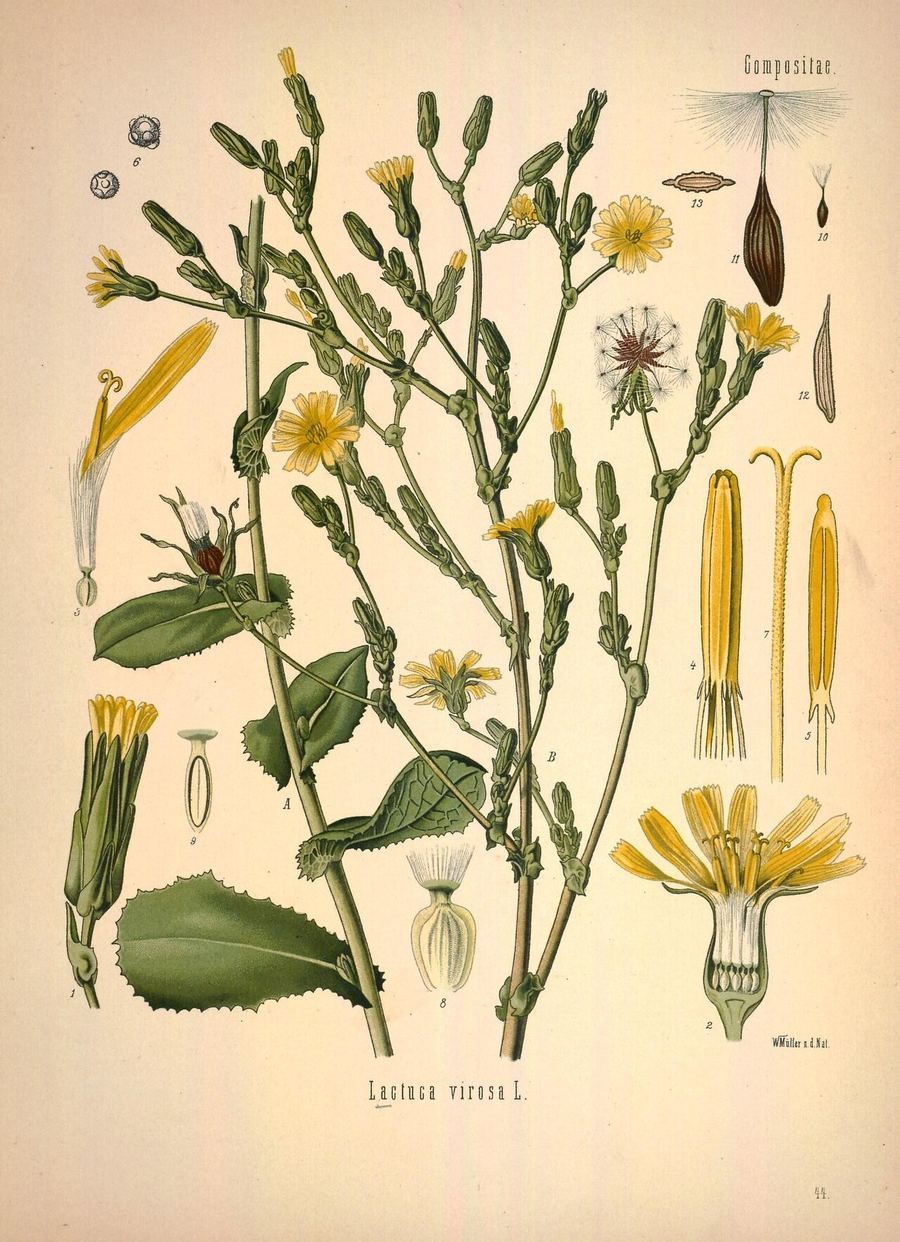
Wild lettuce
Lactuca virosa
Herbs & Roots. Western & European and Folk & home remedies.
Also called Lettuce opium, Opium lettuce
Poisoning cases reported in peopleWild lettuce is a tall weed whose milky sap was dried and sold in the 1800s as a sleep aid and cough remedy, and folk herbalists still use it today.
Did you know? A dried milky sap from this plant, called lactucarium, was sold in the 1800s and early 1900s as a sleep aid, and it was sometimes presented as a milder choice than opium.
What it may help, and how strong the proof is
- Sleep. Traditionally used as a mild sleep aid. Human research is very limited, and the plant can cause strong drowsiness.See the research: No trials in people found yetTraditional proof
- Pain & headaches. Used for pain in old herbal and folk medicine. No good human trials test this.See the research: No trials in people found yetTraditional proof
- Sore throat & cough. Old herbals used it for dry coughs. Evidence is historical, not from modern trials.See the research: No trials in people found yetTraditional proof
Parts of the body
Traditional use
Folk herbalists in Europe and North America used wild lettuce for pain, dry coughs and sleeplessness. Several countries listed it in official drug books, called pharmacopeias, into the early 1900s.
How it is classified
- Herbal actions
- Sedative, Analgesic, Antitussive. Energy: neutral.
How people take it
There is no tested dose. An 1898 US dispensatory listed pill doses of 5 to 20 grains (about 0.3 to 1.3 grams) of the dried sap. These are historical amounts, not modern guidelines, and tinctures vary a lot in strength.
Tincture and tea.
Where to get it
Grows wild in Europe, the Mediterranean and western Asia, and has spread to other regions. Sold as dried herb, tinctures and capsules, along with smoked "lettuce opium" products that carry real risk.
Be careful
Can cause drowsiness, dizziness and confusion, and larger amounts can cause severe sleepiness. In a small case series in Iran, eight people who ate the plant all recovered, though one spent about two days in intensive care. Do not drive or drink alcohol after taking it, and avoid it in pregnancy and for children.
Avoid if: pregnancy; breastfeeding; children under 12; before surgery.
Mixing with other things
- Don't mixSleep or anxiety medicine (Ambien, Xanax, Ativan)
Wild lettuce adds to the drowsiness of sedating medicines and can cause dangerous over-sedation.
- Don't mixAlcohol (beer, wine, spirits)
Alcohol adds to the sleep-inducing effect and can increase the risk of over-sedation.
Adds up with others that can make you drowsy: , , , , , , , , , , , , , and 19 more.
The honest take
Wild lettuce has a long history as a sleep aid and painkiller, but almost no good human research exists. Old use does not show that it is safe or that a dose is known. Poisoning cases in people show real risk, so leave this plant alone unless a clinician is guiding your care.
Sources
Each “See the research” link opens PubMed, the U.S. National Library of Medicine's index of medical studies, showing only trials and reviews done in people. The number tells you how much a use has been tested, not whether it worked. The proof rating tells you that.
Study counts checked October 2026.