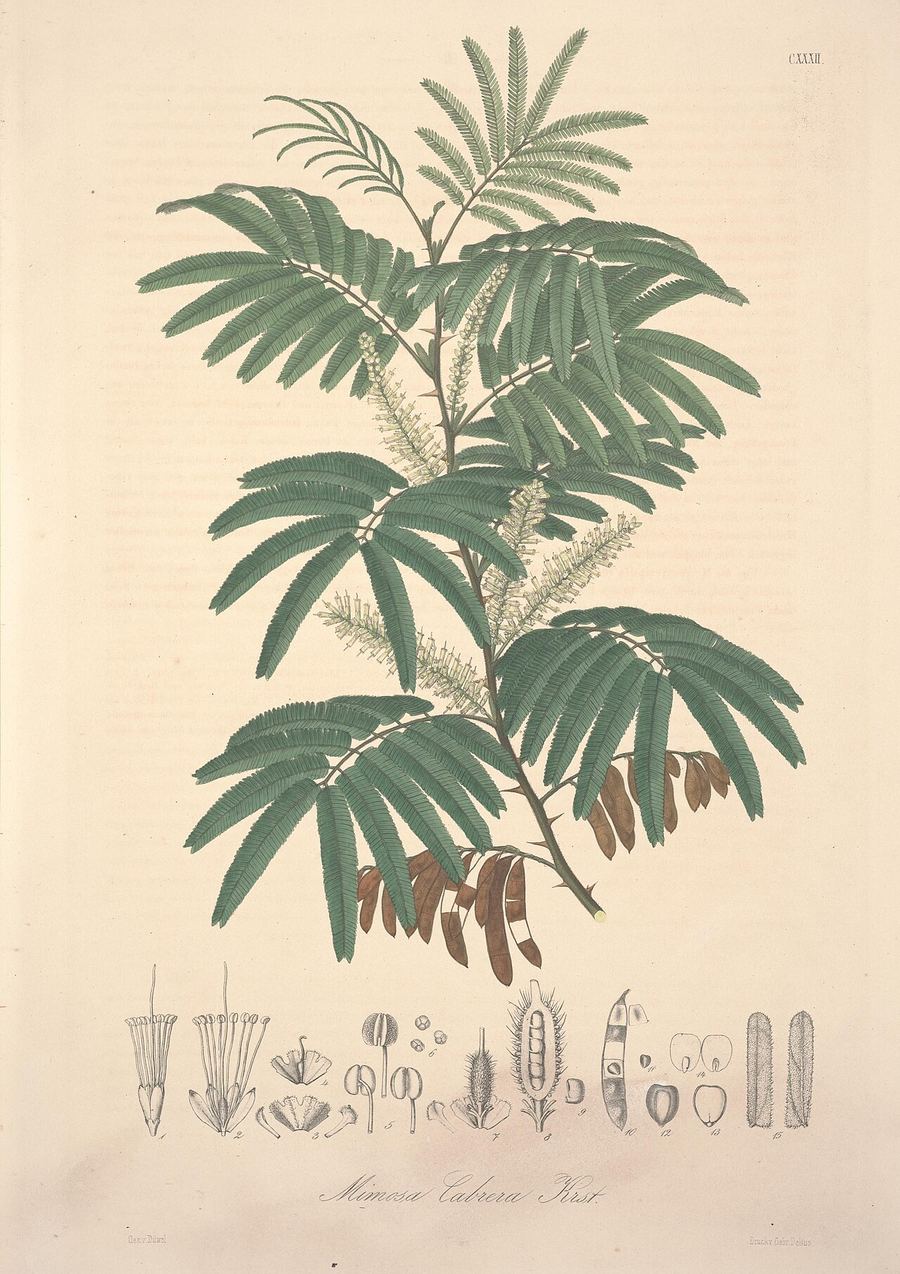
Tepezcohuite
Mimosa tenuiflora
Herbs & Roots. Latin American & Amazon.
Also called Tepezcohuite tree, Jurema preta, Calumbi
Not for swallowing; contains DMTTepezcohuite is the bark of a Mexican and Central American tree, used as a gel or cream on skin wounds and sores.
Did you know? The root bark of this same species, sometimes listed as Mimosa hostilis, is a known source of DMT, a brain-active compound used in some ayahuasca-style brews.
What it may help, and how strong the proof is
- Wounds, burns & bites. A placebo-controlled trial in leg ulcers in 2007 found that a gel with 5% bark extract shrank ulcers much more than placebo by week eight, with no side effects reported. A 2012 trial of a related extract gel in 41 people found the base gel alone improved nearly as much, so larger trials are needed.See the research: 3 studies in peoplePromising proof
- Infections. Lab tests show activity against some skin bacteria. Human studies of skin infections are lacking.See the research: 2 studies in peopleTraditional proof
- Skin. Some products claim anti-aging skin benefits. No human trials support this.See the research: 2 studies in peopleUnproven
Parts of the body
Traditional use
In Mexico and Central America, healers used the ground bark or a water extract on burns, cuts and skin sores.
How it is classified
- Herbal actions
- Vulnerary, Antimicrobial, Astringent. Energy: neutral.
How people take it
It is usually used as a cream or gel on clean skin. The 2007 leg ulcer trial used a gel with 5% bark extract and measured results at week eight. Do not swallow the bark, teas or extracts.
Topical, gel and powder.
Where to get it
The tree grows wild in dry tropical forests of Mexico and Central America, and the bark is harvested from the trunk. It is sold as powder, gels, creams and soaps in Mexican markets and online.
Be careful
The bark contains DMT and related tryptamines, which act on the brain. When swallowed alone, DMT is mostly broken down before it can act, but combined with MAO inhibitor antidepressants it can cause a dangerous reaction. DMT content varies widely between samples, and teas and extracts have not been studied for safety in people. The 2007 leg ulcer trial reported no side effects, but long-term safety is not well studied. Avoid use in pregnancy and breastfeeding, and do not use it on serious burns without medical care.
Avoid if: pregnancy; breastfeeding; MAO inhibitor medicines; serious burns.
Mixing with other things
- Don't mixAntidepressants (Zoloft, Prozac, Lexapro and others)
Bark contains DMT, which can cause a dangerous reaction with MAO inhibitor antidepressants. Do not swallow it while on any antidepressant without medical advice.
The honest take
Tepezcohuite is a traditional wound remedy. One placebo-controlled leg ulcer trial looked promising, but a 2012 trial of a related extract gel found the base gel nearly as effective, so larger trials are needed. It should not be swallowed because of its DMT content.
Sources
Each “See the research” link opens PubMed, the U.S. National Library of Medicine's index of medical studies, showing only trials and reviews done in people. The number tells you how much a use has been tested, not whether it worked. The proof rating tells you that.
Study counts checked October 2026.