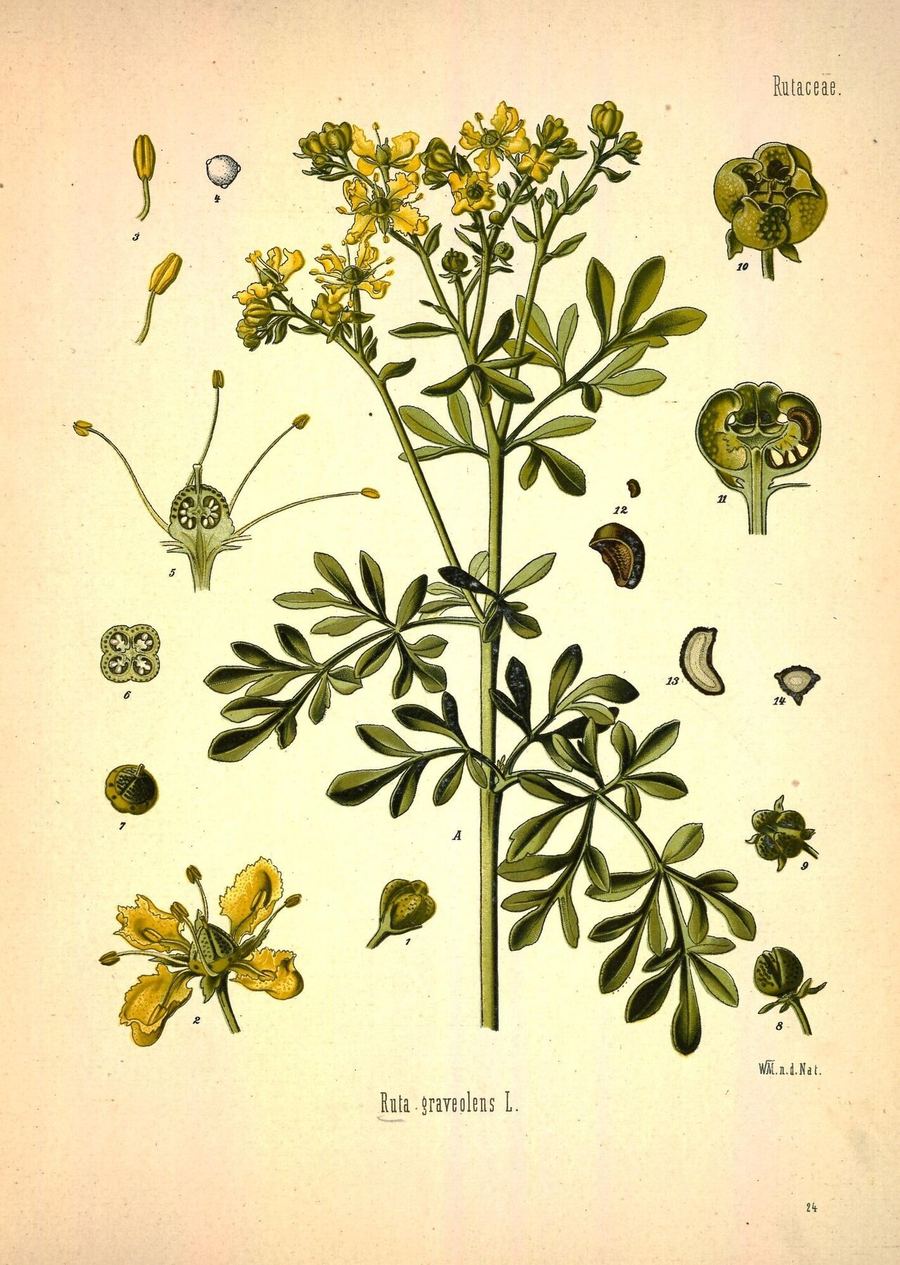
Rue
Ruta graveolens
Herbs & Roots. Western & European, Middle Eastern & Unani, Latin American & Amazon, African and Folk & home remedies.
Also called Common rue, Herb of grace, Garden rue
Spanish: Ruda
Toxic; avoid in pregnancyRue is a strong-smelling herb from southern Europe with blue-green leaves. It has a long folk history, but it is toxic and unsafe for home use.
Did you know? In Shakespeare's Hamlet, Ophelia hands out rue and calls it herb of grace, a sign of how deep the plant's place in folklore runs.
What it may help, and how strong the proof is
- Pain & headaches. Used in folk medicine for headaches and cramping, but no good human trials exist. Strong doses can cause serious harm.See the research: 3 studies in peopleTraditional proof
- Women's health. Used in folk medicine to bring on periods and to end pregnancy. This is dangerous, and no human evidence shows it is safe or works.See the research: No trials in people found yetUnproven
Parts of the body
Traditional use
Ancient Greek and Roman writers described rue. Folk healers used it for headaches, cramps and to bring on periods, but these uses are unsafe and have no proof of benefit.
How it is classified
- Herbal actions
- Antispasmodic, Carminative, Emmenagogue. Energy: neutral.
How people take it
Historically a small amount of leaf was steeped as tea or applied to the skin. Modern guidance does not recommend internal use, and no safe dose is known.
Tea and tincture.
Where to get it
Grows in dry, sunny gardens and hillsides, mostly in southern Europe, and is also grown as an ornamental. Dried leaves and essential oil are sold by some herb suppliers.
Be careful
Fresh rue can irritate the skin, and rue on skin makes sun burns and blisters more likely. Eating it can cause vomiting, stomach pain, slow heartbeat, kidney harm and convulsions. It can bring on uterine contractions and can cause miscarriage, so it must never be used in pregnancy. Breastfeeding and young children are also unsafe.
Avoid if: pregnancy; breastfeeding; children; kidney disease; sun-sensitive skin; heart rhythm problems.
Mixing with other things
- Use cautionAntibiotics (doxycycline, Cipro and similar)
Some antibiotics, such as quinolones and tetracyclines, also raise sun sensitivity, so rue adds to the burn risk.
- Use cautionHeart rhythm medicine (digoxin, amiodarone)
Rue may slow the heart rate, which could add to heart-rate-lowering drugs.
The honest take
Rue is an old herb with a long history, but it is not safe to take. It makes skin burn in sunlight and has been linked to serious poisoning and miscarriage. Modern guidance says to leave it out of home remedies.
Sources
Each “See the research” link opens PubMed, the U.S. National Library of Medicine's index of medical studies, showing only trials and reviews done in people. The number tells you how much a use has been tested, not whether it worked. The proof rating tells you that.
Study counts checked October 2026.