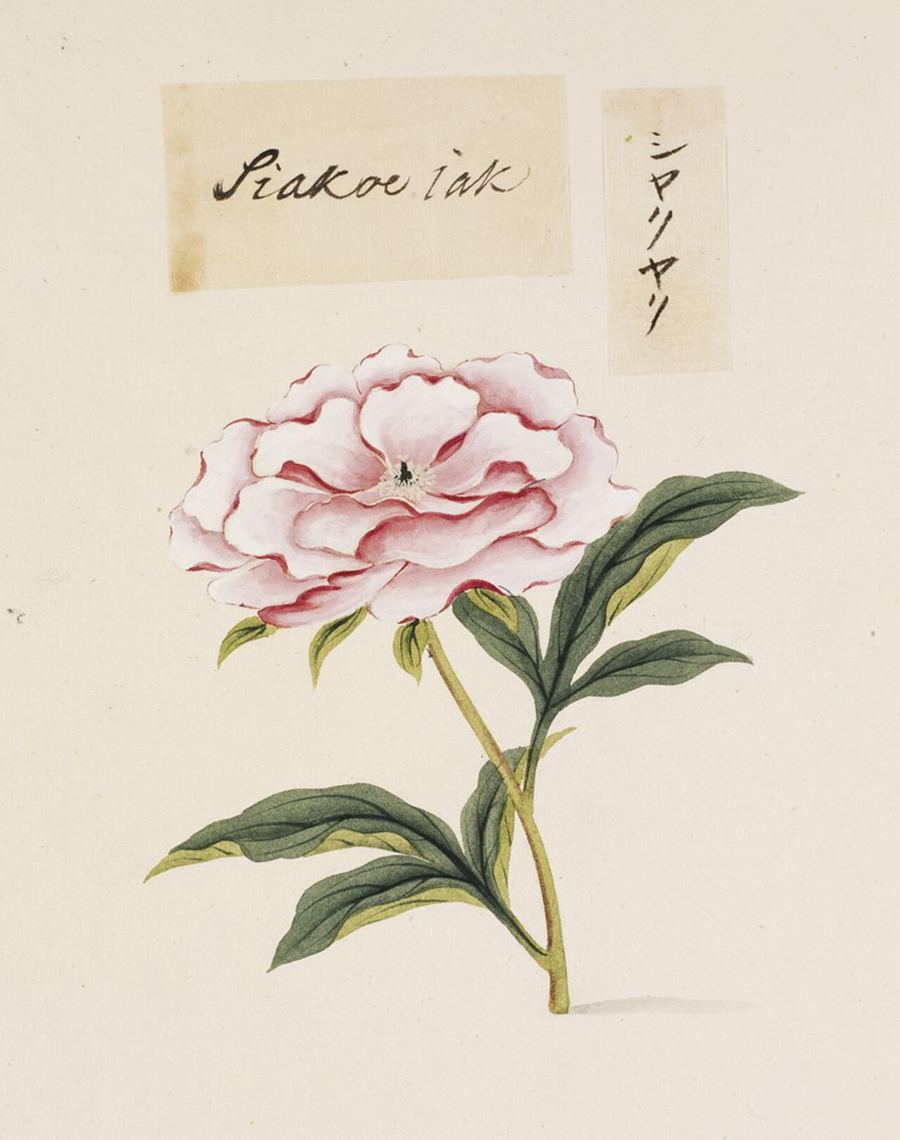
Red peony root (chi shao)
Paeonia lactiflora · 赤芍
Herbs & Roots. Chinese Medicine.
Also called Chi shao, Chi shao yao, Radix Paeoniae Rubra, Red peony, Chinese red peony
Pinyin: Chì Sháo
Avoid in pregnancy; blood-movingRed peony root is the dried root of cultivated peony plants, used in Chinese medicine to move stuck blood and ease pain.
Did you know? Red and white peony roots come from the same kind of plant. The red root keeps its dark outer skin when dried, while the white root is peeled.
What it may help, and how strong the proof is
- Joint pain & arthritis. Peony root extract added to methotrexate gave better results than methotrexate alone in pooled rheumatoid arthritis trials. The trials are small and low quality, and most used white peony root, not red.See the research: 5 studies in peoplePromising proof
- Muscles & exercise. A formula of peony and licorice, usually made with white peony, has been studied for muscle cramps. The studies are few, at high risk of bias, and the results are mixed. They looked at the formula, not red peony on its own.See the research: 1 study in peopleTraditional proof
- Women's health. Chinese texts use it for painful periods with blood stagnation. Human trials are missing, so this is tradition only.See the research: 5 studies in peopleTraditional proof
Parts of the body
Traditional use
Chinese healers used red peony for blood stagnation with pain, painful periods, and bleeding from heat such as nosebleeds. It is also used for red, swollen, painful eyes.
How it is classified
- Herbal actions
- Circulatory, Analgesic, Anti-inflammatory, Antispasmodic. Energy: cooling.
- Chinese medicine
- 赤芍 Invigorate blood. Nature: cool. Flavour: bitter. Enters the Liver channel.
How people take it
The dried root is simmered as a decoction. One Chinese reference gives 6 to 12 grams a day. Capsules and powders are sold, but the extracts used in trials were different products.
Decoction, powder and capsule.
Where to get it
The root of cultivated peony plants, mostly grown in China. Sold as dried whole or sliced root in Chinese herb shops, and as capsules and granules online. Check that the label says red (chi shao) and not white (bai shao).
Be careful
Large amounts may upset the stomach. Chinese practice advises caution in cold patterns. It is not for pregnancy because it is used to move blood and bring on periods. Do not combine it with Li Lu (Veratrum).
Avoid if: pregnancy; bleeding disorders; before surgery.
Mixing with other things
- Works well together
Peony and licorice are paired in Shao Yao Gan Cao Tang for muscle cramps and pain. The formula usually uses white peony.
- Works well together
Both move blood in Chinese formulas for painful periods and blood stagnation.
- Use cautionBlood thinners (warfarin, Eliquis, Xarelto, Plavix, daily aspirin)
Traditionally used to move blood. It may add to bleeding risk with warfarin or aspirin, but human data are limited.
- Worth knowingImmune-suppressing medicine (transplant drugs, some arthritis drugs)
Peony root extract was studied with methotrexate in rheumatoid arthritis trials. Work with a rheumatologist before combining them.
Adds up with others that may slow blood clotting: , , , , , , , , , , , , , and 47 more.
The honest take
Red peony root has a long history in Chinese medicine for blood stagnation and pain. The best modern research uses peony root extracts, mostly from white peony, as an add-on for rheumatoid arthritis, and those trials are small and low quality. Claims about eye redness or period pain rest mostly on tradition.
Sources
Each “See the research” link opens PubMed, the U.S. National Library of Medicine's index of medical studies, showing only trials and reviews done in people. The number tells you how much a use has been tested, not whether it worked. The proof rating tells you that.
Study counts checked October 2026.