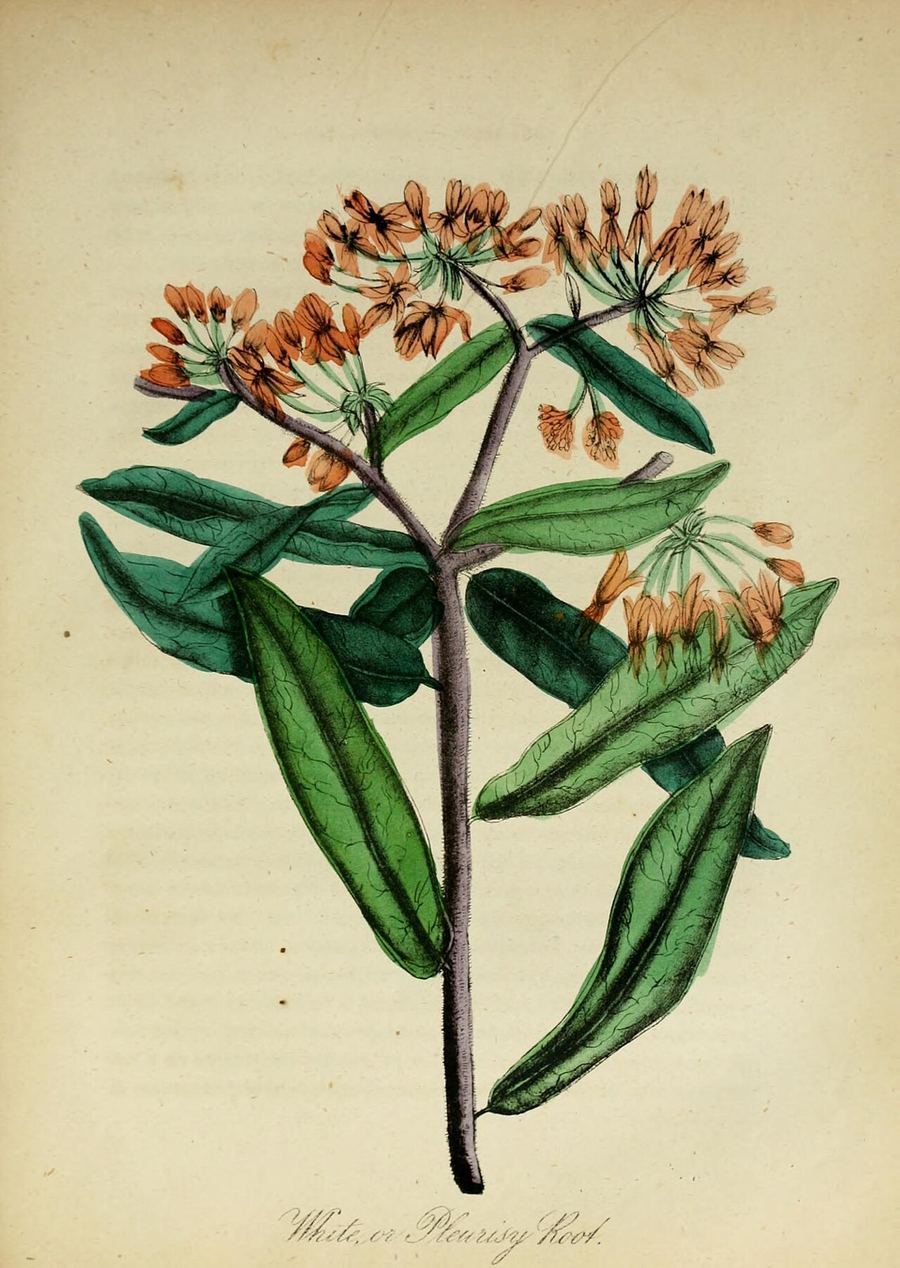
Pleurisy root
Asclepias tuberosa
Herbs & Roots. Native American.
Also called Butterfly weed, Butterfly milkweed, Orange milkweed
Heart-active; toxic in large amountsPleurisy root is a bright orange milkweed whose root has been used in North American herbal medicine for chest complaints and coughs.
Did you know? Butterfly weed is a host plant for monarch butterflies, so its leaves feed the caterpillars and its orange flowers draw pollinators.
What it may help, and how strong the proof is
- Breathing & asthma. Long used for chest inflammation and mucus-heavy coughs. No human trials were found, so it is not shown to work.See the research: 58 studies in peopleTraditional proof
- Fever. Used to bring on sweating during colds and fevers in traditional practice. There are no good human studies.See the research: 8 studies in peopleTraditional proof
Parts of the body
Traditional use
Native American healers and later American herbalists used the root for pleurisy, chest inflammation and coughs with mucus. The root was also used to bring on sweating during colds and fevers.
How it is classified
- Herbal actions
- Expectorant, Diaphoretic. Energy: neutral.
How people take it
The dried root is traditionally steeped as a tea or simmered, and tinctures are sold too. No safe, tested dose exists, so it should not be taken in large amounts.
Tea, decoction and tincture.
Where to get it
Grows in dry prairies, fields and roadsides across eastern and central North America, and is a common garden plant. Sold as dried root and tinctures in herb shops. Look for cultivated sources, since wild digging can harm native plants.
Be careful
Pleurisy root contains cardiac glycosides, heart-active compounds that in large amounts can cause nausea, vomiting and heart-related poisoning like that from digoxin. Avoid it with digoxin and other heart medicines, and keep it away from pregnant women, breastfeeding mothers and children, since its safety in them is not known. Pleurisy itself causes sharp chest pain and needs a doctor. Stop and get medical care for vomiting, a slow or irregular heartbeat, or confusion after taking it.
Avoid if: pregnancy; breastfeeding; heart disease; children under 12.
Mixing with other things
- Works well together
Both are old expectorant herbs used in folk lung and cough teas.
- Works well together
Both are traditional lung herbs for coughs with mucus, often blended in folk teas.
- Don't mixHeart rhythm medicine (digoxin, amiodarone)
Heart-active compounds may add to digoxin and other heart medicines, and raise the risk of toxic heart effects.
- Use cautionWater pills (furosemide, hydrochlorothiazide)
Diuretics can lower potassium, which may raise the risk of toxic heart effects from this root.
The honest take
Pleurisy root has a long place in American herbal practice for chest complaints. Modern research on how well it works is missing, and no good human studies were found. Its heart-active compounds can be dangerous in larger amounts, so use it only with guidance from a trained herbalist or doctor.
Sources
Each “See the research” link opens PubMed, the U.S. National Library of Medicine's index of medical studies, showing only trials and reviews done in people. The number tells you how much a use has been tested, not whether it worked. The proof rating tells you that.
Study counts checked October 2026.