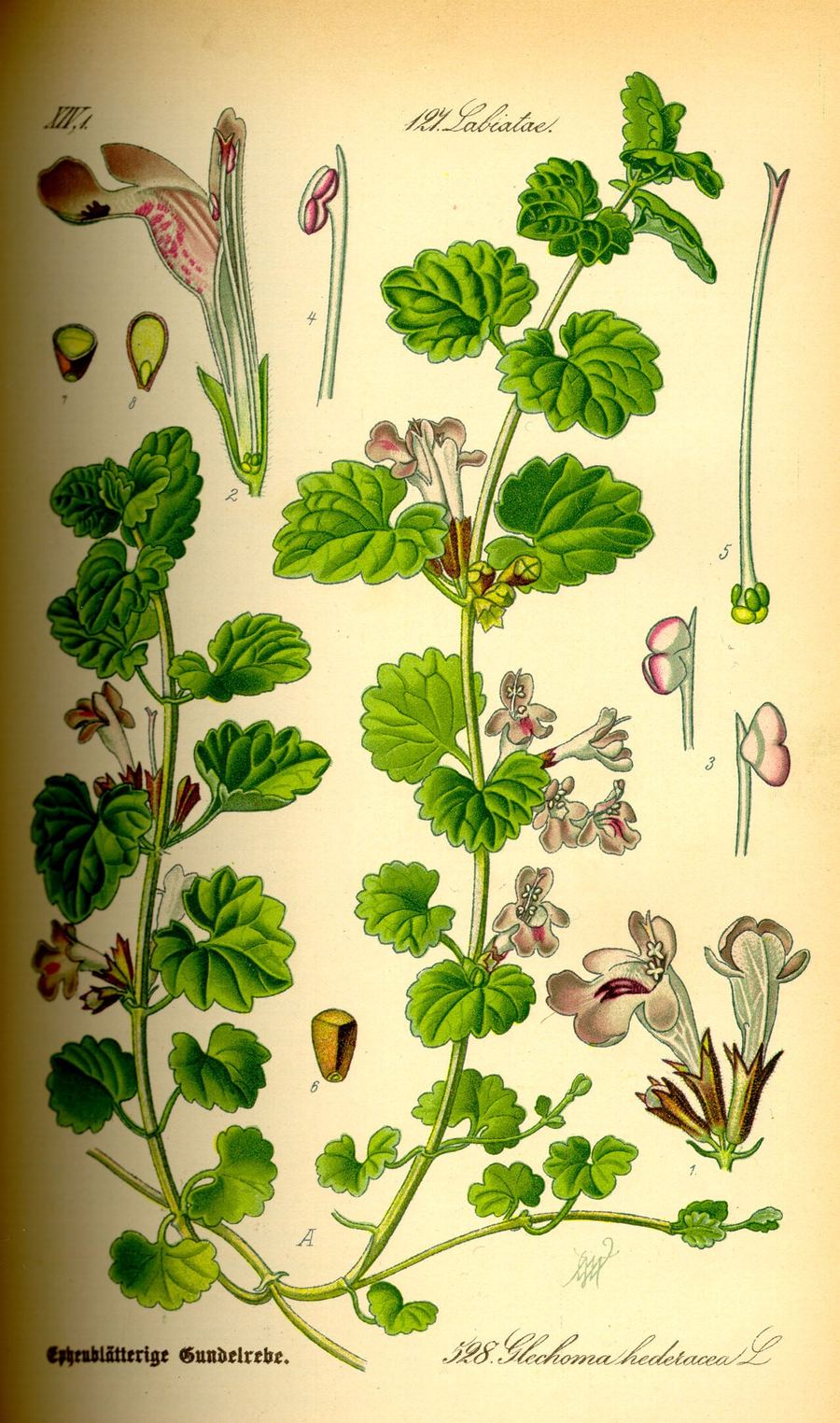
Ground ivy
Glechoma hederacea
Herbs & Roots. Western & European and Folk & home remedies.
Also called Creeping Charlie, Gill-over-the-ground, Alehoof, Field balm
Spanish: Hiedra terrestre
Toxic to horses; pregnancy cautionGround ivy is a low, creeping mint-family plant of lawns and shady edges that has been used in European folk medicine for coughs and colds.
Did you know? Before hops became common, English brewers flavored and clarified ale with ground ivy, which is why it is also called alehoof.
What it may help, and how strong the proof is
- Breathing & asthma. Used in folk medicine for coughs, asthma and bronchitis. No human trials were found, so it is not proven.See the research: No trials in people found yetTraditional proof
- Inflammation. Mouse and cell studies show lower inflammatory signals, but this has not been tested in people.See the research: 1 study in peopleTraditional proof
- Digestion & gut health. Used as a tea for digestive upset in folk practice. There are no good human studies.See the research: No trials in people found yetTraditional proof
Parts of the body
Traditional use
European folk herbalists made tea from ground ivy for coughs, colds, asthma, catarrh and upset stomach.
How it is classified
- Herbal actions
- Expectorant, Astringent, Anti-inflammatory. Energy: neutral.
How people take it
Traditionally the leaves and stems are steeped as a tea, and tinctures are used in folk practice. No standard dose exists, and no studies have set one.
Tea and tincture.
Where to get it
A creeping plant of lawns, hedges and damp shady places across Europe, Asia and North America, where it is widely naturalized as a weed. Some herb shops sell the dried herb, but most people find it growing wild.
Be careful
Ground ivy has been linked to poisoning in horses, mainly after large amounts in pasture or hay. Human safety data are limited, so use small amounts for short periods and avoid it in pregnancy and breastfeeding as a precaution. People allergic to mint-family plants may react.
Avoid if: pregnancy; breastfeeding; children under 12.
Mixing with other things
- Works well together
Both are mint-family herbs used in folk teas for coughs and digestive upset.
- Works well together
Both are mint-family herbs traditionally blended into cough and chest teas.
The honest take
Ground ivy was once a key flavoring in English ale, and it has a long folk record for coughs and colds. Lab and mouse studies show some anti-inflammatory activity, but no human trials were found. Because of reports of poisoning in horses and limited human safety data, keep use small and avoid it in pregnancy.
Sources
Each “See the research” link opens PubMed, the U.S. National Library of Medicine's index of medical studies, showing only trials and reviews done in people. The number tells you how much a use has been tested, not whether it worked. The proof rating tells you that.
Study counts checked October 2026.