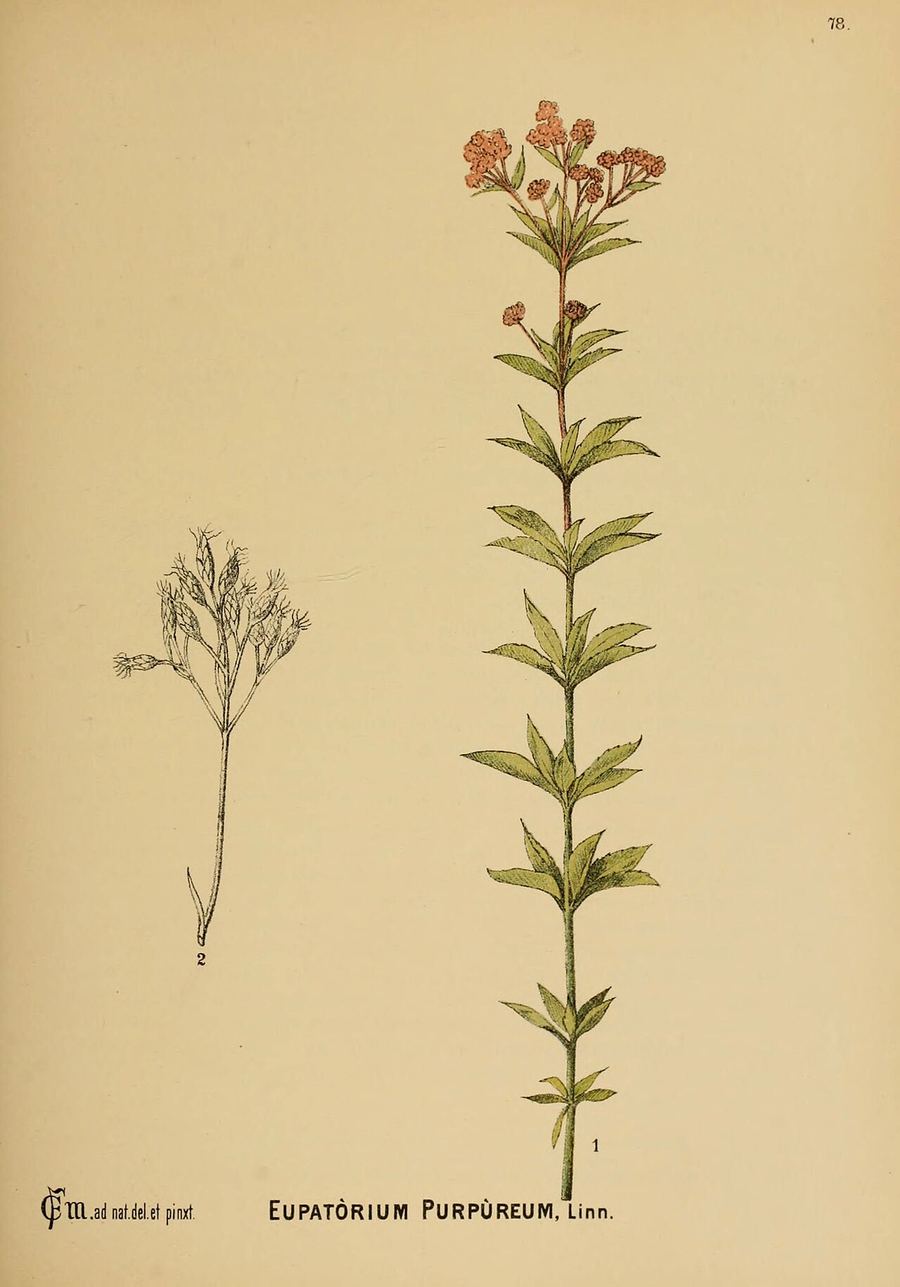
Gravel root
Eutrochium purpureum
Herbs & Roots. Native American.
Also called Joe-Pye weed, Purple boneset, Sweet joe-pye weed
Diuretic; liver safety unknownGravel root is a tall purple-flowered wetland plant whose root was used by Native American healers for kidney and urinary complaints.
Did you know? Joe-Pye weed is named after a healer called Joe Pye, whose identity historians still debate. Legends say he used the plant for typhus, a serious fever, though historians doubt those details.
What it may help, and how strong the proof is
- Kidneys, bladder & UTIs. Used for kidney and bladder complaints and to help with kidney stones, but no modern human studies were found.See the research: 5 studies in peopleTraditional proof
- Joint pain & arthritis. Used for arthritis and rheumatism in traditional practice. Only tradition supports this, and no human trials were found.See the research: No trials in people found yetTraditional proof
Parts of the body
Traditional use
Several Native nations, including the Cherokee, used the root for kidney and urinary complaints and for rheumatism. The name gravel refers to an old word for small stones, such as those in the kidneys or bladder, which the root was believed to help clear.
How it is classified
- Herbal actions
- Diuretic, Diaphoretic. Energy: neutral.
How people take it
The dried root is simmered or steeped as a tea, and tinctures are sold too. No standard dose has been set, and no studies have tested doses in people.
Tea, decoction and tincture.
Where to get it
Grows wild in wet meadows, stream banks and damp woods across eastern and central North America, and is planted in some gardens. Some herb shops sell the dried root and tinctures.
Be careful
Diuretics can cause dehydration or low potassium, and kidney stones need a doctor because they can block the urinary tract. Joe-Pye weed belongs to the daisy family, where some members contain pyrrolizidine alkaloids that can harm the liver. No safety studies on this species were found. Do not use it in pregnancy or breastfeeding, since its safety in these groups is unknown.
Avoid if: pregnancy; breastfeeding; kidney disease; kidney stones; liver disease.
Mixing with other things
- Works well together
Both are folk diuretic herbs used in spring and urinary-flushing teas.
- Works well together
Both are folk herbs for flushing the urinary tract, so they are sometimes blended.
- Use cautionWater pills (furosemide, hydrochlorothiazide)
Gravel root is a diuretic, so it can add to water pills and cause too much fluid loss.
- Use cautionLithium (for bipolar disorder)
Diuretics can raise lithium levels in the blood, so talk to a doctor before using it if you take lithium.
- Use cautionHeart rhythm medicine (digoxin, amiodarone)
Losing potassium through a diuretic can raise the risk of digoxin toxicity, so talk to a doctor if you take heart medicines.
The honest take
Gravel root has a long record of use by Native American healers for urinary and kidney complaints. Modern human research is missing, and its safety has not been well studied. Do not use it in place of medical care for kidney stones, urinary pain, or blood in the urine.
Sources
Each “See the research” link opens PubMed, the U.S. National Library of Medicine's index of medical studies, showing only trials and reviews done in people. The number tells you how much a use has been tested, not whether it worked. The proof rating tells you that.
Study counts checked October 2026.