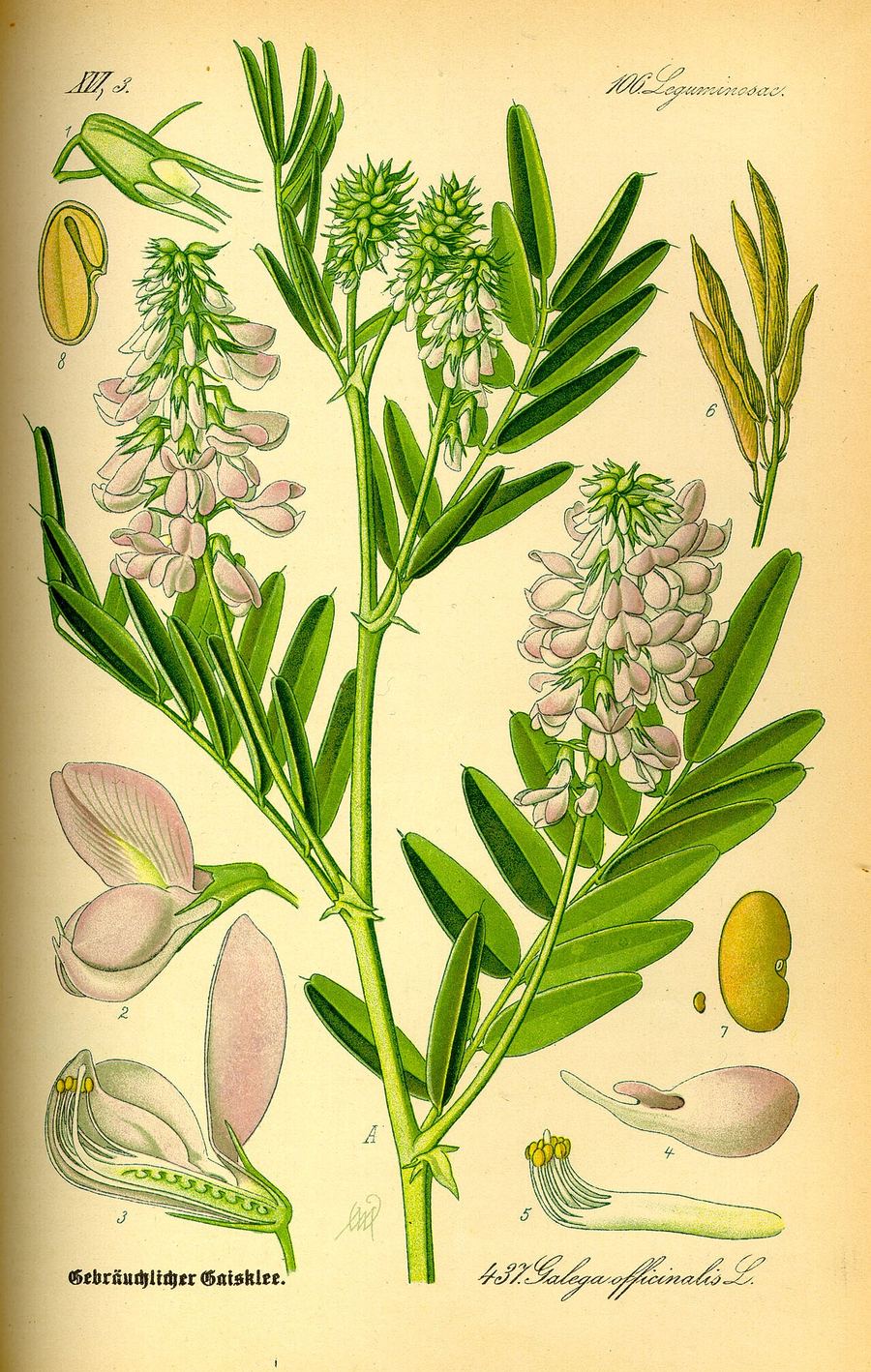
Goat's rue
Galega officinalis
Herbs & Roots. Western & European.
Also called French lilac, Italian fitch, Professor-weed
Toxic; can drop blood sugarGoat's rue is a tall plant in the pea family with lilac flowers. Its compound galegine led to metformin, today's most common first medicine for type 2 diabetes.
Did you know? Galegine from goat's rue was the starting point for metformin, a drug that millions of people take today. The plant itself is not a replacement for that tested drug.
What it may help, and how strong the proof is
- Blood sugar. Lab and animal studies show the plant can lower blood sugar. No good human trials test the plant itself, so this is not shown in people.See the research: No trials in people found yetTraditional proof
- Women's health. Used to increase milk in farm animals and in some folk traditions. Human studies are lacking.See the research: 1 study in peopleTraditional proof
Parts of the body
Traditional use
Medieval and later European herbalists used goat's rue for symptoms we now link to diabetes, such as heavy urination, and to boost milk in farm animals. These uses came from observation, not controlled trials.
How it is classified
- Herbal actions
- Hypoglycemic, Galactagogue. Energy: neutral.
How people take it
No standard human dose exists, and the plant is rarely used as a supplement. Most of its history comes from folk teas and animal feed. People with diabetes should keep taking prescribed medicine and talk with a doctor before trying the plant.
Tea and tincture.
Where to get it
Grows wild and is grown as fodder for animals in parts of Europe and Asia. Dried herb and tinctures are sold by some herb suppliers, but it is rarely found in stores.
Be careful
The plant contains galegine, a close chemical relative of metformin, and other toxic compounds such as canavanine. In sheep, poisoning has caused fluid in the lungs and sudden death. It may lower blood sugar, so it can add to diabetes medicines and cause lows. Its safety in pregnancy, breastfeeding and children is not known.
Avoid if: pregnancy; breastfeeding; diabetes medicines; children under 12.
Mixing with other things
- Don't mixDiabetes medicine (metformin, insulin, glipizide, Ozempic)
The plant may add to blood sugar lowering and cause low blood sugar. Do not combine without medical advice.
Adds up with others that may lower blood sugar: , , , , , , , , , , , , , and 54 more.
The honest take
Goat's rue matters because metformin grew out of its chemistry, a real success story in medicine. The plant itself has only lab and animal evidence and no reliable human dose. Metformin is a separate, tested drug, and the plant is not a replacement for diabetes care.
Sources
Each “See the research” link opens PubMed, the U.S. National Library of Medicine's index of medical studies, showing only trials and reviews done in people. The number tells you how much a use has been tested, not whether it worked. The proof rating tells you that.
Study counts checked October 2026.