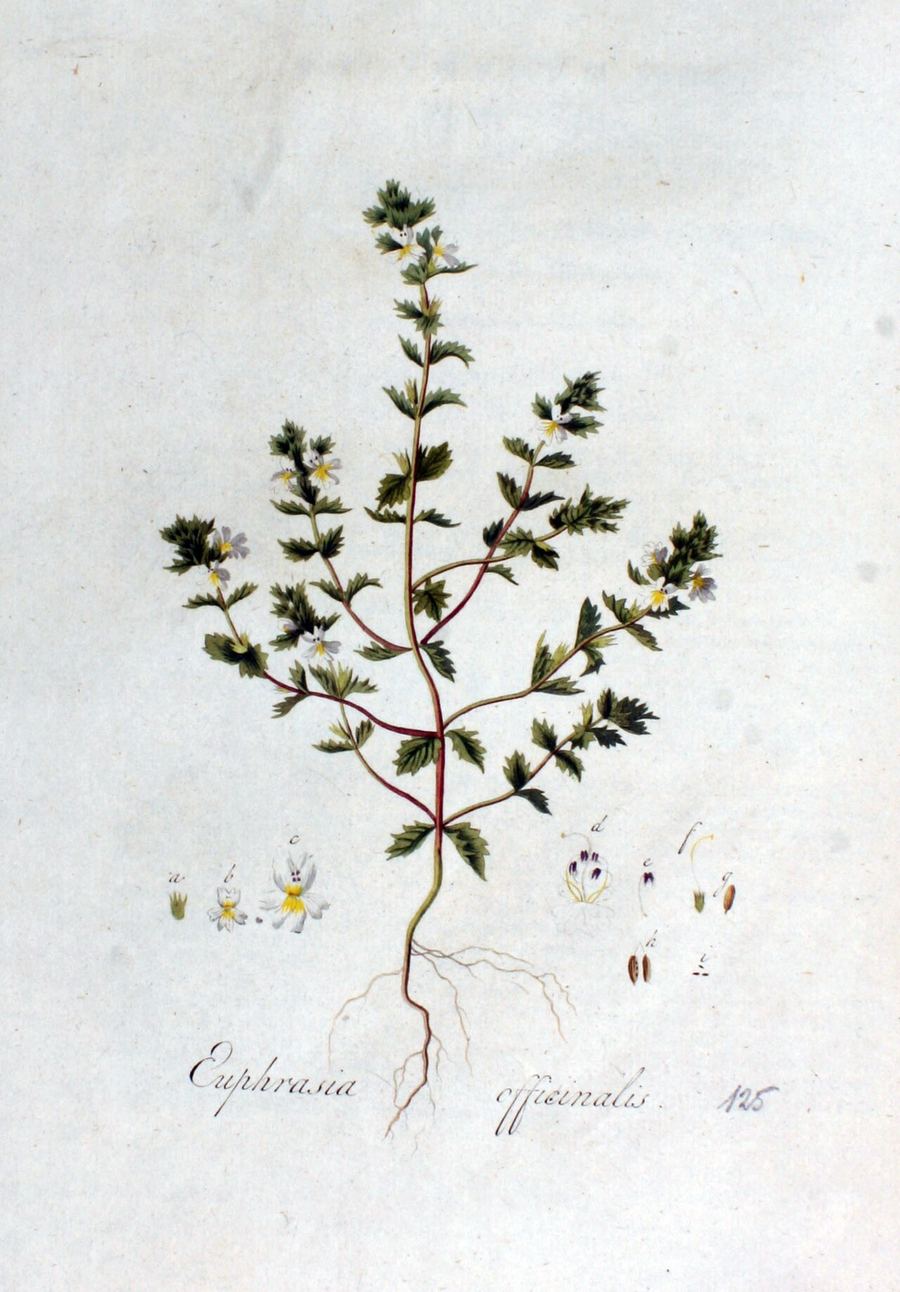
Eyebright
Euphrasia officinalis
Herbs & Roots. Western & European.
Also called Eyewort, Augentrost, Euphrasia
Spanish: Eufrasia
Use only sterile eye productsEyebright is a small wildflower of European meadows, and its tea and eye washes have a long folk history for tired, watery eyes.
Did you know? Eyebright is a partial parasite whose roots tap into nearby grasses, and some old German folk names for it, which translate as "meadow wolf" and "milk thief," reflect how farmers saw it.
What it may help, and how strong the proof is
- Eyes & vision. Used for minor eye irritation and redness. A few small studies exist, some without a control group. No large good trials exist, so this rests mostly on tradition.See the research: 2 studies in peopleTraditional proof
- Colds, flu & immunity. Used in folk medicine for colds and runny noses. No good human trials test this.See the research: No trials in people found yetTraditional proof
- Infections. Lab tests show some plant compounds slow certain germs. This has not been shown in people.See the research: No trials in people found yetTraditional proof
Parts of the body
Traditional use
European herbalists used eyebright tea and eye washes for sore or watery eyes, and as a remedy for colds and catarrh (thick mucus in the nose and chest).
How it is classified
- Herbal actions
- Anti-inflammatory, Astringent, Expectorant. Energy: neutral.
How people take it
Most people drink a tea made from the dried herb, or use sterile eye drops for minor irritation. No standard dose has been set by research, so follow the product label.
Tea, tincture and topical.
Where to get it
Grows in grassy meadows, pastures and heaths, mainly in Europe. Sold as dried herb, tinctures and single-use sterile eye drops, and many similar species make wild plants hard to identify.
Be careful
Eye drops can sting, and homemade eye washes can carry germs that cause infection. Tincture contains alcohol, so it should not go in the eyes. Herbal references list nausea, constipation, confusion and weakness with large amounts of tincture. Pregnant and breastfeeding people should avoid it, since safety information is lacking.
Avoid if: pregnancy; breastfeeding; eye infection; eye injury.
Mixing with other things
No specific mixing notes on file. That doesn't prove it's safe with everything; ask a pharmacist about your full list.
The honest take
Eyebright has a long folk history, but human research is thin and mostly small or observational. Lab tests suggest some activity against germs, which does not prove it works in the body. Use sterile eye products, and see a doctor for eye pain, vision change or infection.
Sources
Each “See the research” link opens PubMed, the U.S. National Library of Medicine's index of medical studies, showing only trials and reviews done in people. The number tells you how much a use has been tested, not whether it worked. The proof rating tells you that.
Study counts checked October 2026.