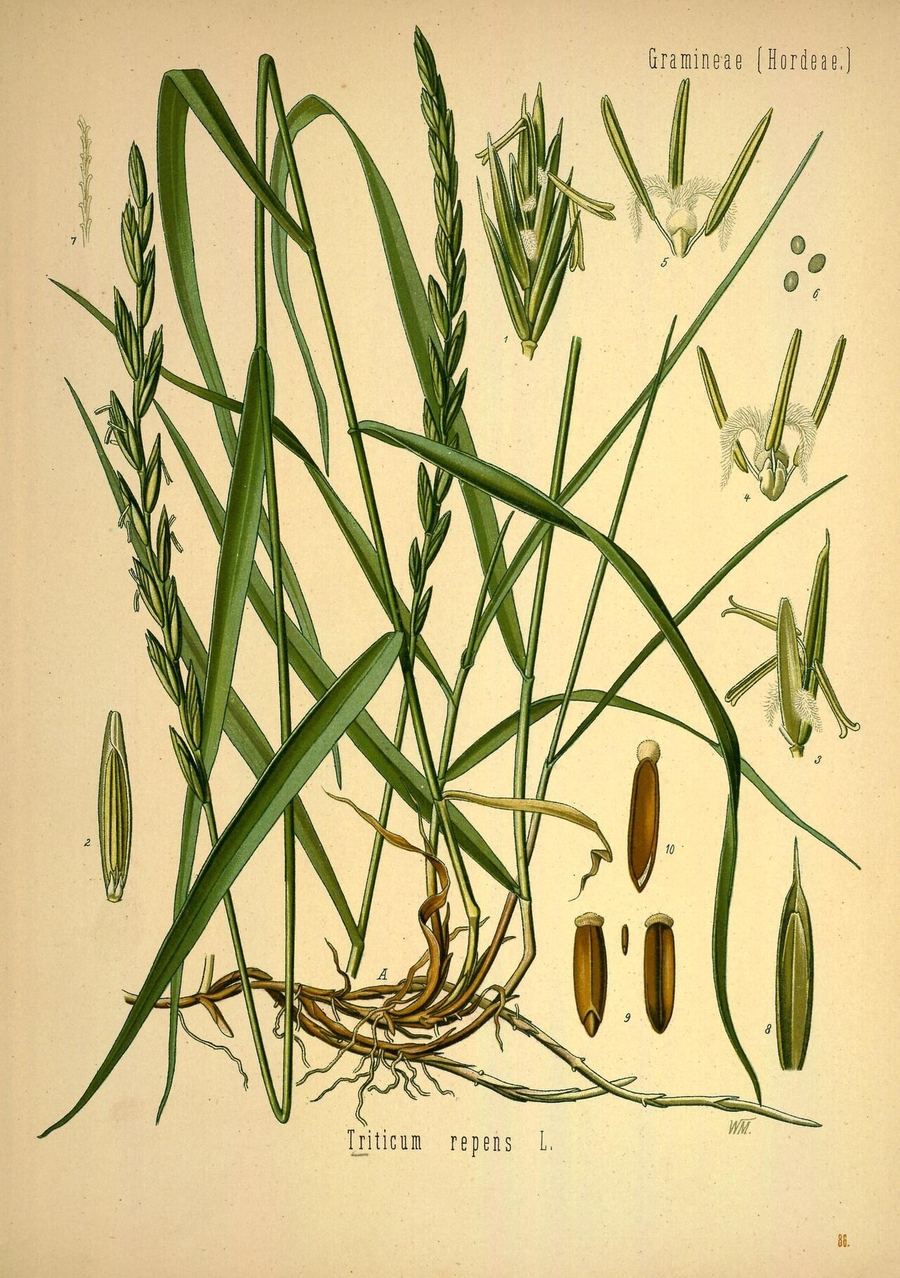
Couch grass
Elymus repens
Herbs & Roots. Western & European and Folk & home remedies.
Also called Quack grass, Twitch, Dog grass, Quickgrass
Diuretic; avoid with kidney diseaseCouch grass is a common lawn and field grass whose underground stem, the rhizome, is used in European folk medicine to flush the urinary tract.
Did you know? Couch grass spreads by underground stems, and even a small broken piece of rhizome can grow into a whole new plant.
What it may help, and how strong the proof is
- Kidneys, bladder & UTIs. Uncontrolled studies in people with bladder irritation or cystitis have been reported, but without a control group they do not show that it works.See the research: 1 study in peopleTraditional proof
- Infections. Used to flush the urinary tract during mild infections. It is not shown to fight infection in people, and it does not replace care for a urinary infection.See the research: No trials in people found yetTraditional proof
Parts of the body
Traditional use
European herbalists have long used couch grass tea to increase urine flow and flush the urinary tract. German herbal references listed it for urinary flushing and for helping to prevent kidney stones.
How it is classified
How people take it
Herbal monographs suggest about 6 to 9 grams of cut rhizome a day, mostly as tea, or 5 to 10 ml of a 1:5 tincture three times a day. These amounts come from herbal references, not large trials.
Tea and decoction.
Where to get it
Grows as a weed in fields, waste ground and gardens across Europe, Asia and North America. Sold as cut, dried rhizome for tea in herb shops and in some mixed teas.
Be careful
Couch grass has few known side effects, but its diuretic effect can cause frequent urination and fluid loss. Use caution with kidney disease, heart disease or fluid retention, and check with a doctor first. People allergic to grass pollen may react, and it has not been studied in pregnancy or breastfeeding, so avoid it then.
Avoid if: pregnancy; breastfeeding; kidney disease; heart disease.
Mixing with other things
- Works well together
Both are folk herbs for flushing the urinary tract, so they are sometimes blended.
- Works well together
Both are diuretic herbs used in folk urinary-flushing teas.
- Works well together
Both are spring diuretic herbs used to flush the urinary tract in folk practice.
- Use cautionWater pills (furosemide, hydrochlorothiazide)
Couch grass adds a diuretic effect, so it can add to water pills and cause fluid or potassium loss.
- Use cautionDiabetes medicine (metformin, insulin, glipizide, Ozempic)
Animal studies suggest couch grass may lower blood sugar, which could add to diabetes medicines.
Adds up with others that may lower blood sugar: , , , , , , , , , , , , , and 54 more.
The honest take
Couch grass is a common weed with a long history in European folk medicine for flushing the urinary tract. The best human studies are small and had no control group, and animal findings on blood sugar and diuretic effects are not proven in people. Urinary pain, fever, or blood in the urine need medical care, not a tea.
Sources
Each “See the research” link opens PubMed, the U.S. National Library of Medicine's index of medical studies, showing only trials and reviews done in people. The number tells you how much a use has been tested, not whether it worked. The proof rating tells you that.
Study counts checked October 2026.