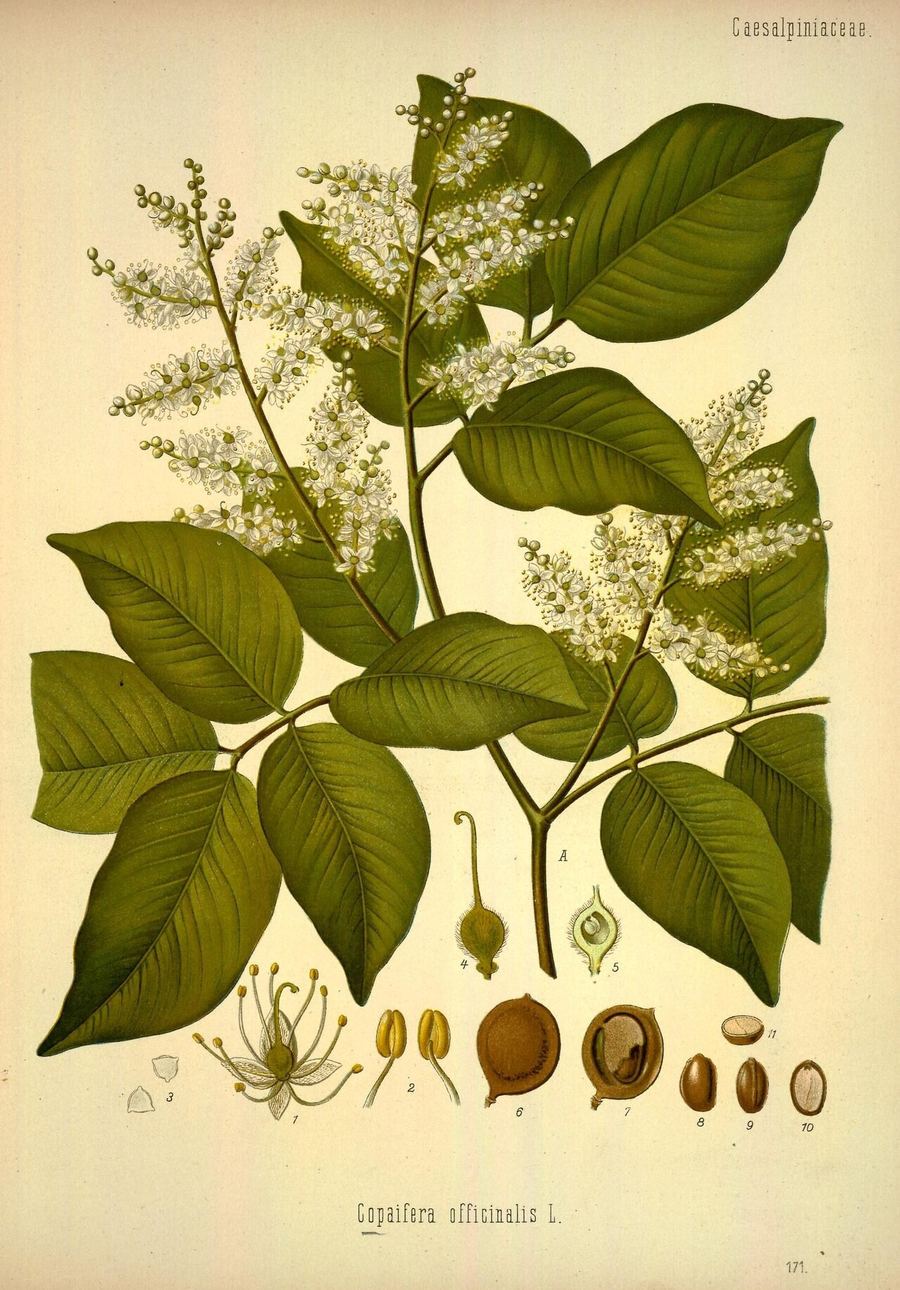
Copaiba
Copaifera officinalis / langsdorffii
Resins & Pitch. Latin American & Amazon.
Also called Copaiba balsam, Balsam of copaiba, Copaiba oil
Avoid swallowing essential oilCopaiba is an oily resin collected from Amazon rainforest trees. It is rubbed on skin and wounds in folk medicine and is sold as oil and capsules.
Did you know? The trees make this oily resin inside their trunk, and it oozes out when the bark is cut, which is how people collect it.
What it may help, and how strong the proof is
- Wounds, burns & bites. Used on cuts and sores in Amazon folk medicine. Lab studies exist, but good human wound trials do not.See the research: No trials in people found yetTraditional proof
- Inflammation. Lab and animal studies show anti-inflammatory activity. Human studies are missing.See the research: 2 studies in peopleTraditional proof
- Sore throat & cough. Taken as a folk remedy for coughs. No good human trials exist.See the research: No trials in people found yetTraditional proof
Parts of the body
Traditional use
Amazon communities have used the oleoresin on wounds, skin problems and swelling, and as a folk remedy for coughs. Healers rubbed it on sores and took small amounts for chest complaints.
How it is classified
- Herbal actions
- Vulnerary, Expectorant, Anti-inflammatory, Antimicrobial. Energy: neutral.
How people take it
Usually a few drops of the oil, diluted in a carrier oil, are applied to the skin. Capsules of the oleoresin are also sold. No safe oral dose has been set for people.
Oil, essential oil, capsule and topical.
Where to get it
Grows in the Amazon basin and parts of northern South America. The oleoresin is tapped from wild and farmed trees and sold as balsam, oil, essential oil and capsules in health shops and online.
Be careful
Essential oil and balsam can irritate the skin and cause allergic reactions. Swallowing essential oil can irritate the lungs and stomach. In animal studies, a single high oral dose of commercial oleoresin (2,000 mg/kg) caused no deaths, but human safety data are missing. In pregnant rats given high doses of another Copaifera species' oleoresin (C. reticulata), fetal weights dropped and skeletal changes appeared, though no malformations were seen. In lab tests, kaurenoic acid, one of its compounds, damaged genetic material at high concentrations. Avoid it in pregnancy and breastfeeding, and keep it away from children.
Avoid if: pregnancy; breastfeeding; children under 12.
Mixing with other things
- Works well together
Both are aromatic resins used in folk remedies for skin and wounds.
- Works well together
Both are aromatic resins used in folk remedies for skin and wounds.
The honest take
Copaiba is a real Amazon resin with a long folk history. Most of what is known comes from lab work and animal studies, and human studies are few or missing. Oral use is not well studied, and essential oil can harm people if swallowed. Use only tested products, and skip it in pregnancy.
Sources
Each “See the research” link opens PubMed, the U.S. National Library of Medicine's index of medical studies, showing only trials and reviews done in people. The number tells you how much a use has been tested, not whether it worked. The proof rating tells you that.
Study counts checked October 2026.