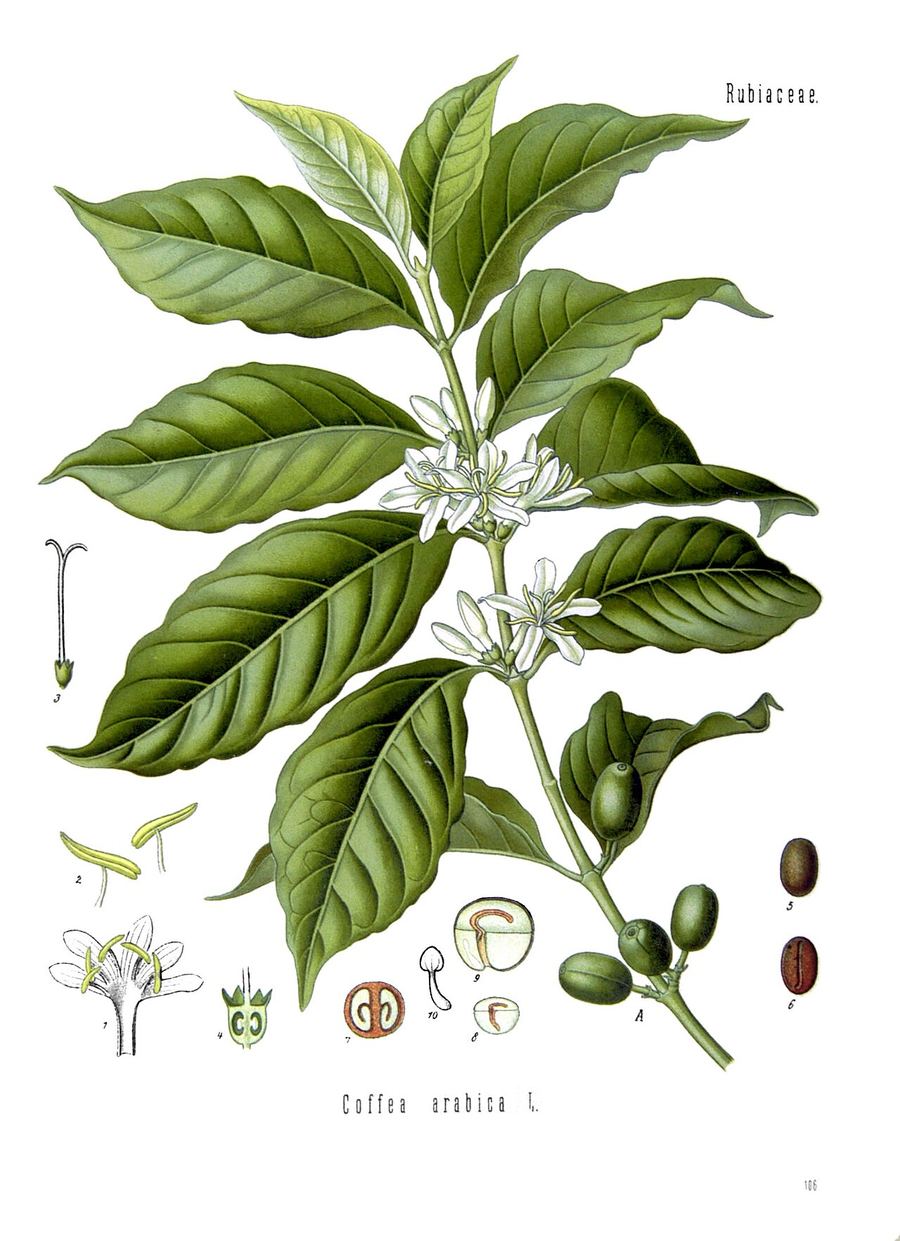
Coffee
Coffea arabica and Coffea canephora (robusta)
Seeds & Grains. African, Middle Eastern & Unani, Latin American & Amazon and Modern nutrition.
Also called Arabica, Robusta, Java, Cup of joe
Pinyin: kā fēi
Spanish: Café
Caffeine: limit in pregnancyCoffee is a drink brewed from roasted seeds of the coffee plant. People mostly drink it for caffeine, which helps keep them alert.
Did you know? The coffee bean is really a seed, the pit inside a red cherry-like fruit called the coffee cherry.
What it may help, and how strong the proof is
- Energy & tiredness. Many trials show caffeine improves alertness and attention for a few hours. It does not fix tiredness from poor sleep.See the research: 122 studies in peopleStrong proof
- Pain & headaches. Caffeine adds some pain relief when it is combined with pain relievers, which is why it is in some headache products. Coffee alone has few trials for headache.See the research: 96 studies in peoplePromising proof
- Blood sugar. Large observational studies link coffee drinking with a lower risk of type 2 diabetes. Trials are lacking, so this does not prove coffee causes it.See the research: 196 studies in peoplePromising proof
- Memory & focus. Large observational studies link coffee with a lower risk of Parkinson's disease. Trials have not shown that coffee or caffeine protects the brain.See the research: 108 studies in peoplePromising proof
- Liver. Observational studies link coffee drinking with a lower risk of liver scarring and cirrhosis. This has not been tested in trials.See the research: 83 studies in peoplePromising proof
Parts of the body
Energy & metabolism, Nerves & pain, Pancreas & blood sugar, Brain & mind, Liver
Traditional use
Coffee began in the highlands of Ethiopia. Sufi communities in Yemen used it to stay awake during night prayers, and coffee houses later spread across the Middle East and Europe. Its use was social and cultural, not medical.
How it is classified
- Herbal actions
- Stimulant, Brain tonic, Antioxidant. Energy: neutral.
How people take it
An 8-ounce cup of brewed coffee has about 80 to 100 mg of caffeine, though strong brews and large cups can have much more. Health agencies consider up to about 400 mg a day safe for most healthy adults. Stop drinking it several hours before bed to protect sleep.
Food and powder.
Where to get it
Coffee is grown on shrubs in tropical regions of Latin America, East Africa and Southeast Asia. It is sold as roasted beans, ground coffee and instant, and as decaf, which still has a small amount of caffeine.
Be careful
Caffeine can cause jitters, trouble sleeping, a fast heartbeat, anxiety, upset stomach, heartburn and a short rise in blood pressure. High amounts can cause a racing heart, and very high doses can be dangerous. Pregnant people are often advised to keep caffeine under about 200 mg a day. Caffeine passes into breast milk, so keep intake modest while nursing. Caffeine pills and energy drinks deliver large doses quickly and carry more risk.
Avoid if: pregnancy; heart rhythm problems; anxiety disorders; insomnia; acid reflux.
Mixing with other things
- Works well together
Roasted chicory root is blended with coffee in New Orleans and parts of Europe for a darker, earthy taste.
- Use cautionAntidepressants (Zoloft, Prozac, Lexapro and others)
Fluvoxamine, an antidepressant, slows caffeine clearance, so caffeine can build up and cause jitters or a fast heartbeat.
- Use cautionAntibiotics (doxycycline, Cipro and similar)
Ciprofloxacin slows caffeine clearance, so caffeine effects can last longer.
- Use cautionThyroid medicine (levothyroxine (Synthroid))
Coffee can reduce how much levothyroxine, a thyroid medicine, the body absorbs. Take the pill with water and wait about an hour before coffee.
- Worth knowingBirth control (the pill and other hormonal birth control)
Estrogen-containing birth control slows caffeine clearance, so caffeine may last longer.
- Worth knowingBlood pressure medicine (lisinopril, amlodipine, losartan)
Caffeine can raise blood pressure for a few hours, especially in people who rarely drink it.
The honest take
Coffee gives a real, short-term boost in alertness, and it has a long social history. Most of its wider health links come from large observational studies, which show links but cannot prove cause and effect. Too much caffeine, late-day cups and caffeine pills can disturb sleep and heart rhythm, so moderation matters.
Sources
Each “See the research” link opens PubMed, the U.S. National Library of Medicine's index of medical studies, showing only trials and reviews done in people. The number tells you how much a use has been tested, not whether it worked. The proof rating tells you that.
Study counts checked October 2026.