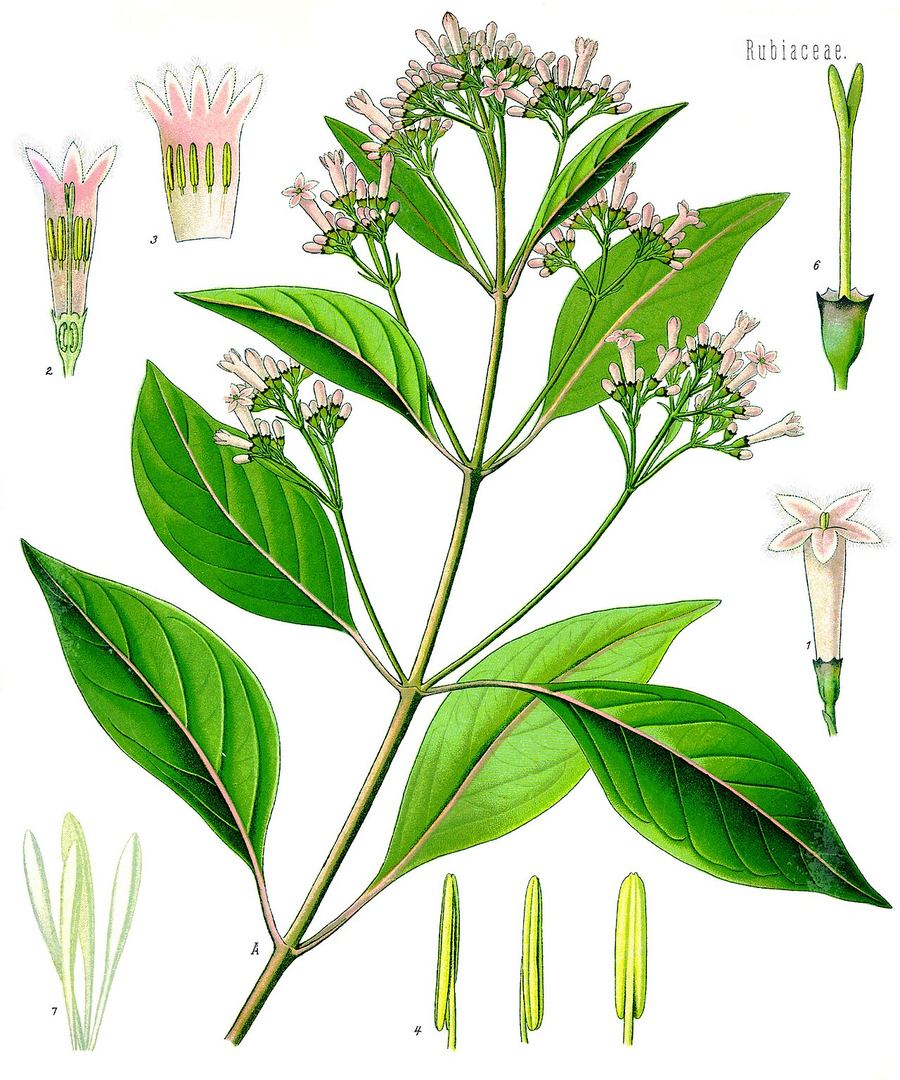
Cinchona (quinine bark)
Cinchona officinalis / C. pubescens
Herbs & Roots. Latin American & Amazon and Western & European.
Also called Quinine bark, Peruvian bark, Jesuit's bark, Quina, Kina-kina
Spanish: Quina
Heart and blood risksCinchona is an Andean tree whose bark gave us quinine, a prescription medicine for malaria. The bark is also where tonic water's bitter taste comes from.
Did you know? Tonic water still contains a small amount of quinine, the compound first pulled from cinchona bark in 1820. Legal limits keep it far below a medicine dose.
What it may help, and how strong the proof is
- Parasites & worms. Purified quinine, the drug made from the bark, is an approved prescription medicine for some forms of malaria. The bark itself has not been tested as a remedy, and bark teas give unknown amounts, so they are not a reliable way to get a dose.See the research: 7 studies in peopleGood proof
- Fever. Used for fevers and chills in old Andean and European folk medicine. Bark teas are not a safe home fever remedy.See the research: 1 study in peopleTraditional proof
Parts of the body
Traditional use
Andean peoples used the bark for fevers and chills long before Europeans arrived. Jesuit missionaries brought it to Europe in the 1600s, where it became known as Jesuit's bark.
How it is classified
- Herbal actions
- Anti-parasite, Bitter. Energy: neutral.
How people take it
Prescription quinine comes as capsules or tablets and is given under a doctor's care. Bark teas and tinctures have no standard strength, so their doses are unknown and risky. Malaria care is set by doctors and public health guidelines, which change over time.
Decoction, tincture and tablet.
Where to get it
Cinchona trees are grown on plantations in Asia, Africa and South America. Quinine is extracted and sold as prescription medicine. Bark, tinctures and teas are sold by some herb shops, and tonic water contains quinine.
Be careful
Quinine can cause cinchonism, with ringing in the ears, headache, nausea, blurred vision and hearing loss. It can also cause dangerous heart rhythm changes, low blood sugar, low platelets with bleeding, kidney harm and, rarely, liver injury. The FDA has warned against using quinine for leg cramps, because serious and sometimes fatal blood reactions have occurred. People with G6PD deficiency can have severe blood reactions. In pregnancy, quinine is used only under medical care for malaria, never as bark tea.
Avoid if: pregnancy; heart rhythm problems; hearing problems; G6PD deficiency; kidney disease; diabetes medicines; bleeding disorders.
Mixing with other things
- Don't mixHeart rhythm medicine (digoxin, amiodarone)
Quinine can lengthen the QT interval and trigger dangerous heart rhythms. This risk adds to other heart-rhythm drugs.
- Use cautionAntibiotics (doxycycline, Cipro and similar)
Some antibiotics, such as macrolides and fluoroquinolones, also affect heart rhythm, adding to quinine's risk.
- Use cautionBlood thinners (warfarin, Eliquis, Xarelto, Plavix, daily aspirin)
Quinine can raise the effect of warfarin, which raises bleeding risk.
- Use cautionDiabetes medicine (metformin, insulin, glipizide, Ozempic)
Quinine can lower blood sugar, which may add to diabetes medicines.
Adds up with others that may slow blood clotting: , , , , , , , , , , , , , and 47 more.
Adds up with others that may lower blood sugar: , , , , , , , , , , , , , and 54 more.
The honest take
Quinine is a real and important medicine that came from cinchona bark. The raw bark is not a safe home remedy, because its strength is unknown and side effects can be serious. Its proper place is malaria care under medical guidance.
Sources
Each “See the research” link opens PubMed, the U.S. National Library of Medicine's index of medical studies, showing only trials and reviews done in people. The number tells you how much a use has been tested, not whether it worked. The proof rating tells you that.
Study counts checked October 2026.