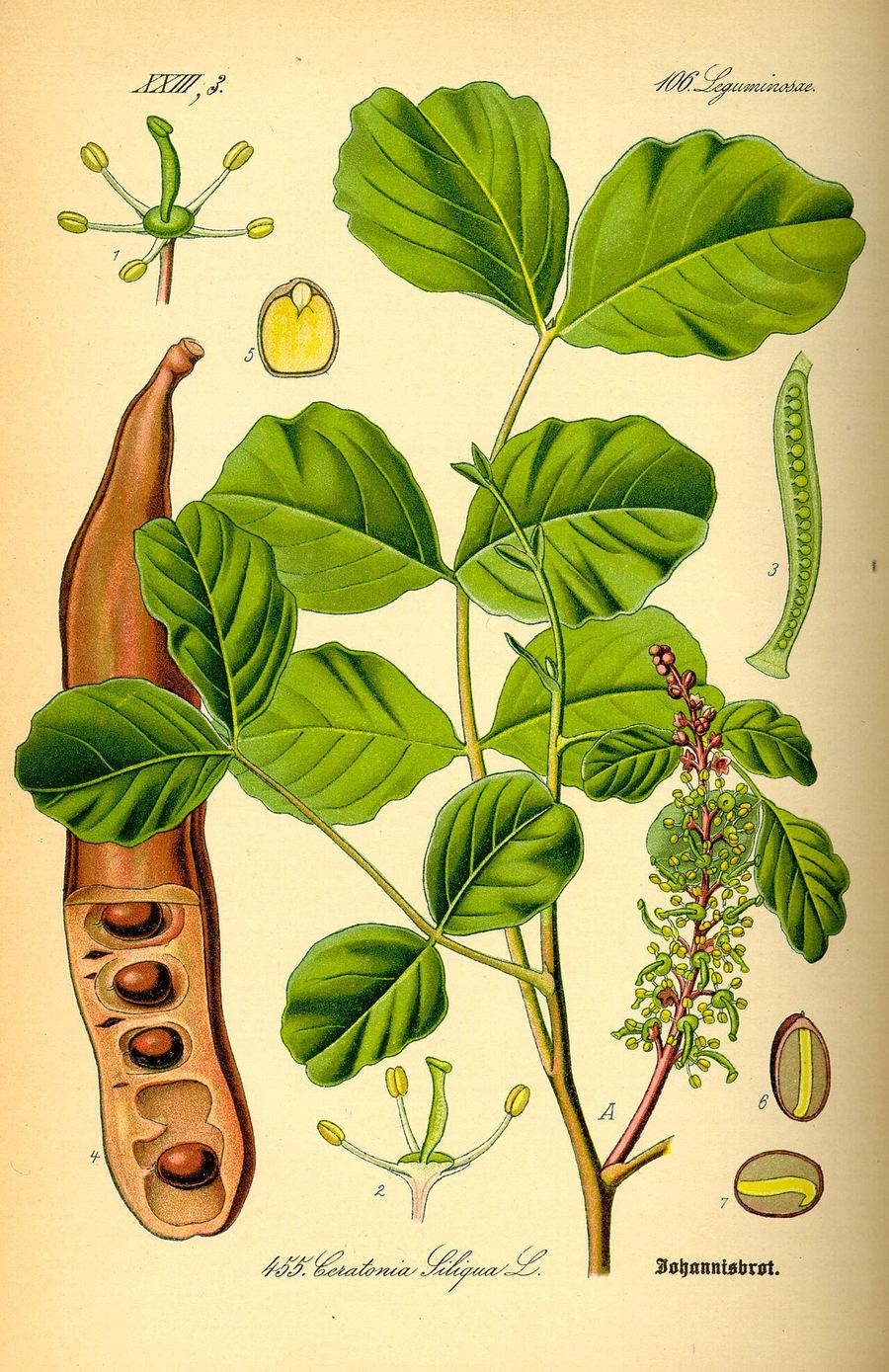
Carob
Ceratonia siliqua
Fruits. Middle Eastern & Unani, Folk & home remedies and Modern nutrition.
Also called St. John's bread, Locust bean, Algarroba, Kharrub
Spanish: Algarroba
Carob is a naturally sweet brown powder made from the dried pods of an evergreen Mediterranean tree. People use it in place of cocoa and as a natural sweetener.
Did you know? The word carat, the unit used to weigh gemstones, is traced back to the Greek word for the carob seed, which traders once used as a reference weight.
What it may help, and how strong the proof is
- Digestion & gut health. A 1998 trial in 80 children with diarrhea found that carob bean juice, given with rehydration fluid, shortened the illness. Larger trials of carob powder are lacking.See the research: 10 studies in peoplePromising proof
- Cholesterol. A small placebo-controlled trial in adults with high cholesterol found only a tiny drop in LDL, about 2 percent, after 15 grams of carob pulp a day. Open trials with no control group reported drops of about 10 to 12 percent, but they cannot show that carob caused them. Trials are few and small.See the research: 11 studies in peoplePromising proof
- Blood sugar. Popular claims that carob lowers blood sugar are not backed by trials. A small study in 20 healthy adults found that carob fiber raised blood sugar and insulin after a sugar drink, and a follow-up found a higher blood sugar rise after a bread meal.See the research: 16 studies in peopleUnproven
Parts of the body
Gut & intestines, Stomach, Heart & vessels, Liver, Pancreas & blood sugar
Traditional use
Carob pods have been eaten around the Mediterranean and in the Middle East for centuries, often as flour or a thick sweet syrup. The name St. John's bread comes from an old folk belief that John the Baptist ate carob pods in the desert.
How it is classified
- Herbal actions
- Nutritive, Astringent. Energy: neutral.
How people take it
Stir carob powder into milk, smoothies, baking or hot drinks in place of cocoa. Carob syrup can be spread on bread or stirred into yogurt. One cholesterol trial used 15 grams of carob pulp a day.
Food, powder and syrup.
Where to get it
Carob trees grow around the Mediterranean, in the Middle East and in North Africa, with large crops in Spain and Portugal. The pods are dried, roasted and ground into powder, and also sold as chips, syrup and carob seed gum.
Be careful
Carob is very low risk as a food. It is high in natural sugar, so large amounts add to sugar intake. Carob seed gum, used as a thickener, can cause bloating or gas. Some infant formulas thickened with carob bean gum have been linked with diarrhea or looser stools in some babies, so infants should only get carob products under medical advice. Food amounts are generally fine in pregnancy, but carob gum supplements have not been studied in pregnancy.
Avoid if: legume allergy; infants on carob-thickened formula.
Mixing with other things
- Works well together
Carob powder is often used in place of raw cacao in drinks and baking.
The honest take
Carob is a pleasant, naturally sweet food, often sold as a stand-in for cocoa. Its best human evidence is from small trials of carob juice and pulp, and the results are modest or early. Claims that it lowers blood sugar are not supported by the trials so far.
Sources
Each “See the research” link opens PubMed, the U.S. National Library of Medicine's index of medical studies, showing only trials and reviews done in people. The number tells you how much a use has been tested, not whether it worked. The proof rating tells you that.
Study counts checked October 2026.