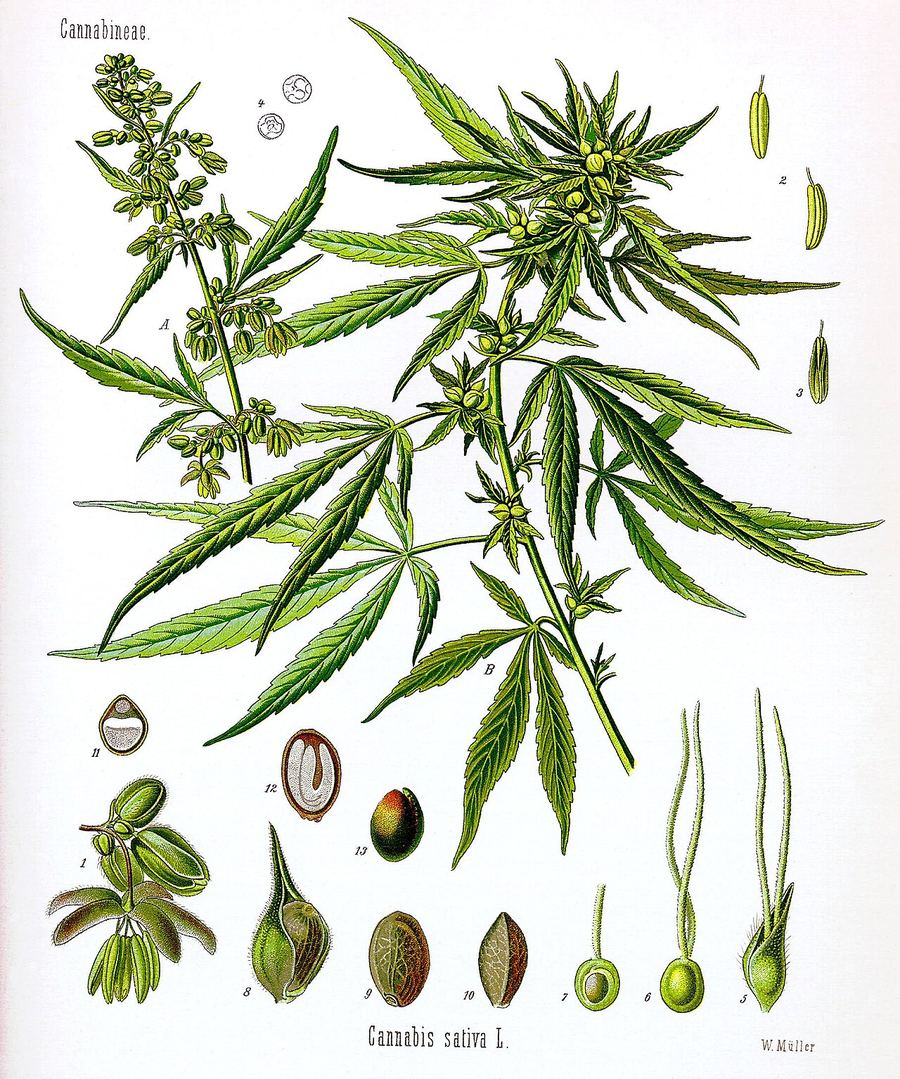
Cannabis (THC)
Cannabis sativa / indica (THC) · 大麻
Herbs & Roots. Ayurveda, Chinese Medicine, Caribbean, African, Middle Eastern & Unani, Modern nutrition and Folk & home remedies.
Also called Marijuana, Ganja, Bhang, Weed, Dronabinol (prescription THC)
Pinyin: Dà Má
Spanish: Marihuana
Sanskrit: विजया (Vijaya)
Psychoactive, laws varyA plant whose flowers hold THC, the compound behind its high, used for pain, nausea, muscle stiffness, appetite and sleep, with prescription THC medicines approved for some of these.
Did you know? The prescription capsule dronabinol is THC made in a lab. It was approved in the US in 1985 to ease nausea from chemotherapy, decades before cannabis itself became legal in any state.
What it may help, and how strong the proof is
- Nausea & upset stomach. THC taken by mouth (dronabinol, nabilone) eases nausea and vomiting from chemotherapy. The US National Academies called this evidence conclusive, and both medicines are approved for it.See the research: 87 studies in peopleStrong proof
- Pain & headaches. Many trials show cannabis and cannabis medicines bring a modest drop in long-term pain in adults, especially nerve pain. The National Academies rated this evidence substantial.See the research: 797 studies in peopleGood proof
- Muscles & exercise. A THC and CBD mouth spray (nabiximols) and nabilone ease muscle stiffness and spasms that people with multiple sclerosis report. The spray is approved in many countries.See the research: 40 studies in peopleGood proof
- Weight. Dronabinol is approved to improve appetite and slow weight loss in people with AIDS. Studies are few and small.See the research: 145 studies in peoplePromising proof
- Sleep. Some people sleep better in the short term, mostly when pain, apnea or fibromyalgia disturb sleep. Daily use can make sleep worse over time, and sleep is often poor for a while after stopping.See the research: 165 studies in peoplePromising proof
Parts of the body
Stomach, Nerves & pain, Muscles, Energy & metabolism, Brain & mind
Traditional use
Ayurveda treats cannabis (vijaya) as a strong plant used purified and in small amounts, for digestion, pain and sleep. Its seed has been a Chinese remedy for constipation for about two thousand years, and in Jamaica and across the Caribbean ganja tea and tonics are long-standing folk medicine; Rastafari also hold it sacred.
How it is classified
- Herbal actions
- Analgesic, Antispasmodic, Sedative, Anti-inflammatory, Nervine. Energy: warming.
- Ayurveda
- Calms Vata and Kapha. Can raise Pitta. Taste (rasa): bitter, astringent. Energy (virya): heating. After digestion (vipaka): pungent. Deepana (kindles digestion), Pachana (digests toxins/ama), Madakari (intoxicant), Upavisha (strong plant, used only purified).
How people take it
Prescription THC comes as dronabinol capsules (often 2.5 to 10 mg) or nabilone. Where it is legal, people use the flower, oils, tinctures, teas or edibles. Start very low, 1 to 2.5 mg of THC, and go slow: edibles take 1 to 2 hours to work and last much longer than smoking.
Oil, capsule, tincture, food, tea and topical.
Where to get it
The flowering tops of female plants hold the most THC. It is sold in licensed stores where it is legal, and THC medicines come by prescription. Laws differ widely between countries and US states, so check where you live. Hemp is the same plant bred to hold very little THC.
Be careful
THC can cause a fast heartbeat, dizziness, dry mouth, red eyes, anxiety or paranoia, and slower reactions, so never drive on it. Too much can bring panic or vomiting. Heavy daily use can lead to dependence and, rarely, bouts of severe vomiting. In teens and people with a family history of psychosis, regular use raises the risk of psychosis. Smoke harms the lungs, and edibles must be kept away from children and pets.
Avoid if: pregnancy; breastfeeding; teens and young adults; history of psychosis or schizophrenia; heart disease; before driving or operating machinery.
Mixing with other things
- Use cautionSleep or anxiety medicine (Ambien, Xanax, Ativan)
Adds to drowsiness and slowed breathing with sleep medicines, opioids, benzodiazepines and other sedatives.
- Use cautionAlcohol (beer, wine, spirits)
Together they impair balance, driving and judgment far more than either alone.
- Use cautionBlood thinners (warfarin, Eliquis, Xarelto, Plavix, daily aspirin)
Cannabis can raise warfarin levels, which can increase bleeding.
- Use cautionAntidepressants (Zoloft, Prozac, Lexapro and others)
May worsen anxiety or mood swings, and some antidepressants change how THC is broken down.
- Use cautionHeart rhythm medicine (digoxin, amiodarone)
THC raises heart rate and can lower blood pressure on standing, so take care with heart disease and heart medicines.
- Worth knowing
CBD may soften some of THC's anxious edge, and many medical products combine the two.
Adds up with others that may slow blood clotting: , , , , , , , , , , , , , and 46 more.
Adds up with others that can make you drowsy: , , , , , , , , , , , , , and 19 more.
The honest take
Cannabis is one of humanity's oldest medicines, and THC has real, well-tested uses: easing chemotherapy nausea, long-term pain and the muscle stiffness of multiple sclerosis. It is also a strong, mind-altering plant. Start low, never drive on it, and keep it away from pregnancy, teens and anyone prone to psychosis.
Sources
Each “See the research” link opens PubMed, the U.S. National Library of Medicine's index of medical studies, showing only trials and reviews done in people. The number tells you how much a use has been tested, not whether it worked. The proof rating tells you that.
Study counts checked October 2026.