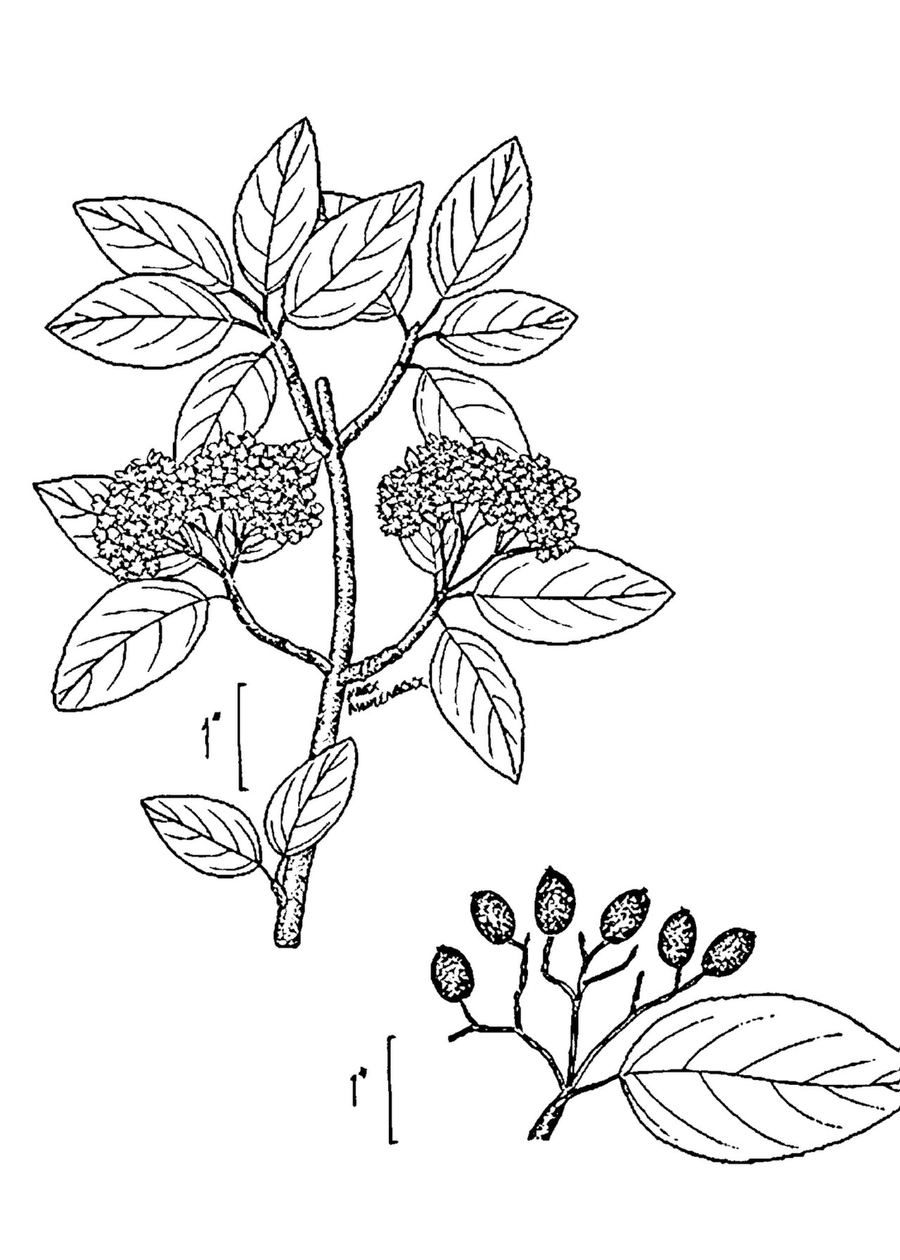
Black haw
Viburnum prunifolium
Herbs & Roots. Native American and Western & European.
Also called Blackhaw, Sweet haw, Stag bush
Aspirin-like; avoid in pregnancyBlack haw is a small North American tree or shrub whose root bark has been used as a women's remedy for cramps.
Did you know? The bark contains salicin, a compound first isolated from willow bark, and chemists later used that family of compounds to develop aspirin.
What it may help, and how strong the proof is
- Women's health. Used for menstrual cramps and other women's complaints. Only tradition and anecdote support this, and no good human trials were found.See the research: No trials in people found yetTraditional proof
- Pain & headaches. The bark contains salicin, a compound related to aspirin that may add to pain relief, but the herb itself has not been tested for pain in people.See the research: No trials in people found yetTraditional proof
Parts of the body
Traditional use
Several Native nations used the bark as a women's tonic. Later American herbalists used it for menstrual cramps, and it is still sold for that today.
How it is classified
- Herbal actions
- Antispasmodic, Analgesic. Energy: neutral.
How people take it
The dried root bark is simmered as a decoction or steeped as a tea, and tinctures and capsules are sold too. No standard dose exists, and studies have not set one.
Decoction, tea, tincture and capsule.
Where to get it
Grows in woodland edges, thickets and fence rows across eastern and central North America. Sold as dried root bark, tinctures and capsules from herb shops and online sellers.
Be careful
Salicin is related to aspirin, so avoid black haw if you are allergic to aspirin, take blood thinners, or have a bleeding disorder unless a doctor agrees. Do not give it to children or teens with a viral illness, because of the risk of Reye's syndrome, a rare but serious condition. Avoid it in pregnancy, since it may affect the uterus, and its safety in breastfeeding is not known.
Avoid if: pregnancy; breastfeeding; children under 12; aspirin allergy; bleeding disorders.
Mixing with other things
- Works well together
Both are viburnum shrubs traditionally used together for uterine cramps.
- Works well together
Both are traditional women's herbs for cramps and childbirth preparation, often sold as blends.
- Use cautionBlood thinners (warfarin, Eliquis, Xarelto, Plavix, daily aspirin)
Salicin is related to aspirin, so black haw may add to blood thinners and raise bleeding risk.
Adds up with others that may slow blood clotting: , , , , , , , , , , , , , and 47 more.
The honest take
Black haw has a long record as a women's cramp remedy in Native and American herbal practice. No good human trials were found for cramps or pain, so the evidence rests on tradition. Because its bark contains aspirin-like salicin, it is not a safe choice in pregnancy, for children, or alongside blood thinners.
Sources
Each “See the research” link opens PubMed, the U.S. National Library of Medicine's index of medical studies, showing only trials and reviews done in people. The number tells you how much a use has been tested, not whether it worked. The proof rating tells you that.
Study counts checked October 2026.