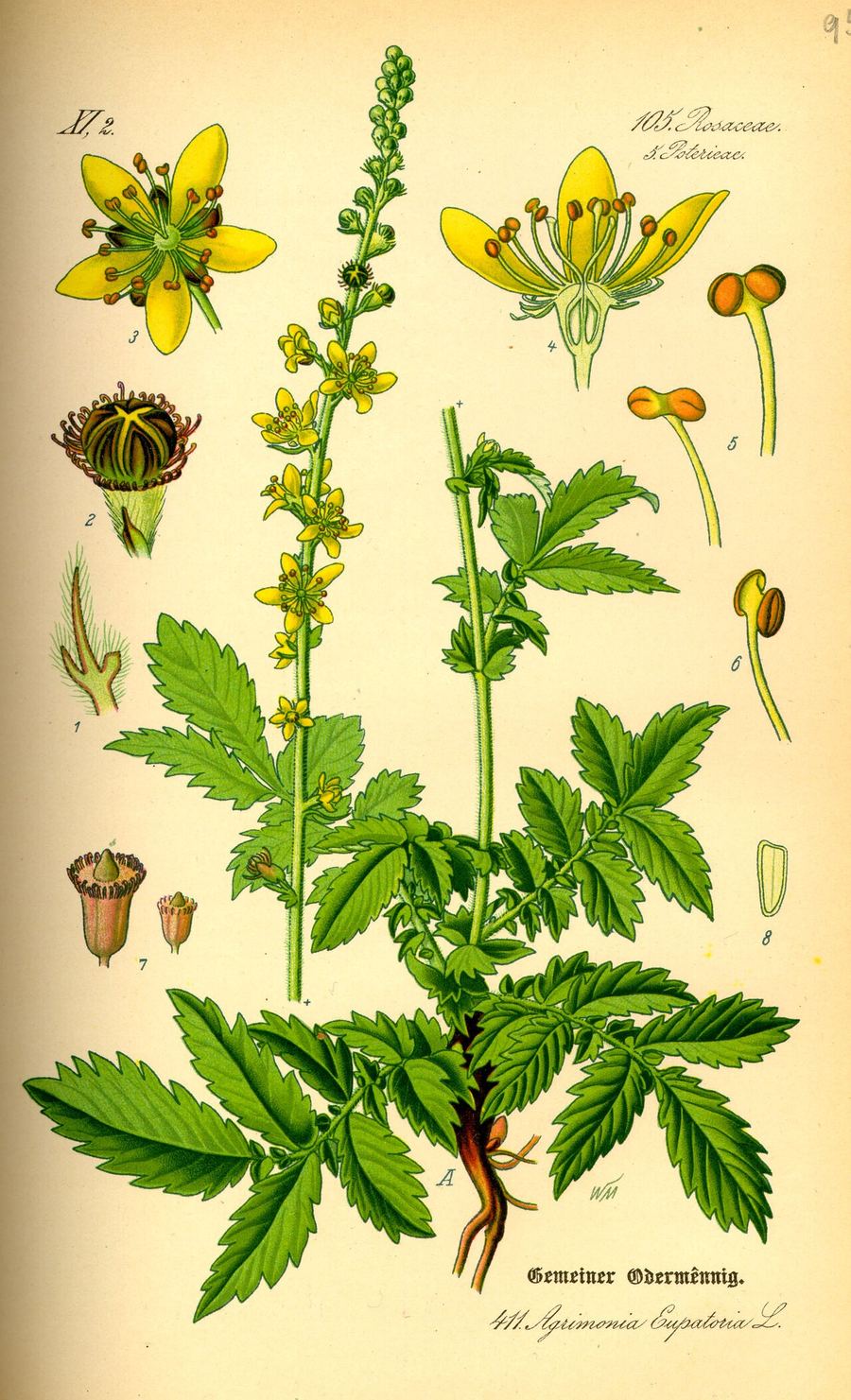
Agrimony
Agrimonia eupatoria
Herbs & Roots. Western & European and Folk & home remedies.
Also called Common agrimony, Sticklewort
Spanish: Agrimonia
May lower blood sugarAgrimony is a tall, yellow-flowered herb of European roadsides and meadows, and its tea is a folk remedy for mild diarrhea and sore mouths.
Did you know? The Latin name may come from a Greek word for a white spot on the eye, because old writers believed the plant helped eye problems.
What it may help, and how strong the proof is
- Digestion & gut health. Used for mild diarrhea. EU herbal regulators accept this based on long use, not clinical trials. See a clinician if diarrhea lasts more than 3 days.See the research: 4 studies in peopleTraditional proof
- Mouth, gums & teeth. Used as a gargle or rinse for mild mouth and throat inflammation. Based on tradition, not on trials.See the research: No trials in people found yetTraditional proof
- Liver. Used as a bitter herb for digestion and the liver. Some lab and animal studies exist, but human liver trials are lacking.See the research: 3 studies in peopleTraditional proof
Parts of the body
Traditional use
European folk medicine used agrimony tea for mild diarrhea, and as a gargle for sore mouth and throat. EU herbal regulators list these traditional uses, which rest on long use rather than trials.
How it is classified
- Herbal actions
- Astringent, Anti-inflammatory, Bitter. Energy: neutral.
How people take it
People usually drink a tea made from the dried flowering tops, or use a cooled tea as a gargle. Research has not set a dose, so follow product labels.
Tea, tincture and capsule.
Where to get it
Grows wild along roadsides, hedges and meadows in Europe and western Asia, and has spread to parts of North America. Sold as dried flowering tops, tea blends, tinctures and capsules.
Be careful
No side effects were reported in the EU assessment, but the herb is not well studied. Its tannins can upset the stomach if taken in strong amounts. Pregnant or breastfeeding people should avoid it, since safety information is lacking.
Avoid if: pregnancy; breastfeeding; children under 12; low blood sugar.
Mixing with other things
- Use cautionDiabetes medicine (metformin, insulin, glipizide, Ozempic)
Animal studies suggest agrimony may lower blood sugar. Taken with diabetes medicines, the combined effect could drop blood sugar too low.
Adds up with others that may lower blood sugar: , , , , , , , , , , , , , and 54 more.
The honest take
Agrimony has a long folk record for mild diarrhea and sore mouths, and EU regulators accept those uses on tradition. Clinical research is thin, and most lab work has not been tested in people. Use it for short periods, and check with a clinician if you take diabetes medicines or are pregnant.
Sources
Each “See the research” link opens PubMed, the U.S. National Library of Medicine's index of medical studies, showing only trials and reviews done in people. The number tells you how much a use has been tested, not whether it worked. The proof rating tells you that.
Study counts checked October 2026.