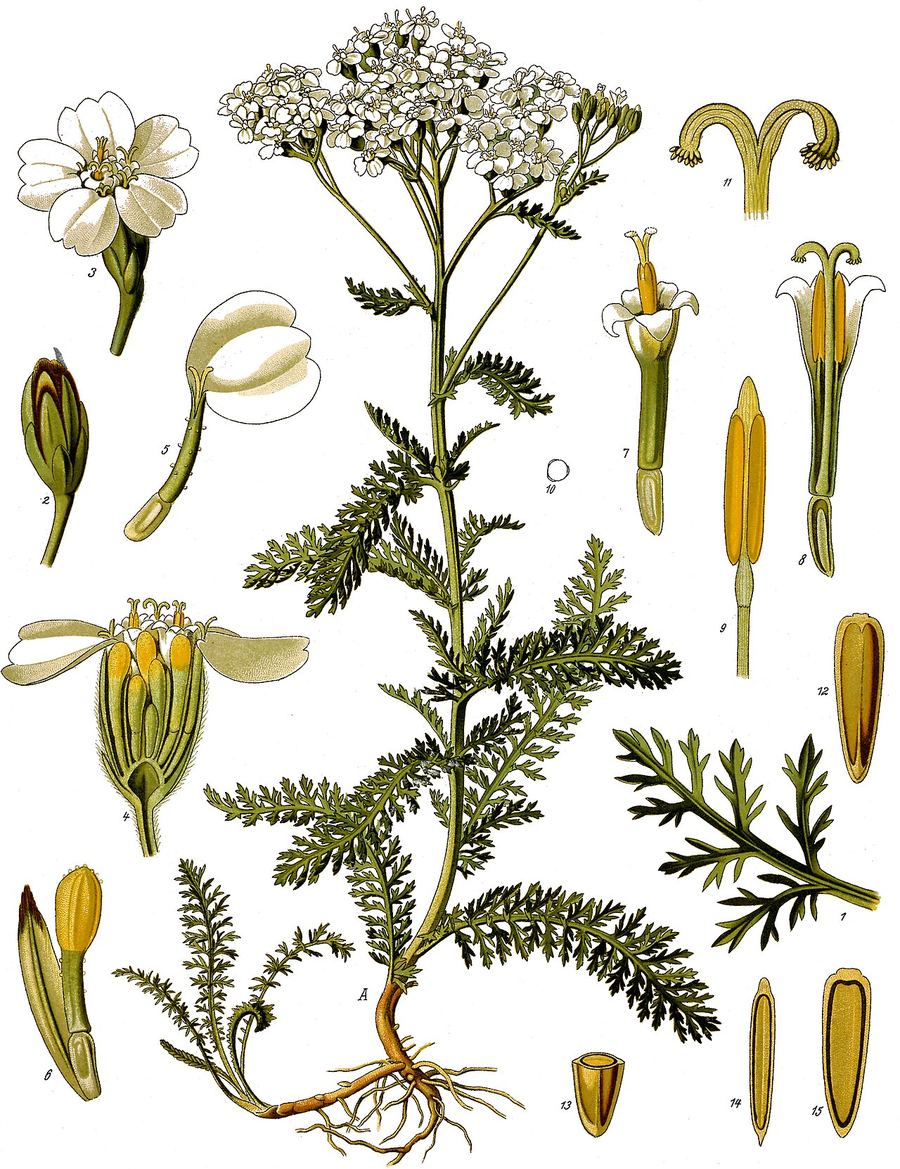
Yarrow
Achillea millefolium
Herbs & Roots. Western & European, Native American and Dr. Sebi's list.
Also called Common yarrow, Milfoil, Nosebleed plant, Soldier's woundwort
Spanish: Milenrama
Allergy risk, avoid in pregnancyYarrow is a feathery wildflower used in folk medicine for cuts, fevers, and digestion, with little human evidence.
Did you know? In Greek legend, the hero Achilles used yarrow to stop his soldiers' bleeding, which is how the plant got its Latin name, Achillea.
What it may help, and how strong the proof is
- Wounds, burns & bites. Used to stop bleeding in folk medicine, but few human studies exist.Traditional proof
- Digestion & gut health. Used as a bitter tonic for indigestion, with little human research.Traditional proof
- Fever. Tea is used to bring on sweating in colds and fevers, mostly from tradition.Traditional proof
Parts of the body
Traditional use
European and Native American healers used yarrow to stop bleeding and to bring on sweating during colds and fevers.
How it is classified
- Herbal actions
- Hemostatic, Diaphoretic, Bitter, Vulnerary. Energy: warming.
How people take it
Dried flowering tops are steeped as tea or made into a tincture. Fresh leaves are crushed onto cuts in folk use. No standard dose is proven.
Tea, tincture, capsule and topical.
Where to get it
Grows wild in fields, meadows, and roadsides across Europe, Asia, and North America, and is also cultivated. Sold as dried herb, tea, tinctures, capsules, and essential oil.
Be careful
Can cause a skin rash in people allergic to daisy-family plants. Avoid it in pregnancy because it may stimulate the uterus. It may lower blood pressure and slow blood clotting, so use caution with those medicines.
Avoid if: pregnancy; ragweed allergy; bleeding disorders.
Mixing with other things
- Works well together
Both were used in old fever and sweating teas.
- Works well together
Both are used together in old European fever teas to bring on sweating.
- Works well together
Both are used together in folk wound salves.
- Works well together
Both are used together in folk wound salves.
- Works well together
Common in old cold and fever tea blends.
- Works well together
A classic European fever and cold tea blend.
- Works well together
Both are astringent herbs used in old women's herbal blends.
- Works well together
Both are traditional styptic herbs used for minor bleeding.
- Use cautionBlood thinners (warfarin, Eliquis, Xarelto, Plavix, daily aspirin)
May slow blood clotting, which could add to blood thinner effects.
- Worth knowingBlood pressure medicine (lisinopril, amlodipine, losartan)
May lower blood pressure in some people.
Adds up with others that may slow blood clotting: , , , , , , , , , , , , , and 40 more.
The honest take
Yarrow has a long folk record as a wound herb and fever tea, with little human proof. Its blood-stopping effect is shown mainly in tradition and lab work. Claims about heavy periods or high blood pressure need more research.