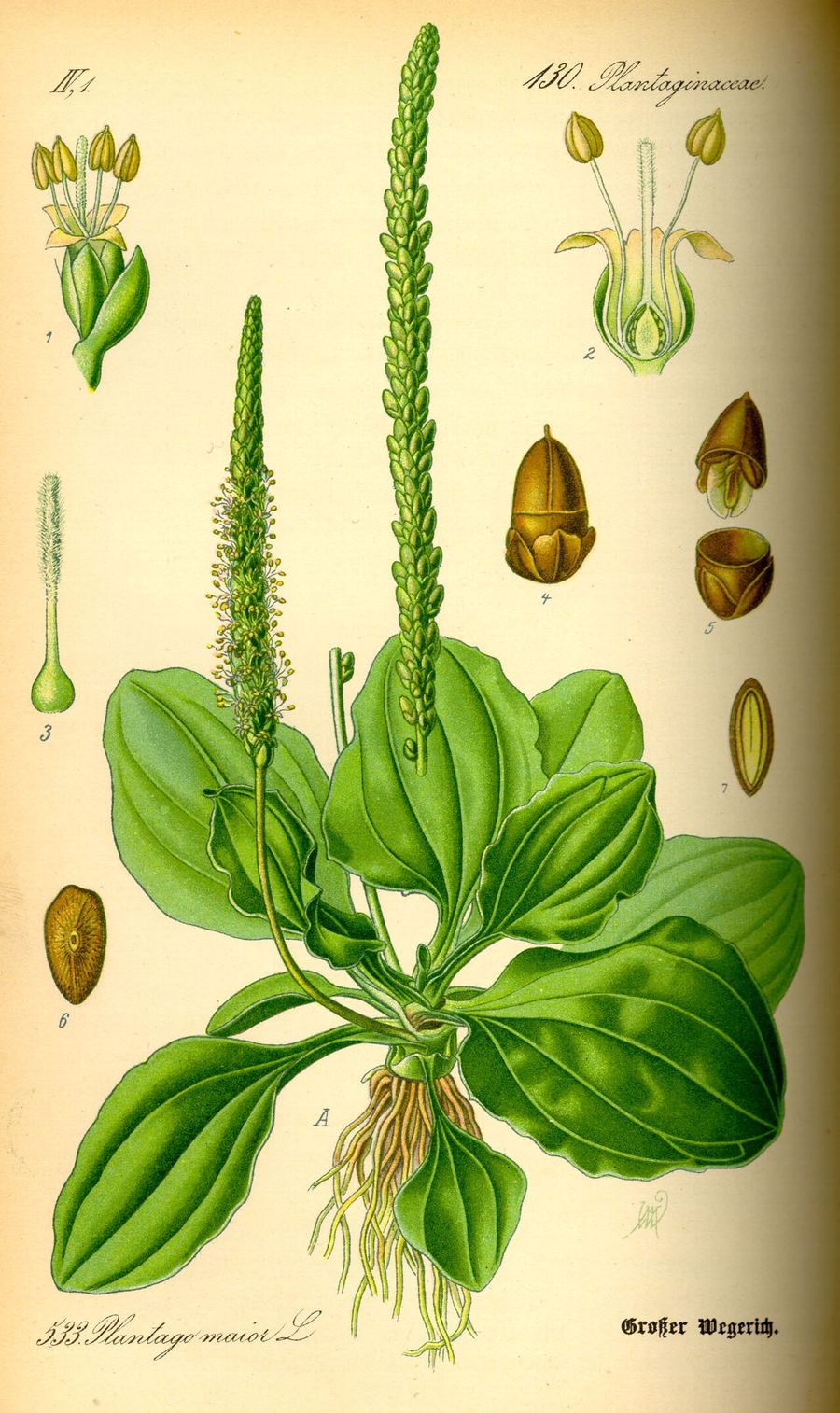
Plantain leaf
Plantago major
Herbs & Roots. Western & European and Native American.
Also called Broadleaf plantain, Greater plantain, White man's foot, Waybread
Spanish: Llantén
Plantain leaf is a common lawn weed used as a folk remedy for insect bites, minor cuts, and coughs.
Did you know? Native Americans called broadleaf plantain 'white man's foot,' because it spread along the trails that European settlers used.
What it may help, and how strong the proof is
- Wounds, burns & bites. Crushed leaves are used on insect bites and small cuts, mostly from tradition and lab work.Traditional proof
- Breathing & asthma. A related species is used in European cough syrups, but plantain leaf itself has little human proof.Traditional proof
Parts of the body
Traditional use
European and Native American healers pressed plantain leaves onto insect bites, stings, and cuts, and used it for coughs.
How it is classified
- Herbal actions
- Vulnerary, Demulcent, Expectorant, Astringent. Energy: cooling.
How people take it
Young leaves are eaten in salads or steamed. Leaves are steeped as tea, or crushed onto bites and minor cuts. European cough syrups usually use a related species, ribwort plantain.
Food, tea, topical and syrup.
Where to get it
A common weed in lawns, fields, and roadsides across Europe, Asia, and North America. Sold as dried leaf, tea, tinctures, and syrups.
Be careful
Generally mild, with rare allergic reactions. Plants picked from roadsides can carry pollution, so forage only from clean places.
Mixing with other things
- Works well together
Both soothing leaves appear together in folk cough blends.
- Works well together
Both are used together in folk salves.
- Works well together
Both are used together in folk topical salves.
- Works well together
Both are soothing herbs used in cough teas and syrups.
- Works well together
Both are used together in folk wound salves.
- Works well together
Both are soothing herbs used together in traditional chest teas.
The honest take
Plantain leaf is a common, low-risk folk remedy for bites and minor cuts, and it is a nutritious green. Its cough benefits come mostly from a related species in European syrups, and the evidence is small. Its wound-healing claims rest mostly on tradition.