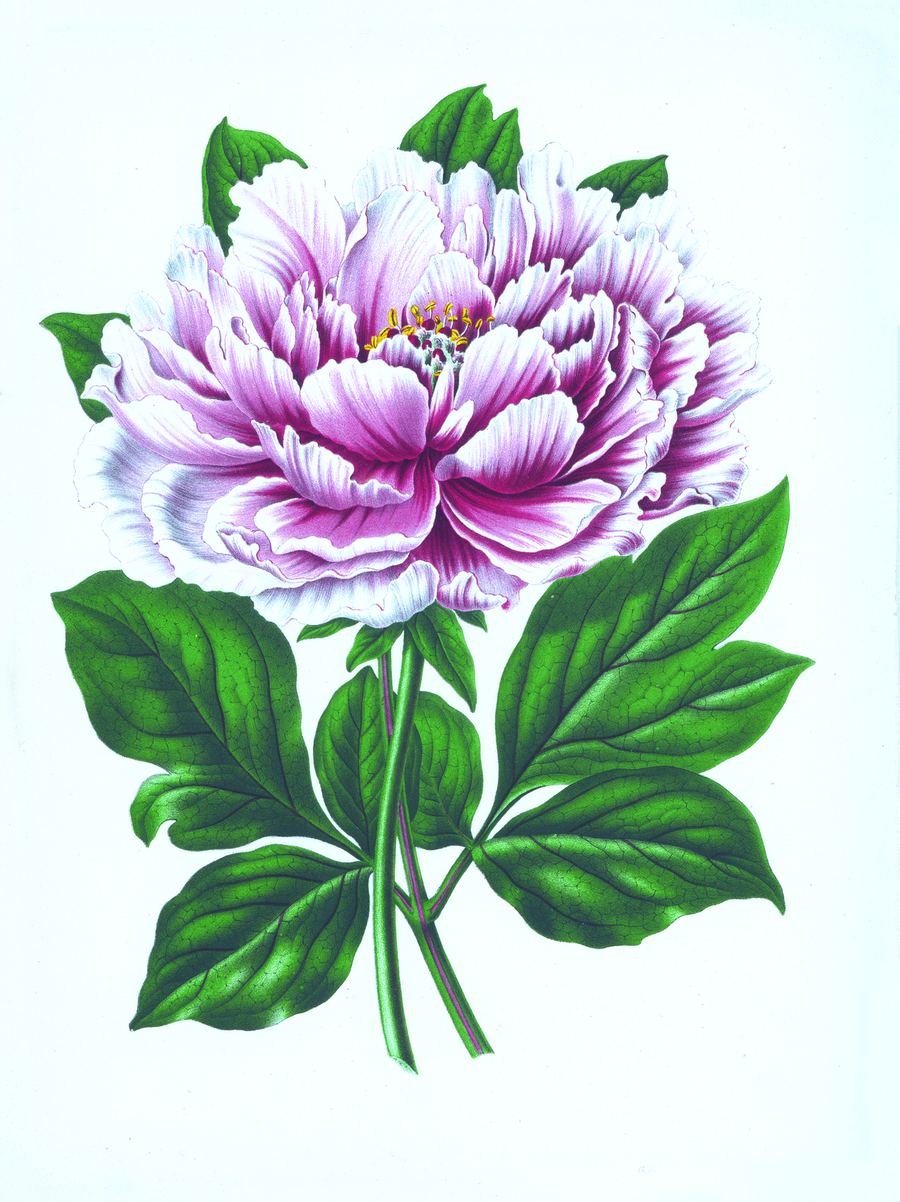
Tree peony bark
Paeonia × suffruticosa · 牡丹皮
Herbs & Roots. Chinese Medicine.
Also called Mu dan pi, Moutan bark, Moutan root bark, Tree peony root bark
Pinyin: Mǔ dān pí
Pregnancy caution; bleeding riskThe root bark of the tree peony, used in Chinese medicine to cool heat in the blood and ease painful, stuck blood.
Did you know? In China the tree peony is called the king of flowers, and the city of Luoyang has held peony festivals for centuries.
What it may help, and how strong the proof is
- Inflammation. Lab and animal studies show anti-inflammatory activity, mainly from a chemical called paeonol. Human trials are lacking.Traditional proof
- Women's health. Used in tradition for painful periods with stuck blood. No good human trials exist.Traditional proof
- Skin. Used in tradition for rashes and red swellings. Lab studies only.Traditional proof
Parts of the body
Traditional use
Traditional Chinese Medicine has used peony bark for heat in the blood, such as nosebleeds, rashes and red swellings, and for painful periods with stuck blood. It appears in Dan Zhi Xiao Yao San and Qing Hao Bie Jia Tang.
How it is classified
- Herbal actions
- Anti-inflammatory, Circulatory, Antispasmodic. Energy: cooling.
- Chinese medicine
- 牡丹皮 Clear heat. Nature: cool. Flavour: bitter, pungent. Enters the Heart, Liver and Kidney channels.
How people take it
Traditional doses are about 6 to 12 grams of dried root bark in a decoction. Human studies are few, so no proven dose exists.
Decoction and capsule.
Where to get it
A woody shrub grown in gardens and farms in China, Japan and Korea. The root bark is dried and sold as slices, capsules and extracts.
Be careful
Traditional texts advise caution in pregnancy because the bark can move blood. Paeonol slows platelets in lab studies, so bleeding risk may rise with blood thinners.
Avoid if: pregnancy; bleeding disorders; before surgery.
Mixing with other things
- Works well together
Dan Zhi Xiao Yao San (Moutan and Gardenia Free and Easy Wanderer) pairs them to clear heat and ease moods that feel stuck or irritable.
- Works well together
Qing Hao Bie Jia Tang (Artemisia and Turtle Shell Decoction) pairs them for long-lasting heat and fevers that come at night.
- Works well together
Also in Dan Zhi Xiao Yao San, where dong quai nourishes blood.
- Works well together
Qing Hao Bie Jia Tang (Artemisia and Turtle Shell Decoction) pairs them with rehmannia for lingering heat.
- Use cautionBlood thinners (warfarin, Eliquis, Xarelto, Plavix, daily aspirin)
Lab studies show paeonol slows platelets. With blood thinners, bleeding risk may rise. Human data are lacking.
Adds up with others that may slow blood clotting: , , , , , , , , , , , , , and 40 more.
Found in these formulas
Six Flavor Rehmannia (TCM)
The honest take
Tree peony bark has a respected role in Chinese formulas, and lab work shows several active chemicals. Human trials are few, so claims for pain, skin or period problems are mostly traditional. Its effect on bleeding with blood thinners deserves care.