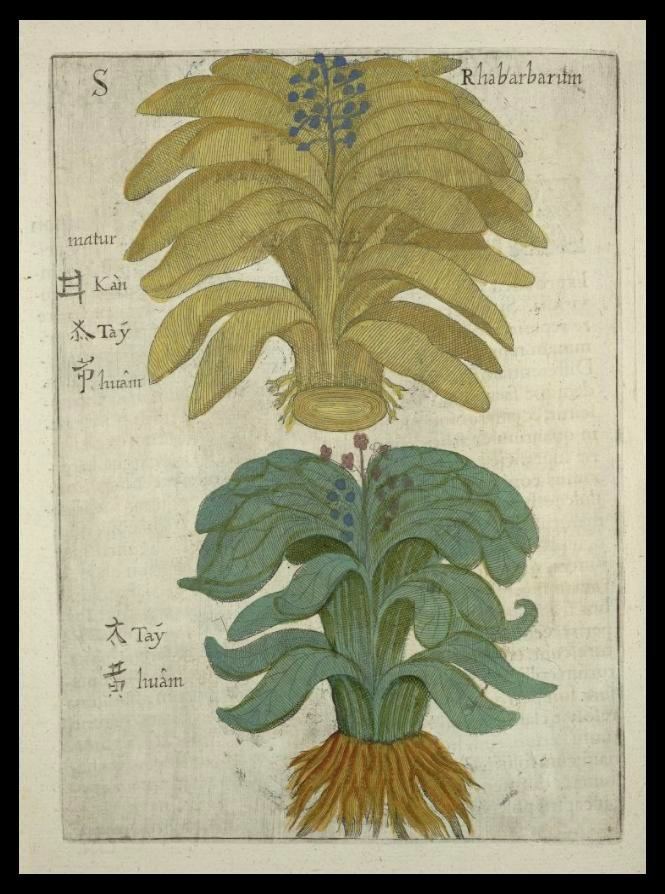
Rhubarb root
Rheum palmatum · 大黄
Herbs & Roots. Chinese Medicine and Western & European.
Also called Da huang, Turkey rhubarb, Chinese rhubarb, Rhei rhizoma
Pinyin: Dà huáng
Spanish: Ruibarbo
Strong laxative; avoid long useThe dried root of a large Asian plant, used as a strong laxative in Chinese and Western herbal medicine.
Did you know? Chinese rhubarb was a prized trade good on the Silk Road, while the leaves of garden rhubarb, a related food plant, contain toxic oxalic acid.
What it may help, and how strong the proof is
- Constipation. It works as a laxative within hours to days. Controlled trials are few, and long-term use can cause dependence.Early proof
- Infections. Lab studies show some antibacterial effects. Human proof is lacking.Traditional proof
- Cleansing & detox. Sold as a colon cleanse. The effect is a laxative effect. No proof shows it removes toxins from the body.Not supported
Parts of the body
Traditional use
Traditional Chinese Medicine has used rhubarb root for constipation, heat in the gut and bleeding from heat. Western herbalists used it as a laxative, and it is part of Essiac-style blends marketed for cancer, which lack proof.
How it is classified
- Herbal actions
- Laxative, Astringent, Antimicrobial. Energy: cooling.
- Chinese medicine
- 大黄 Purge. Nature: cold. Flavour: bitter. Enters the Spleen, Stomach, Large Intestine, Liver and Pericardium channels.
How people take it
Traditional doses are about 3 to 15 grams of dried root in a decoction, often added near the end of cooking. Laxative doses vary by person. Long-term daily use is not advised.
Decoction, capsule, powder and tea.
Where to get it
Grows in mountain areas of western China. Dried root is sold as slices or powder in herb shops, and as capsules and tea blends. Garden rhubarb is a different plant, and its leaves are toxic.
Be careful
A strong laxative that can cause cramps, diarrhea and potassium loss, especially with long use. Oxalates in rhubarb may raise kidney risk, and animal studies hint at liver harm from high or long-term doses. Avoid it in pregnancy, breastfeeding, children under 12 and bowel blockage.
Avoid if: pregnancy; breastfeeding; children under 12; kidney stones; bowel blockage.
Mixing with other things
- Works well together
Da Cheng Qi Tang (Major Order Qi Decoction) pairs rhubarb with magnolia bark to move stuck bowel contents.
- Works well together
Paired in Yin Chen Hao Tang to move damp heat out through the bowels.
- Works well together
Turkey rhubarb is also in Essiac tea. It is a strong laxative, so it needs care.
- Use cautionWater pills (furosemide, hydrochlorothiazide)
Both can lower potassium, so together they may cause dangerous potassium loss. The EU herbal monograph advises checking with a doctor first.
- Use cautionHeart rhythm medicine (digoxin, amiodarone)
Low potassium makes heart medicines such as digoxin more dangerous, and rhubarb can lower potassium.
Found in these formulas
Essiac tea (Native)
The honest take
Rhubarb root is a potent laxative that works in people, and it has a long history in Chinese and Western herbal medicine. Human trials are few, and long-term use is discouraged because of potassium loss and possible liver risk in animal studies. It is not a proven detox or cleanse.