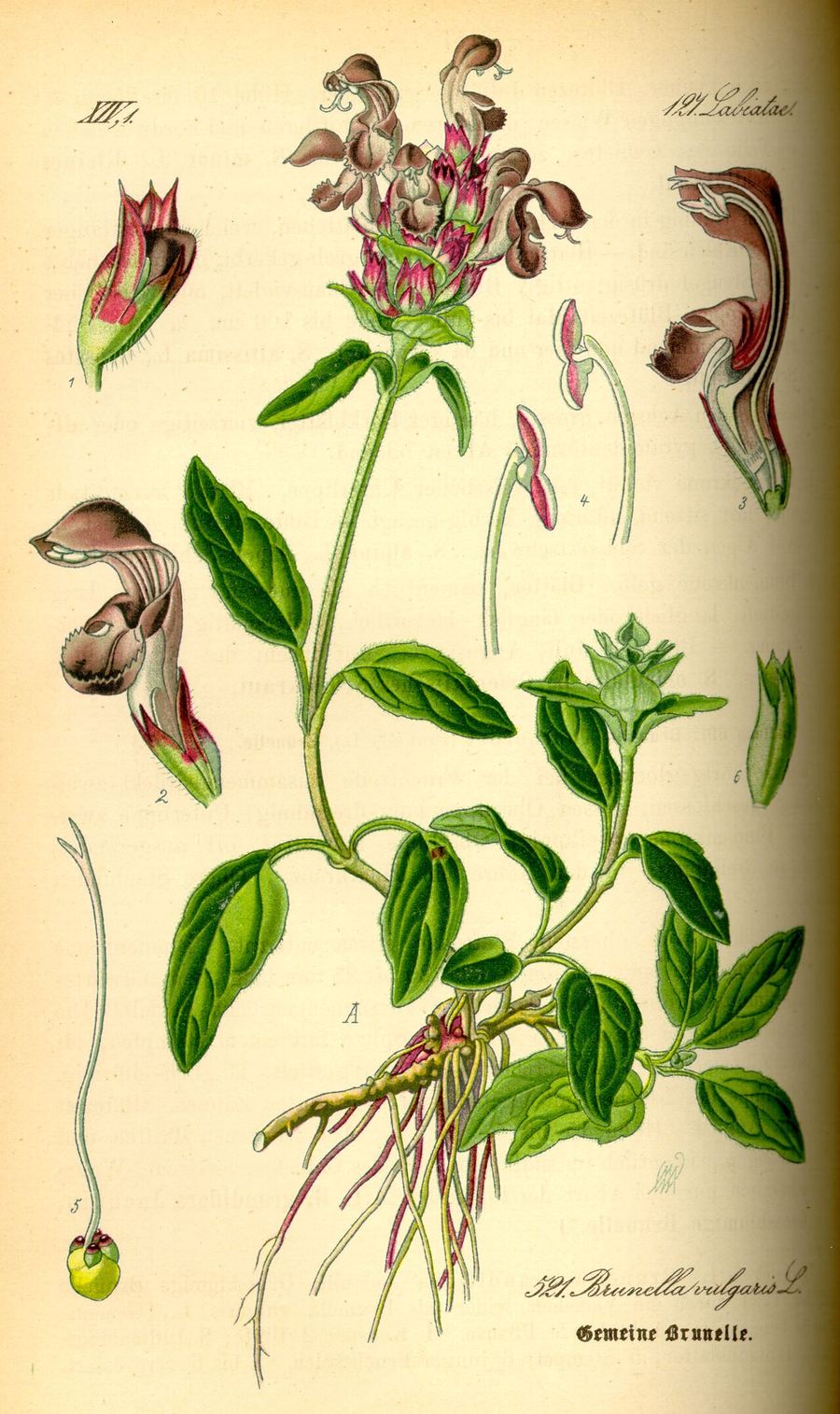
Self-heal
Prunella vulgaris · 夏枯草
Herbs & Roots. Chinese Medicine and Western & European.
Also called Xia ku cao, Heal-all, Selfheal, Prunella spike
Pinyin: Xià kū cǎo
Little human safety dataA common lawn weed whose dried flower spikes are used in Chinese medicine for red, painful eyes and swelling.
Did you know? English folk names such as heal-all came from old European herbals that praised the plant for wounds and sores.
What it may help, and how strong the proof is
- Eyes & vision. Used in tradition for red, swollen eyes. No good human eye trials exist.Traditional proof
- Sore throat & cough. Western herbalists use it for sore throat. Little human research exists.Traditional proof
- Infections. Lab studies show antiviral activity against some viruses. Human trials are lacking.Traditional proof
Parts of the body
Traditional use
Traditional Chinese Medicine has used the spikes for red, swollen, painful eyes and for swelling in the neck. Western herbalists have used the plant for sore throat and minor wounds.
How it is classified
- Herbal actions
- Astringent, Anti-inflammatory, Antiviral. Energy: cooling.
- Chinese medicine
- 夏枯草 Clear heat. Nature: cold. Flavour: pungent, bitter. Enters the Liver and Gallbladder channels.
How people take it
Traditional decoctions use about 9 to 15 grams of dried spikes. A cup of tea is common. Human doses are not established.
Tea, decoction and tincture.
Where to get it
A low-growing plant found on lawns and roadsides across Europe, Asia and North America. Spikes are dried for herb shops, and tinctures and tea blends are sold online.
Be careful
Generally mild. Rare allergic reactions, such as skin rash, may occur. Pregnancy and breastfeeding are not well studied, so avoid them.
Avoid if: pregnancy; breastfeeding.
Mixing with other things
- Works well together
Both are used in Chinese medicine for red, sore eyes from liver heat.
The honest take
Self-heal is a common weed with a long history in Chinese and Western herbal use. Its modern evidence is mostly lab and animal work, with no strong human trials for eyes, throat, or viruses. Use it as a traditional herb with little proof, not as a replacement for eye or throat care.