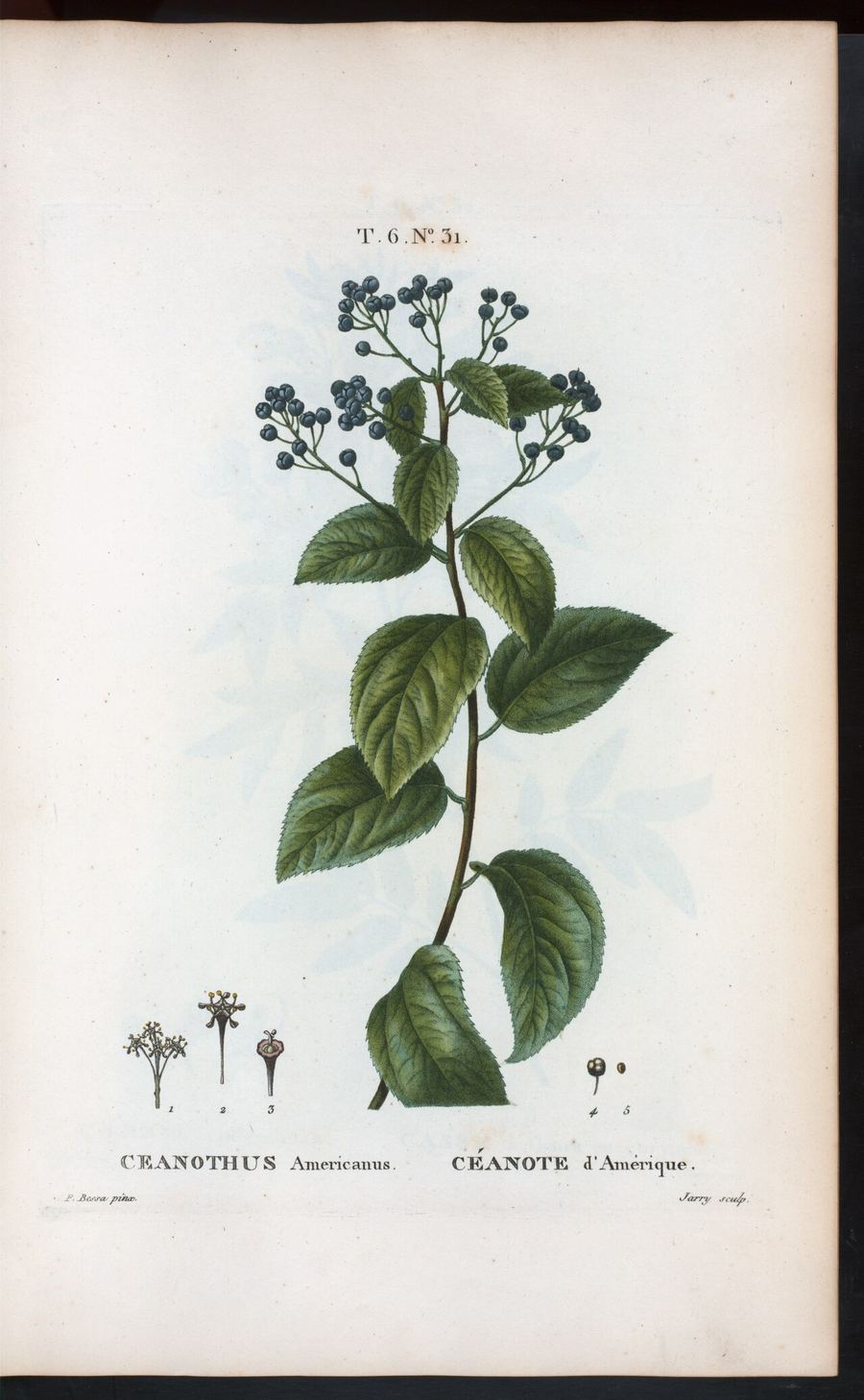
Red root
Ceanothus americanus
Herbs & Roots. Native American and Western & European.
Also called New Jersey tea, Redroot
Little safety dataA low shrub of eastern North America whose leaves and root have been brewed as a tea for sore throats and diarrhea.
Did you know? Colonists brewed its leaves as a stand-in for black tea during the American Revolution, one reason it is called New Jersey tea.
What it may help, and how strong the proof is
- Sore throat & cough. Tea is used for sore throat and cough. No good human studies exist.Traditional proof
- Digestion & gut health. Used for mild diarrhea and stomach upset. No good human studies exist.Traditional proof
Parts of the body
Traditional use
Native peoples brewed the leaves and roots for sore throats, coughs and digestive upsets. Eclectic doctors in the 1800s used the root for swollen glands.
How it is classified
- Herbal actions
- Astringent, Expectorant. Energy: neutral.
How people take it
Tea is made from about 1 to 2 teaspoons of dried leaves or root bark per cup. No tested dose exists, so keep it short-term.
Tea and tincture.
Where to get it
Grows in dry woods, prairies and roadsides of eastern and central North America. Usually wild-picked and sold as dried leaf, root and tincture.
Be careful
Contains tannins, which can cause constipation or stomach upset in large amounts. Little safety research exists. Avoid in pregnancy, breastfeeding and in children.
Avoid if: pregnancy; breastfeeding; children under 12.
Mixing with other things
No specific mixing notes on file. That doesn't prove it's safe with everything; ask a pharmacist about your full list.
The honest take
Red root is a mild, traditional tea with almost no modern research behind it. Its sore throat and gut claims have not been tested in good trials. Think of it as a folk tea, not as a medicine.