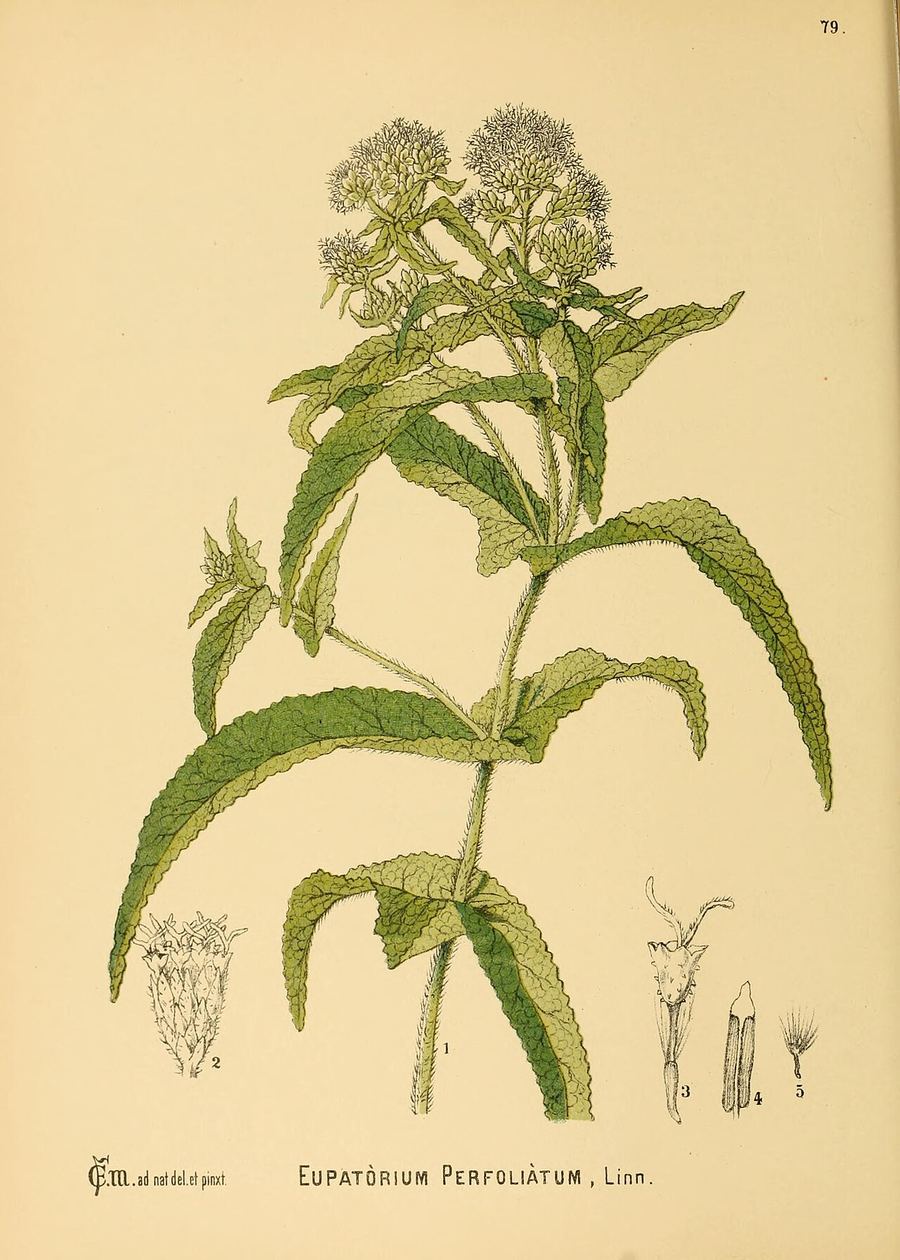
Boneset
Eupatorium perfoliatum
Herbs & Roots. Native American and Western & European.
Also called Thoroughwort, Feverwort, Ague weed
Contains liver-harming alkaloidsA tall white-flowered wetland plant once used for fevers and flu, but it contains chemicals that can harm the liver.
Did you know? Its leaves join around the stem, so the stem looks like it pokes right through them, which gives the plant its name perfoliatum.
What it may help, and how strong the proof is
- Fever. Used to bring on sweating for fever in folk medicine. No good human studies exist.Traditional proof
- Breathing & asthma. Used for coughs and chest colds. No good human studies exist.Traditional proof
Parts of the body
Traditional use
Native peoples used it for fevers and aches. In the 1800s, Eclectic doctors used it for colds, flu and what they called breakbone fever, an old name for dengue.
How it is classified
- Herbal actions
- Diaphoretic, Expectorant, Immune booster. Energy: neutral.
How people take it
Tea is made from dried leaves and flowering tops, taken for short periods during a cold. No tested dose exists. Not for daily or long-term use.
Tea and tincture.
Where to get it
A tall plant of wet meadows, stream banks and ditches in eastern and central North America. Sold as dried herb, tea and tincture from wild or farmed sources.
Be careful
Contains pyrrolizidine alkaloids, chemicals that can injure the liver with long use or high doses. They may also harm an unborn baby. Avoid in pregnancy, breastfeeding and with liver disease, and do not use it for weeks at a time.
Avoid if: pregnancy; breastfeeding; liver disease.
Mixing with other things
- Works well together
Both were used in old flu and fever teas.
- Works well together
Both were used in old fever and sweating teas.
The honest take
Boneset was a common fever remedy, but there is no good human proof that it works. It contains pyrrolizidine alkaloids, which can damage the liver with long or heavy use. Skip it unless a clinician advises it, and never use it during pregnancy.