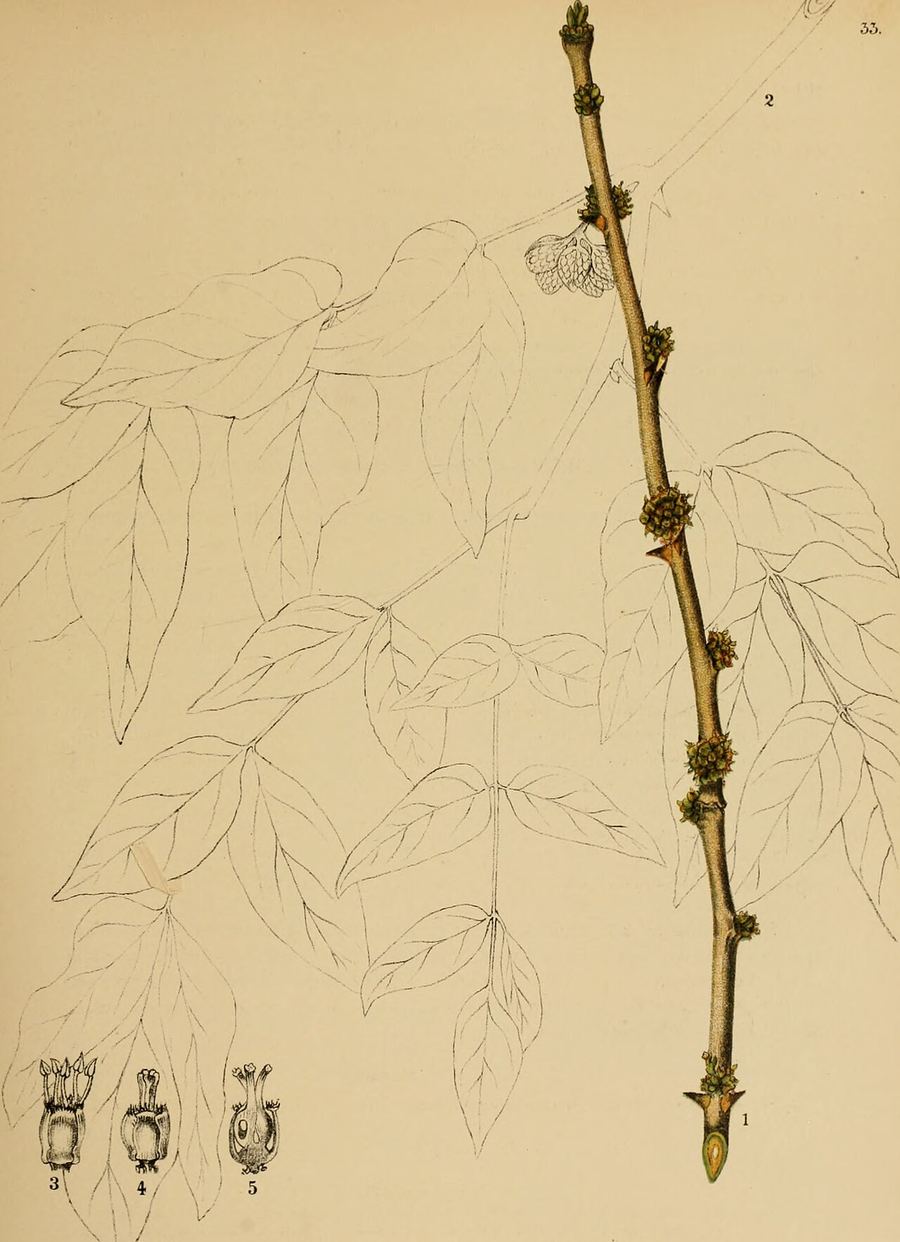
Prickly ash
Zanthoxylum americanum
Herbs & Roots. Native American and Western & European.
Also called Toothache tree, Northern prickly ash, Yellowwood
Limited safety dataA thorny North American shrub whose bark numbs the mouth, long used for toothache and joint pain.
Did you know? It belongs to the same genus as Sichuan pepper, the spice that makes lips tingle.
What it may help, and how strong the proof is
- Mouth, gums & teeth. Chewing the bark numbs the mouth, and it is a traditional toothache remedy. Human trials are missing.Traditional proof
- Joint pain & arthritis. Used for arthritis and joint pain. No good human trials exist.Traditional proof
Parts of the body
Traditional use
Native peoples chewed the bark for toothache. Settlers and Eclectic doctors later used it for rheumatism and poor circulation.
How it is classified
- Herbal actions
- Analgesic, Circulatory, Stimulant. Energy: warming.
How people take it
Traditionally, a small piece of bark is chewed for toothache, and tea or tincture is used for joint pain. No tested dose exists.
Tincture, tea and powder.
Where to get it
Grows as a thorny shrub or small tree in woods and thickets of eastern and central North America. Bark is wild-cut or sold as dried bark, tinctures and tea blends.
Be careful
Chewing the bark causes strong tingling and numbness. Large amounts may upset the stomach. The thorny bark can irritate skin when handled. Avoid in pregnancy and breastfeeding, since it has not been studied.
Avoid if: pregnancy; breastfeeding.
Mixing with other things
- Works well together
Both are old toothache remedies that numb the mouth. Clove oil has more study.
The honest take
Prickly ash has a long history as a toothache remedy, and its numbing effect is real. Modern human studies for its pain and joint claims are missing. Do not use it for a dental infection, which needs a dentist.