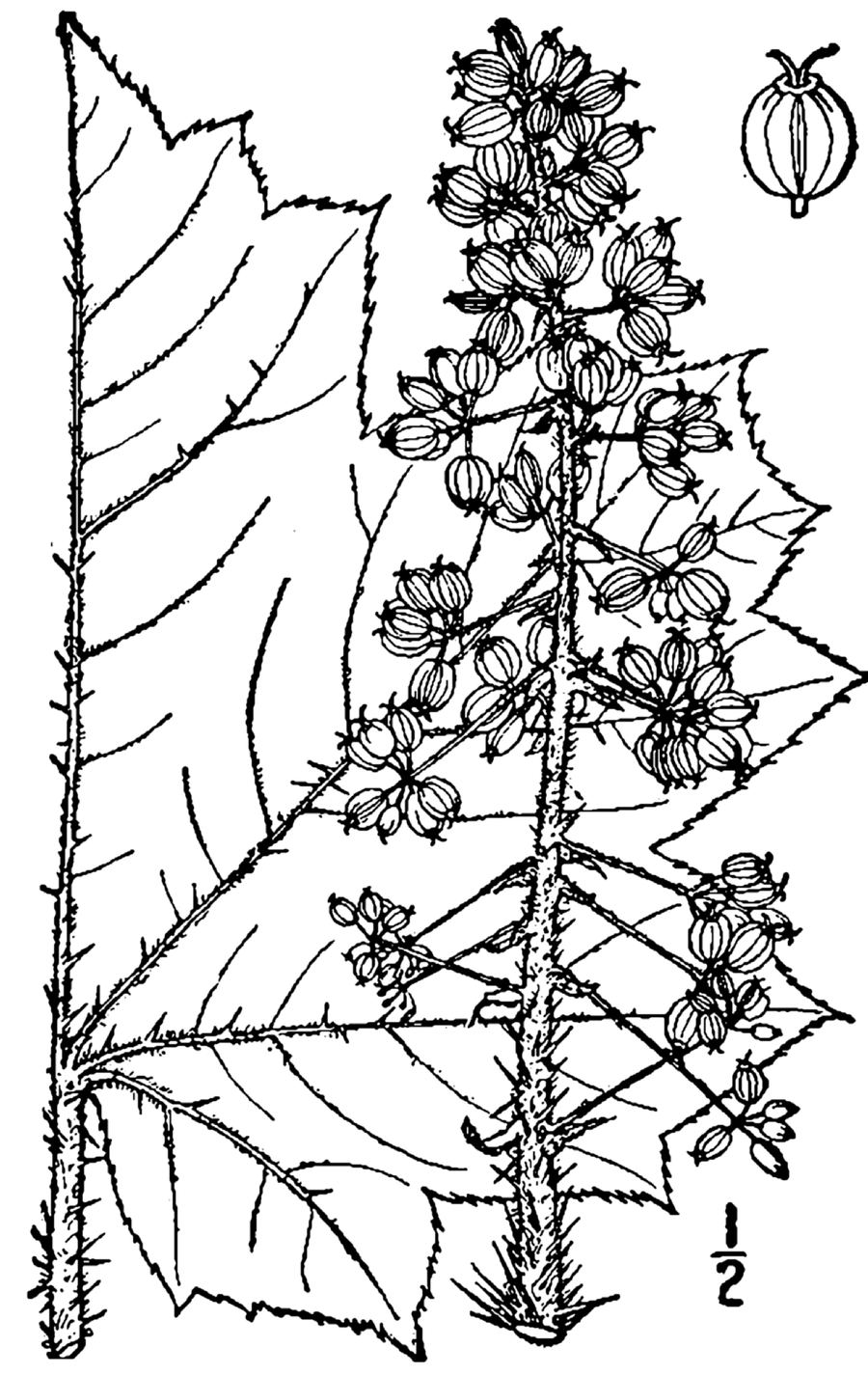
Devil's club
Oplopanax horridus
Herbs & Roots. Native American.
Also called Alaska ginseng
Little safety dataA spiny shrub of the Pacific Northwest and Alaska whose root and bark were used by Indigenous healers for pain and blood sugar.
Did you know? Its stems are covered in long, sharp spines that can break off in the skin and cause painful wounds.
What it may help, and how strong the proof is
- Blood sugar. Traditional use for diabetes. Few studies exist, and no good human trials have been done.Traditional proof
- Pain & headaches. Used for arthritis and muscle aches. Few studies exist.Traditional proof
Parts of the body
Traditional use
Indigenous peoples of the Pacific Northwest and Alaska used the root and bark for pain, colds, stomach trouble and blood sugar problems.
How it is classified
- Herbal actions
- Hypoglycemic, Analgesic, Anti-inflammatory. Energy: neutral.
How people take it
The root and bark are made into tea or tincture. No tested doses exist, and folk recipes vary widely.
Tea, tincture and powder.
Where to get it
A shrub of moist forests along the Pacific coast from Washington to Alaska. Roots and bark are dug or cut from wild plants, which harms the plant. Sold as dried root, tinctures and capsules.
Be careful
Little safety research exists. Handling the stems can cause skin rash and painful spine punctures. Avoid in pregnancy and breastfeeding. Because it was used for blood sugar, people on diabetes medicines should talk to a doctor first.
Avoid if: pregnancy; breastfeeding.
Mixing with other things
- Use cautionDiabetes medicine (metformin, insulin, glipizide, Ozempic)
May push blood sugar lower. Check your levels more often.
Adds up with others that may lower blood sugar: , , , , , , , , , , , , , and 39 more.
The honest take
Devil's club has deep roots in Indigenous healing, but there is almost no modern research on its effects. Its claims for diabetes and pain have not been tested in good human studies. Its spines are a real injury risk when harvesting.