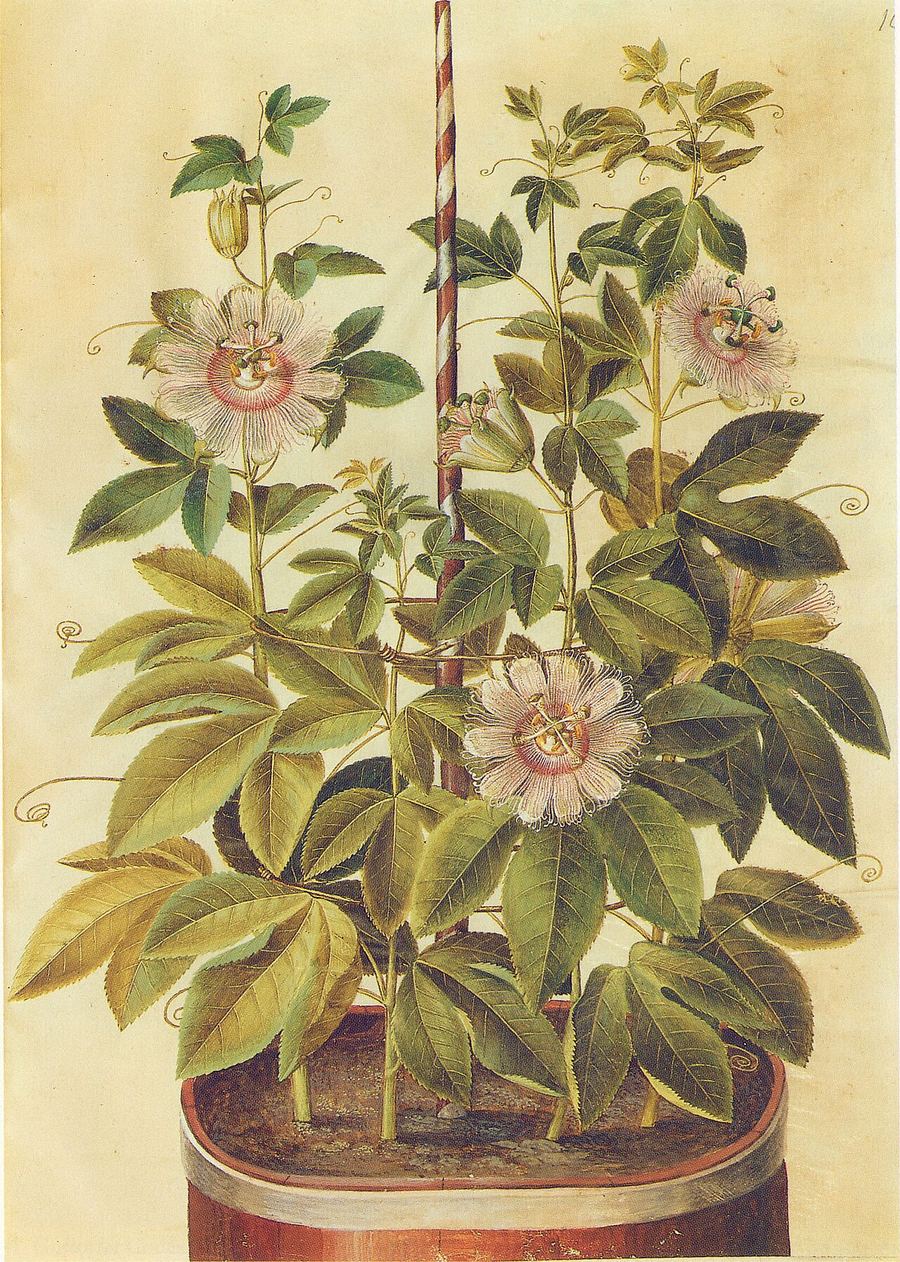
Passionflower
Passiflora incarnata
Herbs & Roots. Western & European and Native American.
Also called Maypop, Passion vine, Purple passionflower
Spanish: Pasionaria
Adds to sedating medicinesPassionflower is a climbing vine whose leaves and flowers are used as a calming tea for nerves and sleep.
Did you know? Spanish missionaries in the Americas named the flower for the Passion of Christ, seeing its parts as symbols of the crucifixion.
What it may help, and how strong the proof is
- Stress & anxiety. Small trials suggest less anxiety, but the studies are short and small.Early proof
- Sleep. Small trials suggest better sleep quality, but the evidence is early.Early proof
Parts of the body
Traditional use
Native American peoples in the southeastern United States used passionflower as a calming herb, and European herbalists later adopted it for nervous tension.
How it is classified
- Herbal actions
- Sedative, Nervine, Antispasmodic. Energy: cooling.
How people take it
Leaves and flowers are steeped as tea, or taken as tincture or capsules. Trials usually used standardized extracts, and no standard dose is proven.
Tea, tincture and capsule.
Where to get it
Native to the southeastern United States and grown widely as an ornamental vine. Sold as dried herb, tea, tinctures, and capsules. Passion fruit comes from a different species, so it is not the same herb.
Be careful
Usually well tolerated. It can cause drowsiness, dizziness, and confusion, so avoid driving after a dose. It is not well studied in pregnancy, so it is best avoided then.
Avoid if: pregnancy; before surgery.
Mixing with other things
- Works well together
Often combined in calming tea blends.
- Works well together
Often combined in calming sleep blends.
- Works well together
Often combined in calming sleep blends.
- Works well together
Common together in folk nerve blends.
- Works well together
Often blended with passionflower for sleep and anxiety.
- Use cautionSleep or anxiety medicine (Ambien, Xanax, Ativan)
Adds to the effects of sedating medicines.
- Use cautionAlcohol (beer, wine, spirits)
Adds to the drowsy effect of alcohol.
Adds up with others that can make you drowsy: , , , , , , , , , , , , , and 14 more.
Found in these formulas
Sleepy-time blend (Western)
The honest take
Passionflower has a small set of human trials for anxiety and sleep, with some positive results. The studies are small and short, so the evidence is early. It may suit some people as a gentle option, but it is not a proven replacement for medical care for anxiety or insomnia.