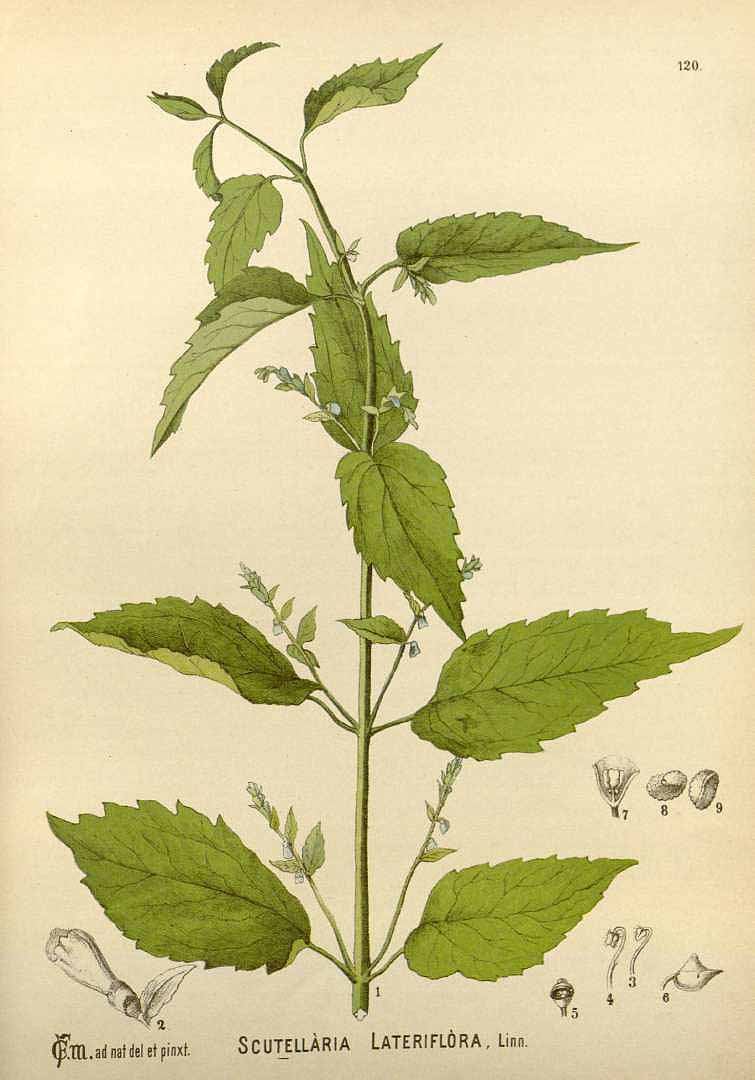
Skullcap
Scutellaria lateriflora
Herbs & Roots. Native American and Western & European.
Also called American skullcap, Mad dog skullcap, Helmet flower
Spanish: Escutelaria
Rare liver injury reportedAmerican skullcap is a wild mint-family plant used in folk medicine for nerves and sleep, with very little modern research.
Did you know? The folk name 'mad dog skullcap' comes from an old belief that the herb helped with rabies bites, a claim with no proof behind it.
What it may help, and how strong the proof is
- Stress & anxiety. Used for nerves and tension, but there is almost no human research.Traditional proof
- Sleep. Used as a folk sleep aid, but there are no good human trials.Traditional proof
Parts of the body
Traditional use
Native American healers and later European-American herbalists used skullcap for nerves, tension, headaches, and sleep.
How it is classified
- Herbal actions
- Nervine, Sedative, Antispasmodic. Energy: cooling.
How people take it
Steeped as tea or taken as tincture or capsules. No standard dose is proven, and product quality varies.
Tea, tincture and capsule.
Where to get it
Native to eastern North America, growing in wet woods and meadows. Sold as dried herb, tinctures, teas, and capsules, and some past products were adulterated.
Be careful
Usually mild in tea, but rare liver injury has been linked to skullcap products, often blends or contaminated lots. Stop and see a doctor if you notice yellow skin, dark urine, or belly pain.
Avoid if: liver disease; pregnancy; before surgery.
Mixing with other things
- Works well together
Both are nervine herbs often used together in folk blends.
- Works well together
A traditional nerve and sleep combination.
- Works well together
Common together in folk nerve blends.
- Works well together
Both are nervine herbs used together in traditional calming teas.
- Use cautionSleep or anxiety medicine (Ambien, Xanax, Ativan)
Likely adds to sedatives, though few studies have tested this.
- Use cautionAlcohol (beer, wine, spirits)
Alcohol adds to the drowsiness.
Adds up with others that can make you drowsy: , , , , , , , , , , , , , and 14 more.
The honest take
Skullcap has a long folk use for nerves and sleep, but there are almost no good human studies. Its safety record is also unclear, because past products were contaminated with germander and some blends were linked to liver injury. Consider it unproven, and avoid it if you have liver disease.