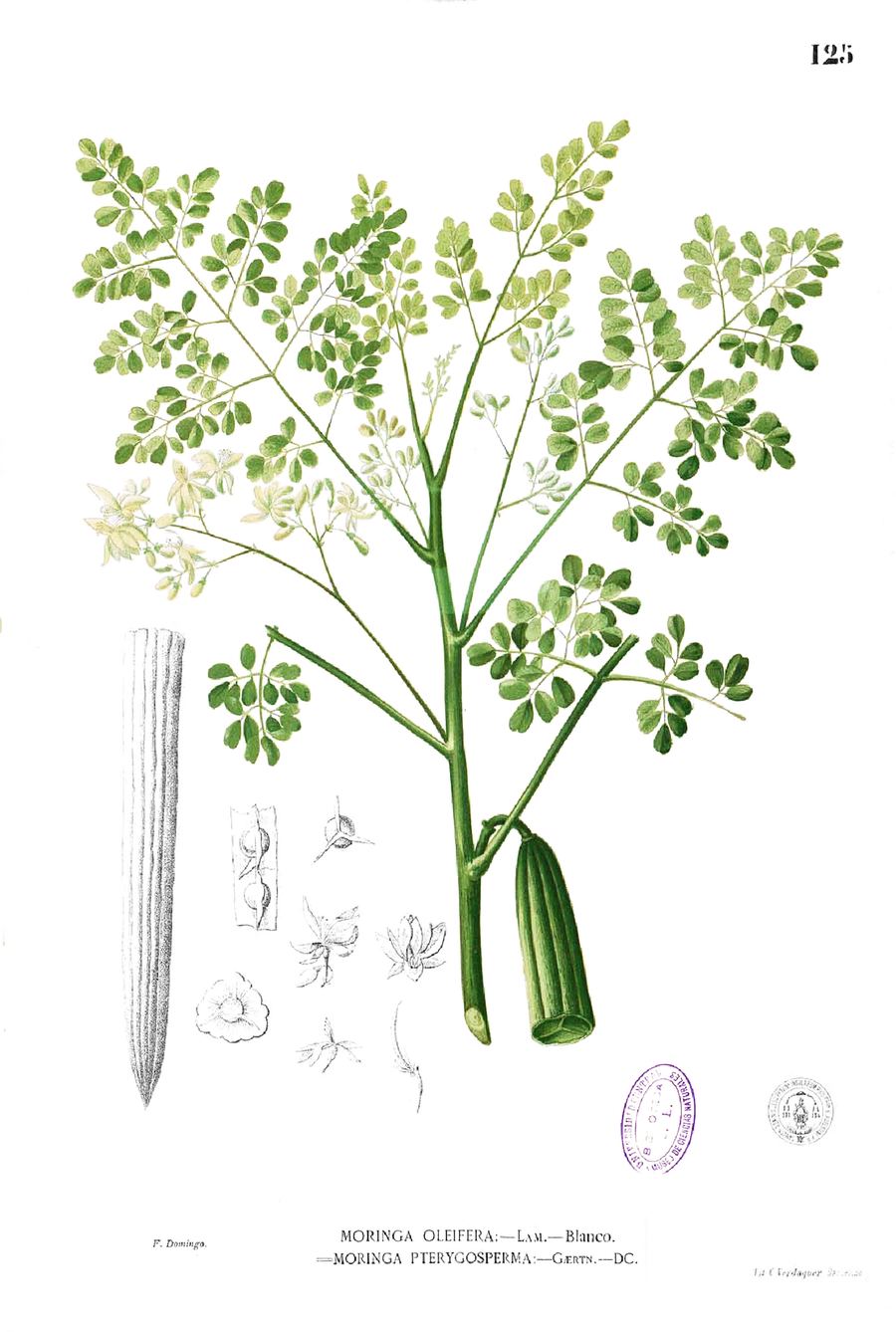
Moringa
Moringa oleifera · शिग्रु
Herbs & Roots. Ayurveda, African and Caribbean.
Also called Drumstick tree, Horseradish tree, Malunggay, Ben oil tree
Sanskrit: शिग्रु (Shigru)
Root and bark are toxicMoringa is a fast-growing tree whose leaves and pods are eaten as food, and whose leaf powder is sold as a supplement.
Did you know? Its long, thin seed pods look like drumsticks, which is why many people call it the drumstick tree.
What it may help, and how strong the proof is
- Blood sugar. Small randomized trials in adults with type 2 diabetes often found lower fasting blood sugar after leaf powder or capsules. The trials are small and short, and the drop in HbA1c, a blood test that reflects about three months of blood sugar, is less consistent.Early proof
- Women's health. Small trials have tested it to raise breast milk volume, including one placebo-controlled trial of 88 new mothers. Larger and better trials are needed before anyone can be sure.Early proof
- Inflammation. Lab and animal studies show anti-inflammatory and antioxidant effects. Human proof for swelling or pain is limited.Traditional proof
Parts of the body
Pancreas & blood sugar, Hormones & reproduction, Immune system, Joints
Traditional use
Ayurveda in India has used moringa, called shigru, for centuries. In parts of Africa and the Caribbean, people cook the leaves into soups and brew them as tea.
How it is classified
- Herbal actions
- Nutritive, Galactagogue, Hypoglycemic, Antioxidant. Energy: warming.
- Ayurveda
- Calms Vata and Kapha. Can raise Pitta. Taste (rasa): pungent, bitter. Energy (virya): heating. After digestion (vipaka): pungent. Deepana (kindles digestion), Shothahara (reduces swelling).
How people take it
Leaf powder is usually stirred into smoothies, soups, or water. Diabetes trials used about 10 grams of leaf powder a day for about three months.
Food, powder, capsule and tea.
Where to get it
Grown in warm regions of India, Africa, the Caribbean, and Latin America. Sold as dried leaf powder, capsules, tea, and seed oil, and fresh leaves and pods are sold in markets where they are eaten.
Be careful
Leaves are well tolerated as food, though large doses can upset the stomach. The root and bark contain compounds that can be toxic, and animal studies link stem bark to pregnancy loss, so avoid those parts. Leaf supplements have little safety research in pregnancy.
Avoid if: pregnancy; diabetes medicines.
Mixing with other things
- Works well together
Vitamin C from lemon helps the body take up iron from leafy plant foods.
- Works well together
Both African plant powders are added to the same smoothies and porridge.
- Use cautionDiabetes medicine (metformin, insulin, glipizide, Ozempic)
Moringa can lower blood sugar, so it may add to the effect of diabetes medicines and cause blood sugar to drop too low.
Adds up with others that may lower blood sugar: , , , , , , , , , , , , , and 39 more.
The honest take
The leaves are a real source of nutrients, and small trials show modest drops in fasting blood sugar. Claims that moringa can reverse diabetes or beat every food for nutrients are not proven. Most trials are small, so the evidence is early, and the root and bark should be avoided.