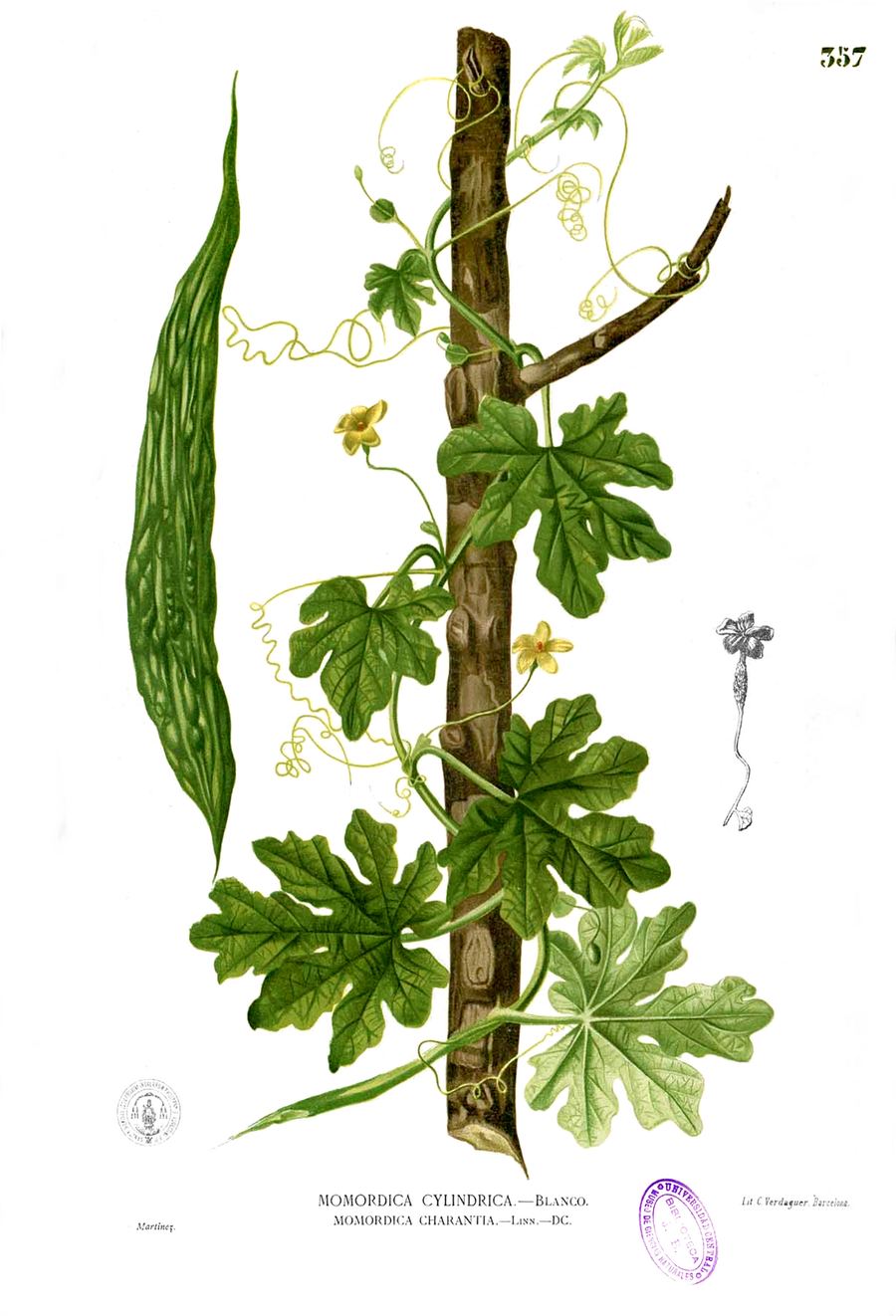
Bitter melon
Momordica charantia · 苦瓜
Vegetables. Caribbean, Ayurveda, Chinese Medicine and Dr. Sebi's list.
Also called Cerasee, Karela, Bitter gourd, Karavella
Pinyin: Kǔ Guā
Spanish: Cundeamor
Sanskrit: कारवेल्ल (Karavella)
Can drop blood sugarA bumpy green gourd with a very bitter taste. It is eaten as a vegetable and brewed as a tea, often for blood sugar.
Did you know? Its bitterness comes from compounds called charantin and related triterpenoids, found in gourds of the same plant family as cucumbers and melons.
What it may help, and how strong the proof is
- Blood sugar. Some human trials show modest blood sugar drops. Reviews call the evidence low quality and say safety data are sparse.Early proof
- Weight. Fat-loss effects come from animal and lab studies only.Traditional proof
- Joint pain & arthritis. Preliminary data hint at less knee osteoarthritis pain. More studies are needed.Traditional proof
Parts of the body
Traditional use
In Ayurveda (as karavella) and Chinese medicine it is used for clearing heat. In Jamaica, cerasee tea is a common folk drink for blood sugar.
How it is classified
- Herbal actions
- Bitter, Hypoglycemic. Energy: cooling.
- Ayurveda
- Calms Kapha. Taste (rasa): bitter. Energy (virya): heating. After digestion (vipaka): pungent. Deepana (kindles digestion), Pachana (digests toxins/ama).
- Chinese medicine
- 苦瓜 Clear heat. Nature: cold. Flavour: bitter. Enters the Heart, Lung, Spleen and Stomach channels.
How people take it
Eaten cooked as a vegetable, or taken as tea, juice or capsules. Trials used juice or extracts at doses that vary a lot, so no standard dose exists.
Food, tea, juice and capsule.
Where to get it
A climbing vine grown in tropical and subtropical Asia, Africa and the Caribbean. Sold as fresh fruit, dried slices, teas, capsules and extracts. Seeds and unripe fruit carry the most risk.
Be careful
Can push blood sugar too low when combined with diabetes medicines. Animal studies suggest it can cause birth defects, so avoid it in pregnancy. Seeds can cause favism, a serious reaction with fever, pain and coma. Large amounts and extracts have caused stomach ulcers and kidney injury in case reports.
Avoid if: pregnancy; breastfeeding; diabetes medicines; before surgery.
Mixing with other things
- Works well together
Both are traditional blood sugar herbs in Ayurveda and folk use. Neither has strong human proof.
- Works well together
Bitter melon and jamun are both used for blood sugar in folk medicine.
- Use cautionDiabetes medicine (metformin, insulin, glipizide, Ozempic)
Adds to diabetes medicine and can push blood sugar too low. It is not a replacement for prescribed medicine.
Adds up with others that may lower blood sugar: , , , , , , , , , , , , , and 39 more.
The honest take
Bitter melon has the best human data of the herbs in this batch, mostly for blood sugar, and even that is low quality. It is a real food. The popular claims for cancer and weight loss rest on lab and animal work.