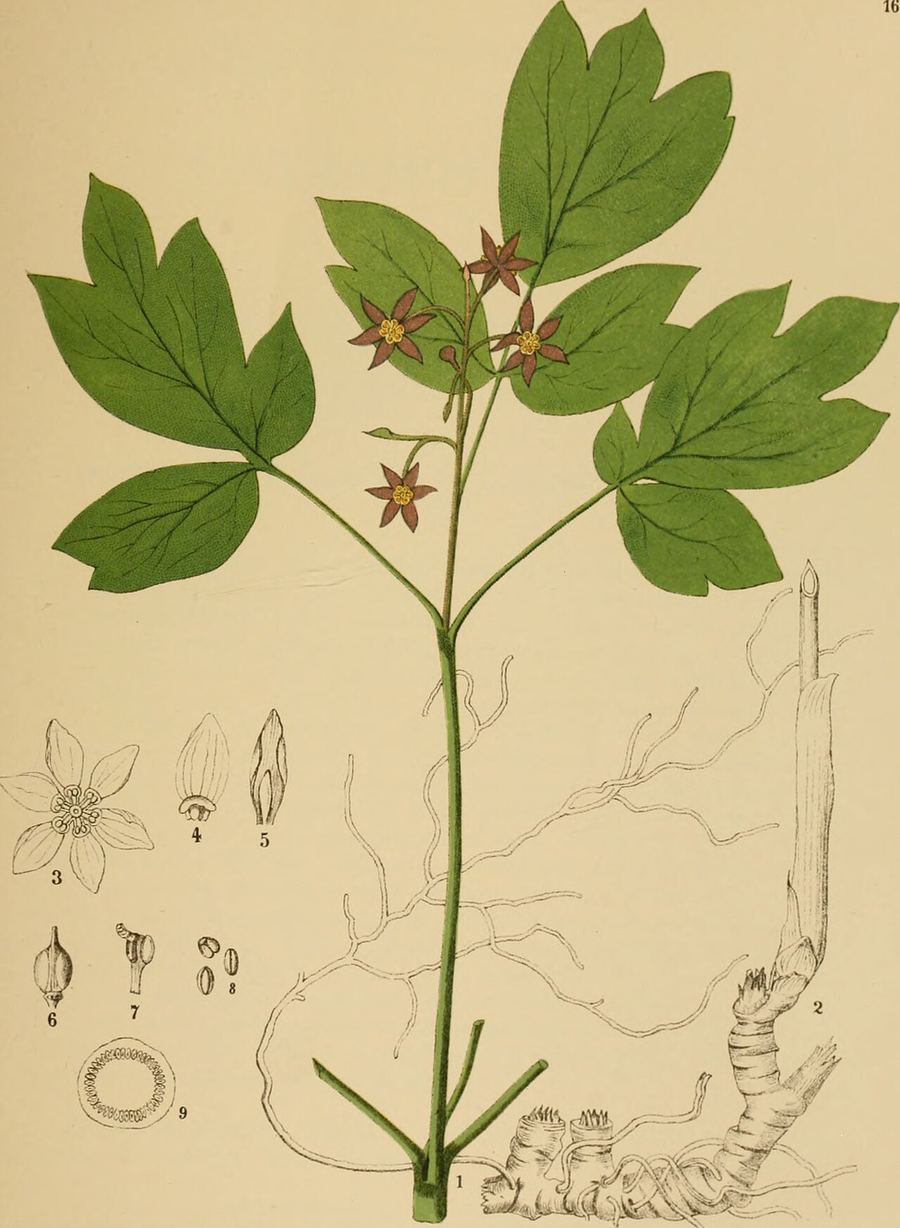
Blue cohosh
Caulophyllum thalictroides
Herbs & Roots. Native American and Western & European.
Also called Blue ginseng
Can harm a baby's heartA woodland plant of eastern North America whose root was once used to bring on labor, and which has been linked to serious harm in newborns.
Did you know? Its seeds are a striking blue, which is where the plant gets its name.
What it may help, and how strong the proof is
- Women's health. Traditional use to bring on labor and periods. No good human studies show it works, and it has harmed newborns.Traditional proof
- Joint pain & arthritis. Folk use for rheumatism and aches. No human studies exist.Traditional proof
Parts of the body
Traditional use
Native healers and later midwives used the root to bring on labor and ease periods. Eclectic doctors in the 1800s used it for the same purposes.
How it is classified
- Herbal actions
- Emmenagogue, Antispasmodic. Energy: neutral.
How people take it
No safe home dose is known. Traditional remedies used small amounts of root, often under a midwife's care. Modern products have no tested dose, so do not self-dose.
Tincture, capsule and tea.
Where to get it
Grows in shady, moist hardwood forests of eastern North America. Wild roots have been dug in large numbers, so the plant is scarce in parts of its range. Sold as dried root, tinctures and capsules from herb suppliers.
Be careful
The root contains chemicals that are believed to narrow blood vessels and affect the heart. A 1998 case report described a newborn with a heart attack and heart failure after the mother took blue cohosh to bring on labor. Do not use in pregnancy or breastfeeding. Avoid with heart disease or high blood pressure, and keep it away from children.
Avoid if: pregnancy; breastfeeding; children under 12; heart disease; high blood pressure.
Mixing with other things
- Works well together
Old Eclectic and folk remedies often paired them for period cramps. The pair has no proof and is not advised.
The honest take
Blue cohosh has no good proof that it works for labor, periods or joint pain. Its root contains chemicals that can narrow blood vessels, and there is at least one documented case of serious harm to a newborn. Most people should avoid it entirely.