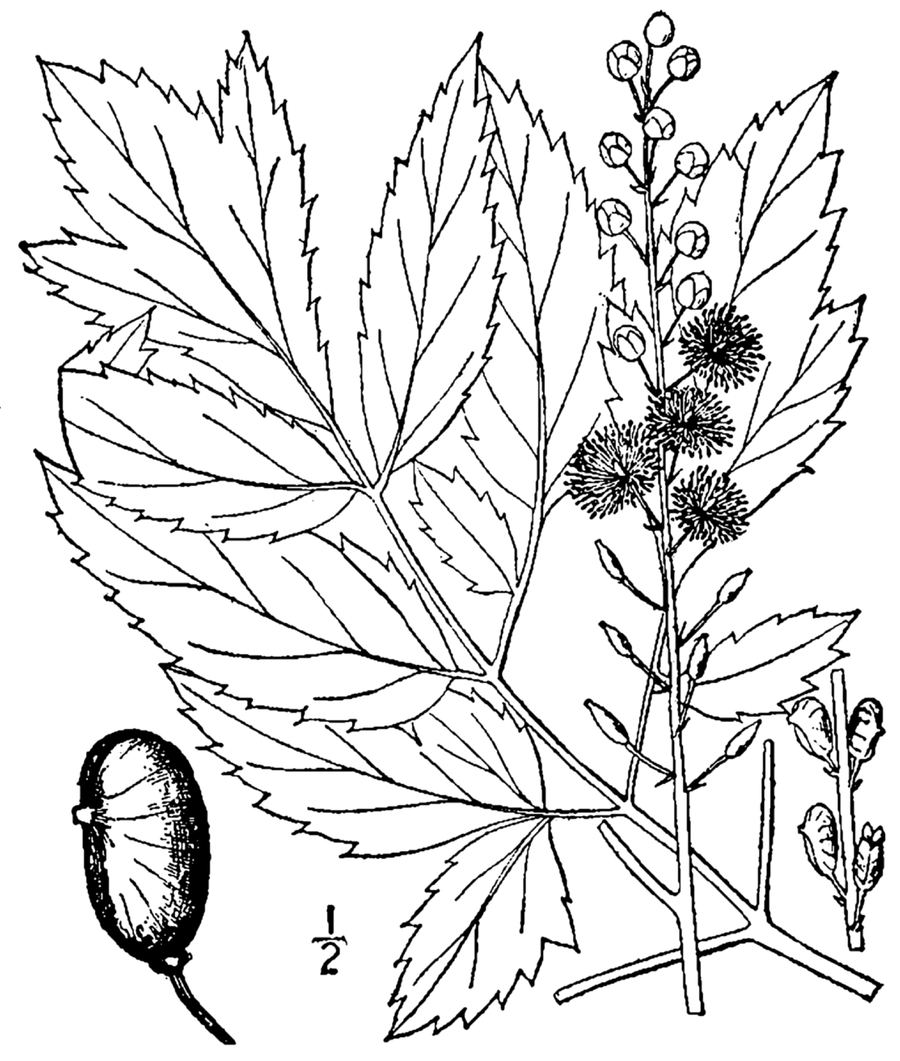
Black cohosh
Actaea racemosa
Herbs & Roots. Native American and Western & European.
Also called Black snakeroot, Bugbane
Spanish: Cimicífuga
Liver injury reportsA tall woodland plant of eastern North America whose root is used mainly for hot flashes and period pain.
Did you know? One of its common names, bugbane, comes from an old belief that its strong smell drove away bugs.
What it may help, and how strong the proof is
- Pain & headaches. Traditional use for aches and cramps. Few human studies exist.Traditional proof
- Women's health. Long used for hot flashes and period pain. A 2012 Cochrane review of 16 trials found it no better than placebo for hot flashes.Not supported
Parts of the body
Traditional use
Native peoples of eastern North America used the root for women's health, childbirth and aches. Eclectic doctors in the 1800s made it a common remedy for periods and menopause.
How it is classified
- Herbal actions
- Antispasmodic, Analgesic, Hormone balancer. Energy: neutral.
How people take it
Most products are capsules or tinctures of the root. Many trials used a standard extract at about 40 mg a day for a few months. Tea doses are not well studied.
Capsule, tincture and tea.
Where to get it
Grows in rich, shaded woods of eastern and central North America. Wild roots have been heavily dug, so most supply is cultivated. Sold as dried root, capsules, tinctures and in women's blends.
Be careful
Common side effects are upset stomach, headache, dizziness and rash. Rare liver injury has been reported, so stop and see a doctor if you notice yellow skin, dark urine or belly pain. Not safe in pregnancy, since it may stimulate the uterus. Avoid with hormone-sensitive cancers unless your doctor says otherwise.
Avoid if: pregnancy; breastfeeding; liver disease; hormone-sensitive cancer.
Mixing with other things
- Works well together
Often sold together in women's cycle blends. Neither has strong proof for hot flashes.
- Works well together
A common menopause blend partner. Red clover trials are also mixed.
- Works well together
Old Eclectic and folk remedies often paired them for period cramps. The pair has no proof and is not advised.
- Works well together
Often sold together in menopause blends. Neither has strong proof.
- Use cautionAlcohol (beer, wine, spirits)
Both can strain the liver, so limit alcohol while using it.
The honest take
Black cohosh is one of the most studied menopause herbs, and the larger trials did not show it beats placebo for hot flashes. Some small trials looked promising, but the gains disappeared when results were pooled. Rare liver injury has been reported, so it is not risk-free.