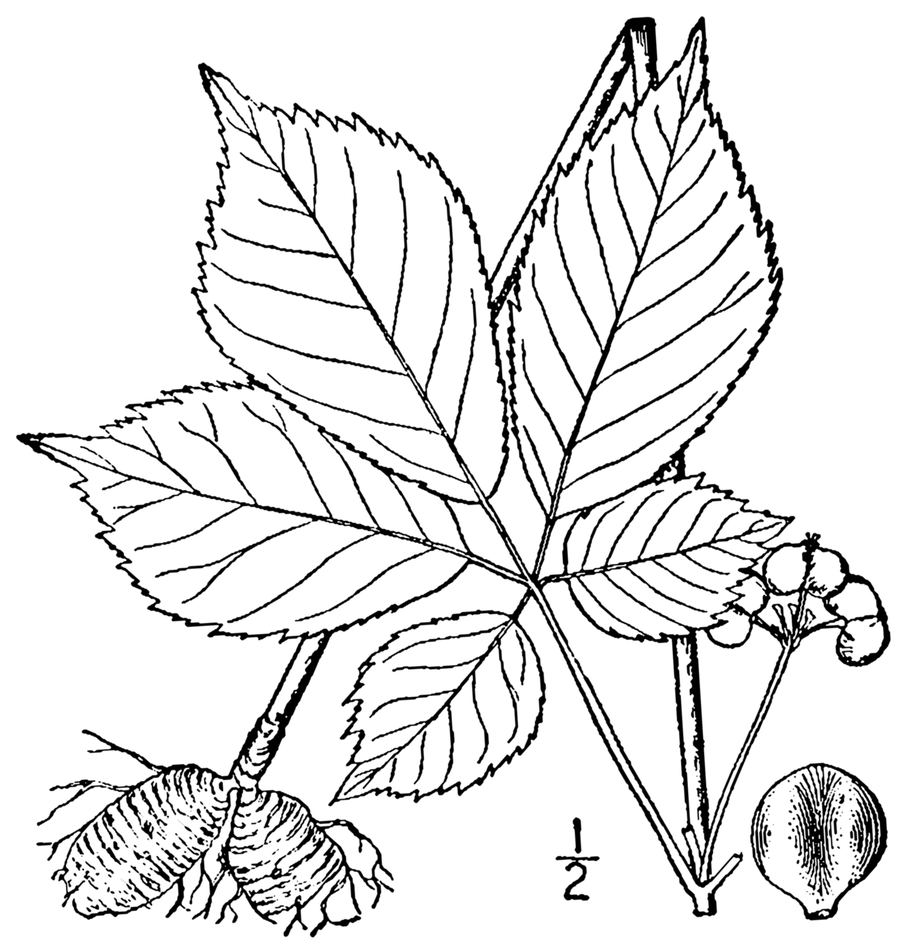
American ginseng
Panax quinquefolius · 西洋参
Herbs & Roots. Native American and Chinese Medicine.
Also called Xi yang shen, Western ginseng, Five-leaf ginseng
Pinyin: Xī Yáng Shēn
Spanish: Ginseng americano
Can interact with blood thinnersA slow-growing forest root from eastern North America that people use for blood sugar, colds and fatigue.
Did you know? Its Chinese name, xi yang shen, roughly means ginseng from the Western ocean, because Western traders brought it to China.
What it may help, and how strong the proof is
- Blood sugar. Several small trials in type 2 diabetes show modest drops in blood sugar after meals.Early proof
- Colds, flu & immunity. Cold trials are small and some were funded by product makers. Results are mixed, with a few showing fewer colds.Early proof
- Energy & tiredness. Long used against fatigue. Trials in tired people are small and inconsistent.Traditional proof
Parts of the body
Traditional use
Native peoples of eastern North America used the root for many complaints. In Chinese medicine it is a cooling tonic for qi and yin, used for tiredness, dry mouth and internal heat.
How it is classified
- Herbal actions
- Adaptogen, Tonic, Immune balancer. Energy: cooling.
- Chinese medicine
- 西洋参 Tonify Qi. Nature: cool. Flavour: sweet, bitter. Enters the Heart, Lung and Kidney channels.
How people take it
Diabetes trials used roughly 1 to 3 grams of dried root powder, taken before meals. Cold trials often used a standard extract at about 200 mg twice a day. Tea is made by simmering thin slices of root.
Capsule, tea, powder and tincture.
Where to get it
Wild American ginseng grows in cool hardwood forests of eastern and central North America. Wild roots have been over-harvested, so international trade rules (CITES) control it. Most supply now comes from farms, especially in Wisconsin and Ontario.
Be careful
Common side effects are headache, sleeplessness, nervousness and upset stomach. Too much can cause restlessness or a racing heart. It can lower blood sugar and can change how warfarin works. Pregnant or breastfeeding people, and people with autoimmune disease or bleeding disorders, should avoid it.
Avoid if: pregnancy; breastfeeding; autoimmune disease; bleeding disorders.
Mixing with other things
- Works well together
Both appear in the Chinese formula Sheng Mai San for fatigue and dry mouth. Classic versions use Asian ginseng.
- Works well together
Also in Sheng Mai San, where it nourishes fluids and eases dry mouth and heat signs.
- Use cautionBlood thinners (warfarin, Eliquis, Xarelto, Plavix, daily aspirin)
May change how warfarin works and raise bleeding risk, so tell your prescriber if you take it.
- Use cautionDiabetes medicine (metformin, insulin, glipizide, Ozempic)
Can lower blood sugar, so it may add to diabetes medicines and cause lows.
Adds up with others that may slow blood clotting: , , , , , , , , , , , , , and 40 more.
Adds up with others that may lower blood sugar: , , , , , , , , , , , , , and 39 more.
The honest take
American ginseng has some human studies for blood sugar and colds, but most trials are small and a few were funded by product makers. Its energy claim is weakly supported. Wild roots are scarce, so choose farm-grown products with clear labels.