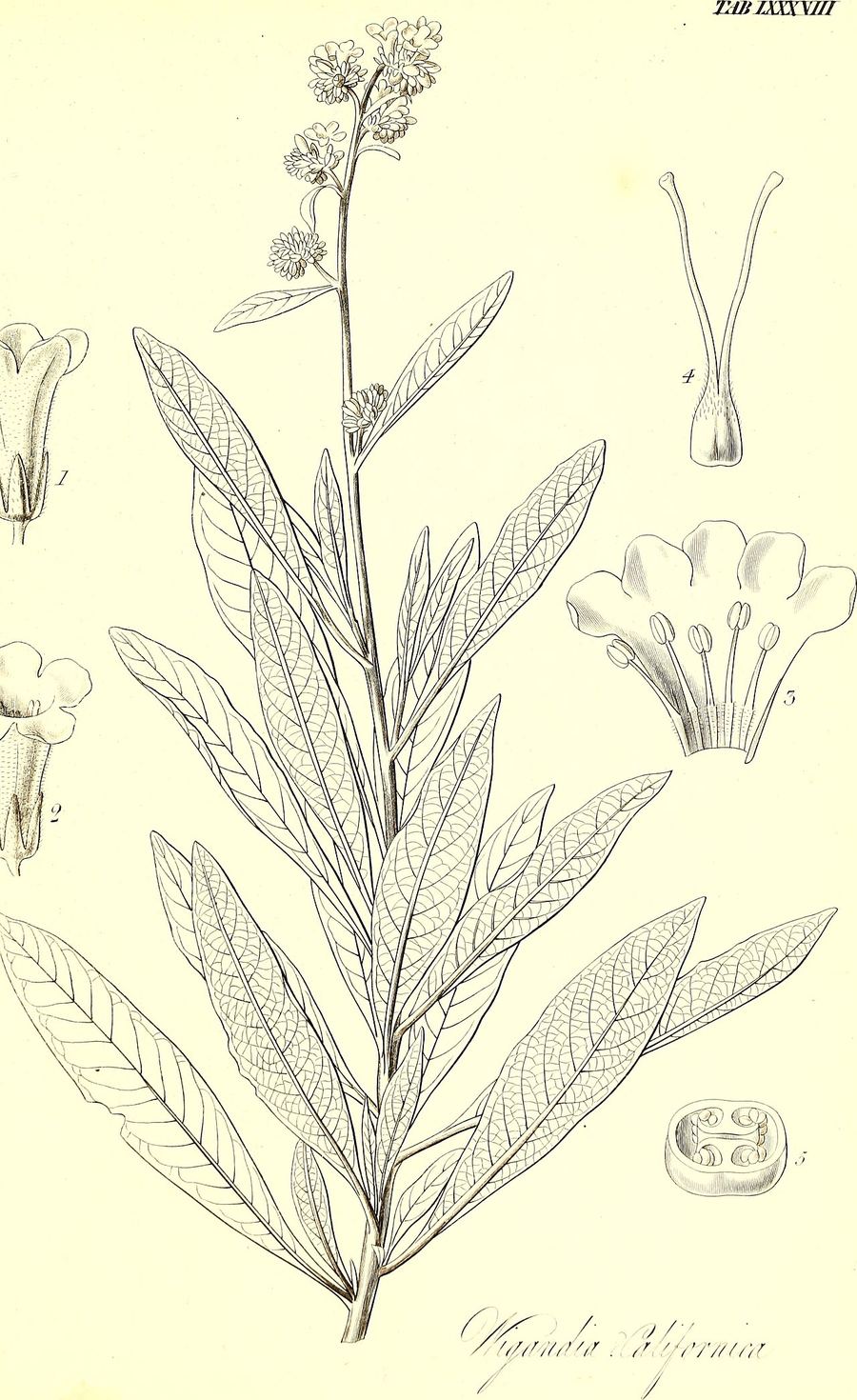
Yerba santa
Eriodictyon californicum
Herbs & Roots. Native American and Western & European.
Also called Mountain balm, Holy herb
Spanish: Yerba santa
Few safety studiesA California shrub whose leaves are brewed as a tea for coughs and chest problems.
Did you know? Spanish settlers in California called it yerba santa, which means holy herb.
What it may help, and how strong the proof is
- Breathing & asthma. Used for coughs, asthma and chest congestion in tradition. Few human studies exist.Traditional proof
- Sore throat & cough. Tea is used for sore throat and cough. Few human studies exist.Traditional proof
Parts of the body
Traditional use
Native peoples of California used the leaves for colds, asthma and chest pain. Later, folk healers and Eclectic doctors used it for coughs.
How it is classified
- Herbal actions
- Expectorant, Demulcent, Bitter. Energy: neutral.
How people take it
Tea is made from 1 to 2 teaspoons of dried leaves per cup, steeped about 10 minutes. No tested dose exists, so use small amounts for short periods.
Tea and tincture.
Where to get it
A shrub of dry hillsides, chaparral and open woods in California and nearby states. Much of the supply is wild-picked. Sold as dried leaves, tea bags and tinctures.
Be careful
There are very few safety studies. The most common complaint is mild stomach upset. Avoid in pregnancy and breastfeeding, and do not give it to infants.
Avoid if: pregnancy; breastfeeding.
Mixing with other things
- Works well together
Both are used in folk cough and chest teas.
- Works well together
Traditional cough blends often include both.
The honest take
Yerba santa has a long folk history, but almost no modern human research. Any help for coughs is unproven. See a doctor for a cough that lasts more than a few weeks.