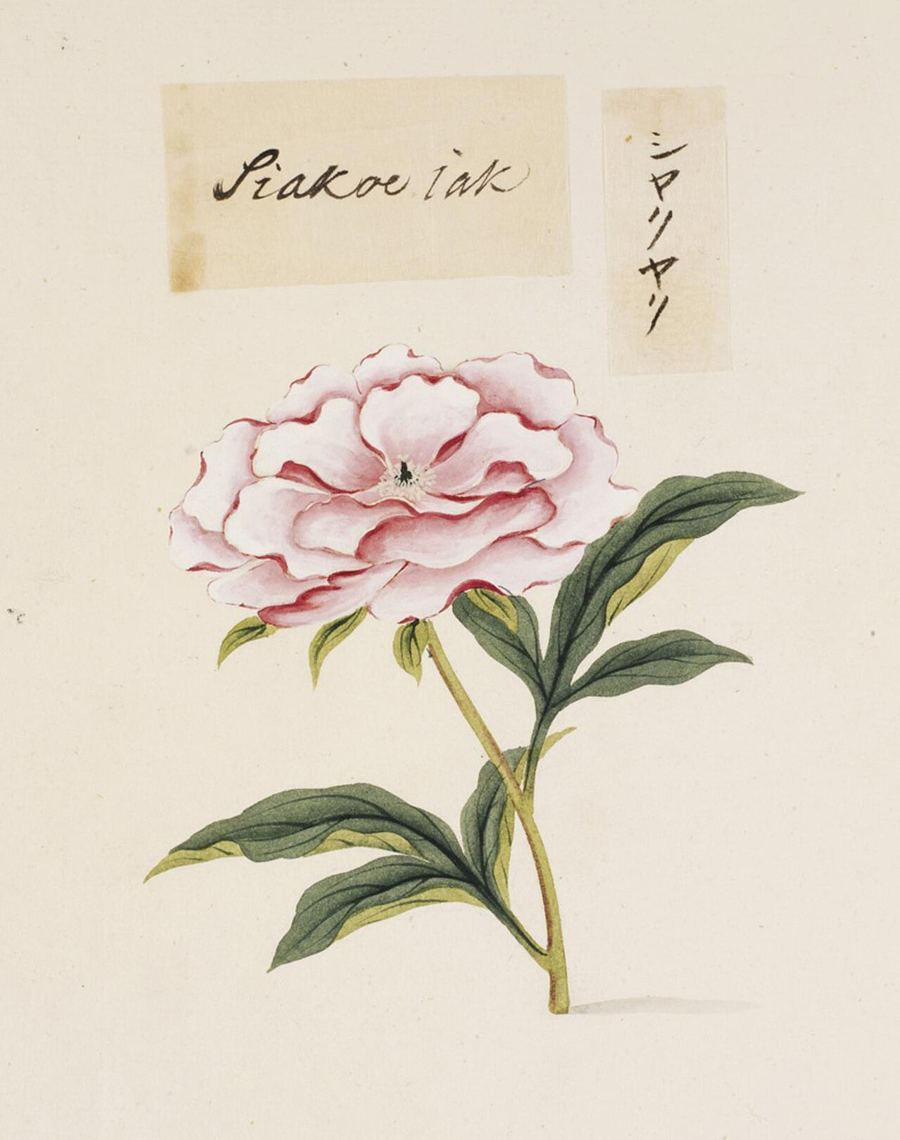
White peony root
Paeonia lactiflora · 白芍
Herbs & Roots. Chinese Medicine.
Also called Bai shao, Chinese peony root, Chinese white peony
Pinyin: Bái Sháo
Few human trials for rootA root used in Chinese medicine to ease cramps and pain and to support blood. It is often paired with licorice.
Did you know? A peony and licorice decoction is still prescribed in Japanese Kampo clinics for muscle cramps.
What it may help, and how strong the proof is
- Nerve health. Trials of the peony and licorice formula for nerve pain (postherpetic neuralgia) show mixed results and uneven quality.Early proof
- Muscles & exercise. Used for cramps mainly as part of a formula with licorice. The only human data are small, uncontrolled studies. The root alone has not been tested in people.Traditional proof
- Women's health. Used with other herbs in tradition for painful periods. No good human trials test the root alone.Traditional proof
Parts of the body
Traditional use
Traditional Chinese Medicine uses bai shao to nourish blood, soften the Liver to ease pain and cramps, and support yin (cooling fluids). It appears in Si Wu Tang (Four Substances Decoction) and Shao Yao Gan Cao Tang (Peony and Licorice Decoction).
How it is classified
- Herbal actions
- Antispasmodic, Analgesic, Nutritive, Anti-inflammatory. Energy: cooling.
- Chinese medicine
- 白芍 Tonify blood. Nature: cool. Flavour: bitter, sour. Enters the Liver and Spleen channels.
How people take it
Traditional decoctions often use about 6 to 15 g of dried root. The studied form is usually a formula rather than the root alone. Extract doses vary widely.
Decoction, powder, capsule and tea.
Where to get it
Grown in China, Japan and Korea. Sold as dried root (white peeled root), slices, powder, extract and capsules. Red peony (chi shao) is a related root with different traditional uses.
Be careful
Usually mild. Can cause stomach upset or loose stools. With long use, the licorice often paired with it can lower potassium, so people on heart medicines or water pills should be careful.
Avoid if: pregnancy; bleeding disorders.
Mixing with other things
- Works well together
Dong quai and bai shao are both in Si Wu Tang.
- Works well together
Shu di huang and bai shao are both in Si Wu Tang.
- Works well together
Bai shao and licorice form Shao Yao Gan Cao Tang (Peony and Licorice Decoction), used for cramps in tradition and in Japanese Kampo.
- Works well together
Bai shao and bai zhu are both in Xiao Yao San (Free and Easy Wanderer).
- Works well together
Also in Xiao Yao San, where white peony helps soften tension and pain.
- Works well together
Ge Gen Tang (Kudzu Decoction) pairs kudzu with white peony, cinnamon twig and licorice for neck stiffness with early cold symptoms.
- Works well together
Also in Gui Zhi Tang, where white peony softens the formula and eases cramps.
- Works well together
White peony is part of Si Wu Tang, which pairs it with chuan xiong to ease cramps.
- Worth knowingBlood thinners (warfarin, Eliquis, Xarelto, Plavix, daily aspirin)
Its effect on clotting is not well studied. Use caution with warfarin or aspirin.
Found in these formulas
Four Substances (TCM), Free & Easy Wanderer (TCM)
The honest take
White peony is a widely used root with low risk in classic formulas. Its evidence for cramps and nerve pain comes from formulas with licorice, and the root alone has barely been tested in people. Most claims about it are traditional.