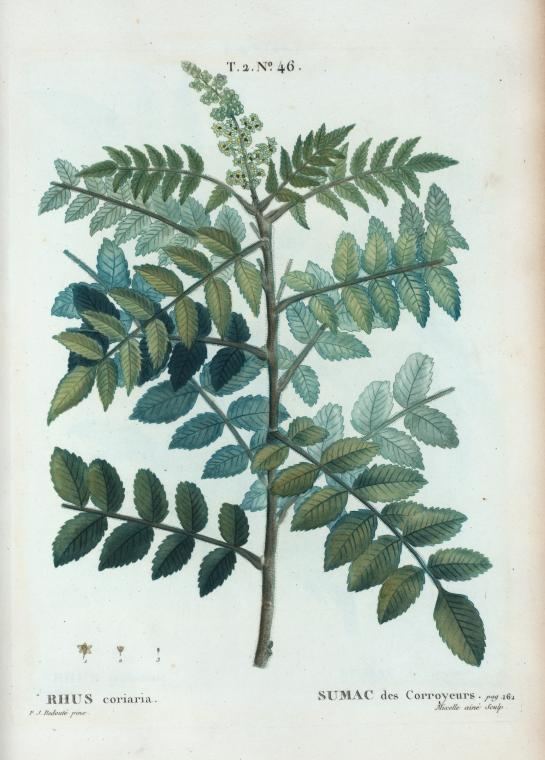
Sumac
Rhus coriaria
Spices. Middle Eastern & Unani.
Also called Summaq, Tanner's sumac
Spanish: Zumaque
A tangy dark red spice made from dried berries, used in Middle Eastern cooking and some folk remedies.
Did you know? Sumac gives a sour taste without liquid, so cooks use it in place of lemon juice in many dishes.
What it may help, and how strong the proof is
- Blood sugar. A few small and animal studies suggest a modest blood sugar effect. Proof is limited.Traditional proof
- Digestion & gut health. Used for diarrhea in folk medicine. Human studies are few.Traditional proof
Parts of the body
Traditional use
Middle Eastern cooks sprinkle it on meats, salads and in za'atar. Folk healers have used it for diarrhea and sore throat.
How it is classified
- Herbal actions
- Astringent, Antimicrobial, Antioxidant. Energy: neutral.
How people take it
Sprinkle on meat, salads, hummus or onions, or mix into za'atar. Medicine doses are not set.
Food and powder.
Where to get it
Grown in Turkey, Iran, Sicily and Syria. Buy culinary sumac in spice shops and Middle Eastern markets. Do not use other sumac species, such as poison sumac, which can cause a rash.
Be careful
Safe as food. People allergic to other cashew-family plants may react.
Mixing with other things
- Works well together
Both are in za'atar, a Middle Eastern herb mix.
- Works well together
Sumac is a key tangy ingredient in za'atar.
- Works well together
Pomegranate molasses and sumac are common partners in Middle Eastern dishes.
Found in these formulas
Za'atar (Middle East)
The honest take
Sumac is a safe, tasty food with little human research. Its health claims are mostly from tradition and small studies. Its best use is in cooking.