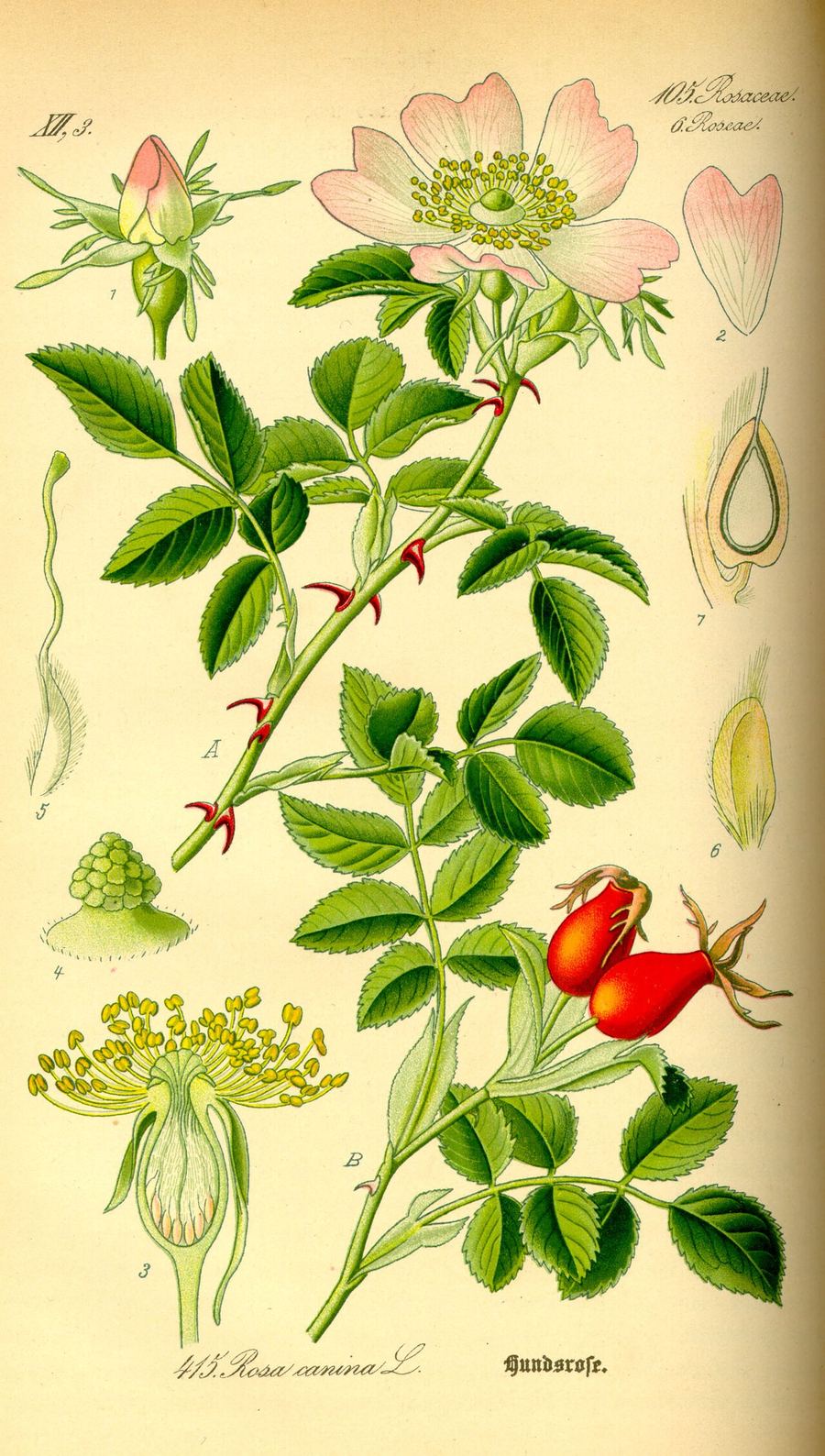
Rose hips
Rosa canina
Fruits. Western & European.
Also called Dog rose, Wild rose hips, Rosehip
Spanish: Escaramujo
The small red fruit of wild roses, eaten as tea, syrup, or powder for vitamin C and joint comfort.
Did you know? During World War II, Britain collected wild rose hips and made syrup to give young children extra vitamin C.
What it may help, and how strong the proof is
- Joint pain & arthritis. Small crossover trials of one standardized rose hip powder found less pain and stiffness in osteoarthritis than placebo. The trials are small and mostly from one research group, so larger studies are needed.Early proof
- Colds, flu & immunity. Rich in vitamin C, which the immune system needs. Rose hips are not proven to prevent colds.Traditional proof
Parts of the body
Traditional use
European folk medicine used rose hip tea for colds, fevers, and joint pain. The fruit was also made into jams, soups, and syrups.
How it is classified
- Herbal actions
- Nutritive, Antioxidant. Energy: neutral.
How people take it
The main trials used about 5 grams of a standardized rose hip powder a day, and one trial used 2.5 grams twice a day. Tea and syrup have no standard dose.
Food, tea, powder and syrup.
Where to get it
Wild roses grow across Europe, Asia, and North America, and the hips ripen in autumn. Buy dried hips, tea, syrup, powder, or capsules.
Be careful
Rose hips are food-like and generally safe. Seeds have fine hairs that can irritate the gut, so use strained products. Very high vitamin C doses from supplements may raise kidney stone risk in some people.
Avoid if: kidney stones.
Mixing with other things
- Works well together
Both are tart fruit teas often blended together.
- Works well together
Both are used in winter syrups for colds.
- Works well together
Both are sour, vitamin C-rich berries often blended into teas and juices.
The honest take
Rose hips are a real source of vitamin C and a good fruit tea. The joint claim has some small trial support, but larger, longer studies are needed. The idea that they prevent colds is not proven.