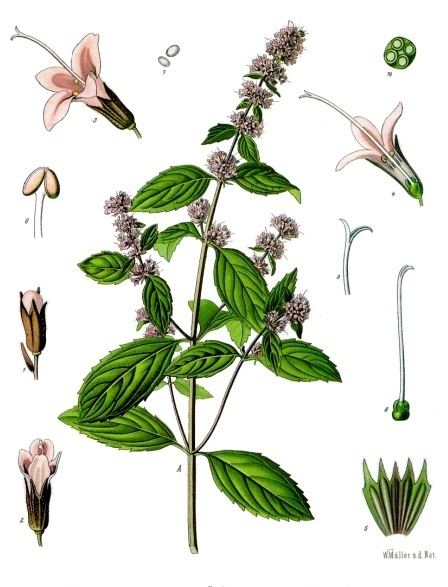
Peppermint
Mentha × piperita · 薄荷
Herbs & Roots. Western & European and Chinese Medicine.
Also called Brandy mint, Black peppermint, Bo he
Pinyin: Bò Hé
Spanish: Menta
Can worsen heartburnPeppermint is a mint whose leaves and oil are used mainly for irritable bowel symptoms and tension headaches.
Did you know? Menthol in peppermint activates the same cold-sensing nerve receptor (TRPM8) that feels cool air, so your skin feels cold even when nothing is colder.
What it may help, and how strong the proof is
- Digestion & gut health. Enteric-coated peppermint oil eases irritable bowel symptoms in several randomized trials and meta-analyses.Good proof
- Pain & headaches. Peppermint oil rubbed on the forehead eased tension headaches in small trials.Early proof
- Nausea & upset stomach. Tea and the smell are used for nausea, but the evidence is thin.Traditional proof
Parts of the body
Traditional use
Western herbalists used peppermint for indigestion, gas, and colds. In Chinese medicine, bo he is a cool, aromatic herb used to release wind-heat, often early in colds and sore throats.
How it is classified
- Herbal actions
- Carminative, Antispasmodic, Analgesic. Energy: cooling.
- Chinese medicine
- 薄荷 Release the exterior. Nature: cool. Flavour: pungent. Enters the Lung and Liver channels.
How people take it
Tea is made from dried leaves. Enteric-coated peppermint oil capsules, 450 to 750 mg a day, were used in many IBS trials. Diluted oil can be rubbed on the temples or forehead for headaches.
Tea, capsule, essential oil and topical.
Where to get it
Grows in damp places and is widely cultivated worldwide. It is a hybrid of watermint and spearmint. Sold as dried leaf, tea bags, enteric-coated oil capsules, and essential oil.
Be careful
Heartburn is the most common side effect, so it may not suit people with reflux. Essential oil must be diluted and should never be swallowed in large amounts. Strong menthol oil on a baby's face can cause breathing trouble.
Avoid if: heartburn; hiatal hernia; young children (oil).
Mixing with other things
- Works well together
Often added to cold and fever teas with elderflower.
- Works well together
Both are in STW 5 (Iberogast), a European stomach blend.
- Works well together
Both are in STW 5 (Iberogast), a European stomach blend.
- Works well together
Both are in STW 5 (Iberogast), a European stomach blend.
- Works well together
Both mints are used together in tea blends.
- Works well together
Common in old cold and fever tea blends.
- Works well together
Both are used in digestive teas for gas and bloating.
- Works well together
Both are used in soothing tea blends.
- Works well together
Often combined in steam and chest rub blends.
- Works well together
Also in Yin Qiao San, where mint helps release the outer layer of the body.
- Works well together
Cang Er Zi San (Xanthium Powder) pairs magnolia flower with peppermint and angelica root for a stuffy, blocked nose.
- Works well together
A common pairing in soothing digestive teas.
Found in these formulas
Free & Easy Wanderer (TCM), Honeysuckle & Forsythia (TCM)
The honest take
Peppermint oil has the strongest evidence in this list for easing irritable bowel symptoms. Its evidence for headaches and nausea is smaller. Claims that it boosts energy or clears toxins are not supported.