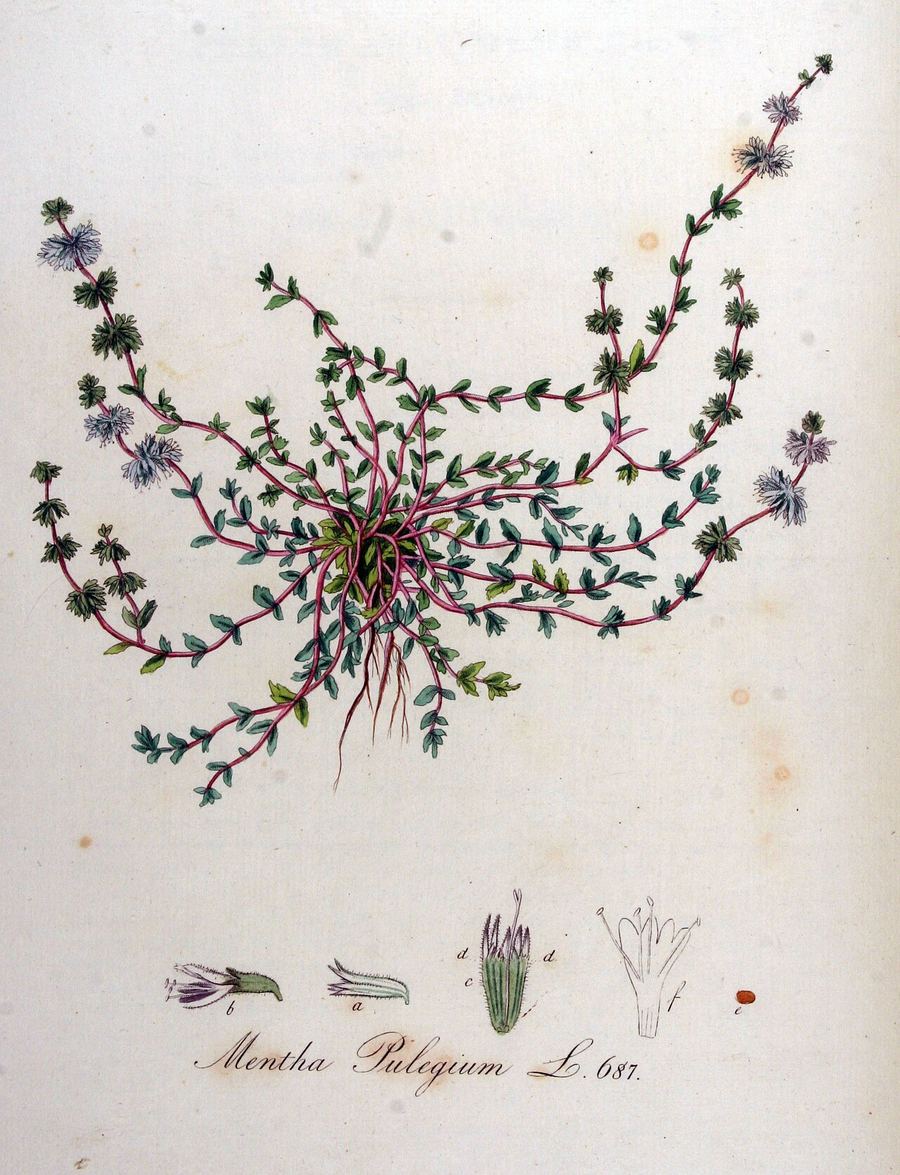
Pennyroyal
Mentha pulegium
Herbs & Roots. Western & European.
Also called European pennyroyal
Spanish: Poleo
Liver damage; deaths reportedA strong-smelling mint once used to repel fleas and bring on periods, and now known to be dangerous.
Did you know? Its Latin name, pulegium, comes from pulex, the Latin word for flea, because people used it to repel fleas.
What it may help, and how strong the proof is
- Digestion & gut health. Used for gas and stomach upset. Only tradition, and the amount that helps is close to the amount that harms.Traditional proof
- Women's health. Used to start periods or end pregnancy. This is not safe. It has caused liver failure and death, and no trial shows safe use.Not supported
Parts of the body
Traditional use
Greek and Roman doctors used pennyroyal for digestion and to bring on periods. Folk use to end pregnancies has caused deaths.
How it is classified
- Herbal actions
- Carminative, Antispasmodic. Energy: warming.
How people take it
No safe dose is known, and people should not use the herb or oil for health. Do not use the essential oil by mouth or on the skin.
Tea and essential oil.
Where to get it
Pennyroyal grows wild in damp places in southern Europe, North Africa, and western Asia. Dried herb and essential oil are sold by some herb suppliers.
Be careful
Pennyroyal contains pulegone, which is toxic to the liver, and deaths have been reported after the oil was swallowed. Avoid it in pregnancy, breastfeeding, and childhood, and with liver or kidney disease. Keep it away from pets, since the oil can poison them.
Avoid if: pregnancy; breastfeeding; liver disease; kidney disease; children under 12.
Mixing with other things
- Don't mixAlcohol (beer, wine, spirits)
Both strain the liver, so do not combine them.
The honest take
There is no safe, proven use for pennyroyal. Its oil and strong tea can badly harm the liver and have caused deaths. Its old uses for periods and flea control are not a reason to try it.