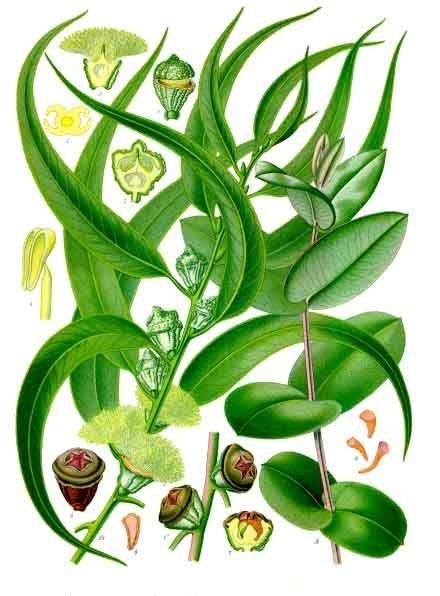
Eucalyptus
Eucalyptus globulus
Herbs & Roots. Western & European and Dr. Sebi's list.
Also called Blue gum, Tasmanian blue gum
Spanish: Eucalipto
Oil is toxic if swallowedLeaves and oil of a tall Australian tree, used as steam, chest rub, or tea for cough and stuffiness.
Did you know? Koalas survive on mostly eucalyptus leaves, which are toxic to most animals, thanks to special liver enzymes that break the toxins down.
What it may help, and how strong the proof is
- Breathing & asthma. Cineole, the main compound in the oil, has been tested in small trials for sinus infections and bronchitis. Results are limited, and most trials used purified cineole rather than whole oil.Early proof
- Sore throat & cough. Used as steam or lozenges for cough and sore throat. Tradition, with few human trials.Traditional proof
Parts of the body
Traditional use
Aboriginal Australians used the leaves for colds and wounds. European herbalists later adopted the oil for chest colds and sinus problems.
How it is classified
- Herbal actions
- Expectorant, Antimicrobial. Energy: neutral.
How people take it
Leaf tea is traditional, but the oil is most often used as steam or a diluted chest rub. Eucalyptus oil should never be swallowed.
Tea, essential oil and topical.
Where to get it
Eucalyptus globulus is native to Australia and grows fast in warm regions worldwide, where it is planted for timber. Leaves and oil are sold, and the oil is steam-distilled from leaves.
Be careful
Swallowing eucalyptus oil can cause seizures, breathing trouble, and death, especially in young children. Keep the oil away from children's faces and out of bath water. Strong steam or oil can trigger breathing trouble in people with asthma.
Avoid if: children under 2; asthma; pregnancy.
Mixing with other things
- Works well together
Often combined in steam and chest rub blends.
- Works well together
Thyme and eucalyptus are used together in traditional chest rubs.
The honest take
Steam and chest rubs are popular for stuffiness, and cineole has some small trial support. Most other claims rest on tradition or lab work. The oil is dangerous to swallow and to young children, so keep it out of reach.