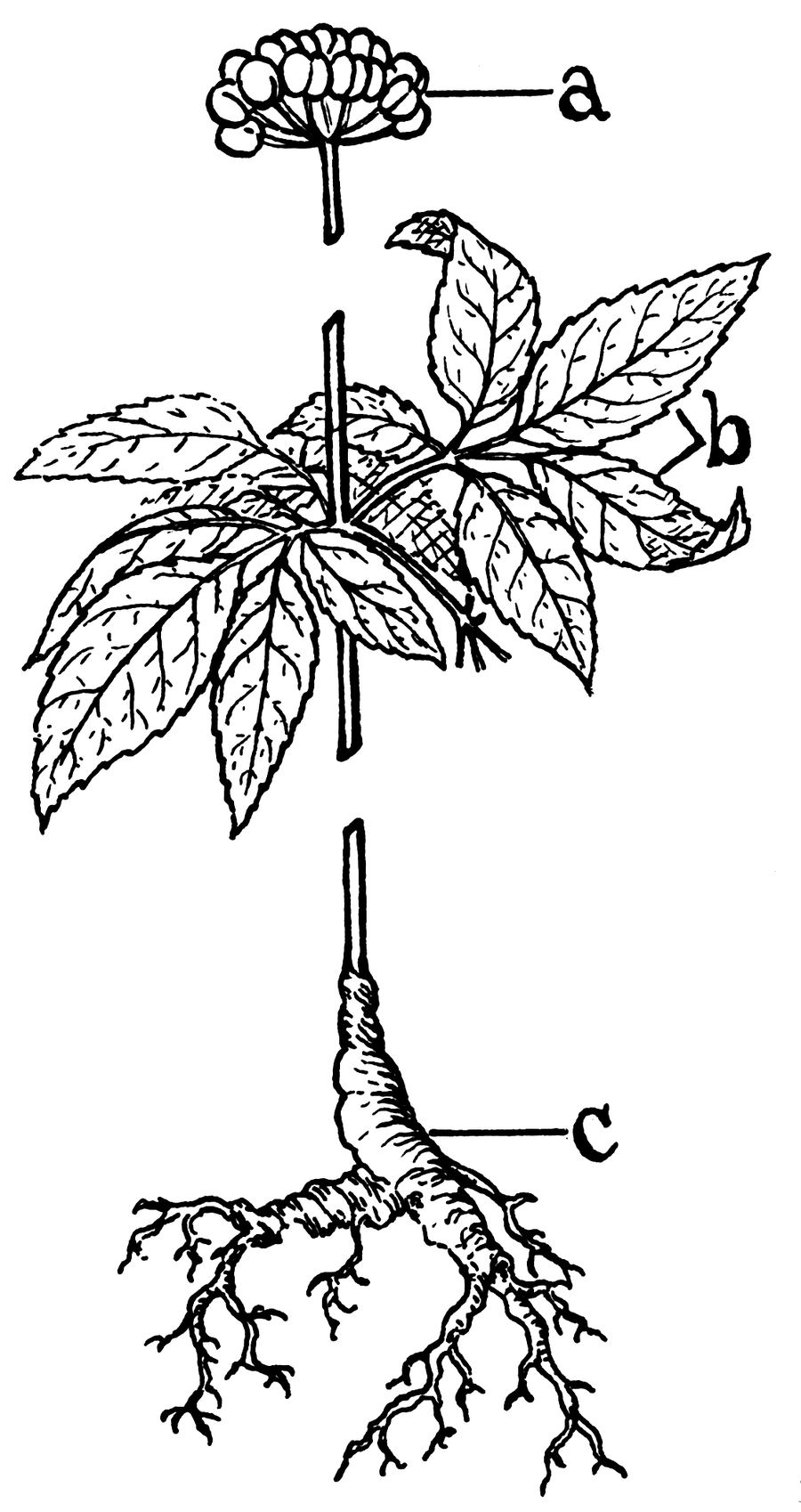
Asian ginseng
Panax ginseng · 人参
Herbs & Roots. Chinese Medicine.
Also called Ren shen, Korean ginseng, Korean red ginseng
Pinyin: Rén Shēn
Spanish: Ginseng asiático
Blood thinner and sugar interactionsA slow-growing root used in Chinese and Korean medicine to build energy and stamina.
Did you know? Wild ginseng roots can be over 100 years old, and historically they have sold for prices close to gold by weight.
What it may help, and how strong the proof is
- Energy & tiredness. Some small trials in people with cancer-related fatigue show a small lift in energy. Pooled results are uncertain, since the confidence range reaches zero.Early proof
- Sexual health. Small trials of red ginseng suggest better erections in some men. A 2022 Cochrane review of ginseng found low-certainty gains, and the score change was called trivial by the authors.Early proof
- Blood sugar. A few small trials show modest drops in blood sugar after meals. Results are inconsistent.Early proof
- Anemia & blood building. Traditional use for weakness and blood loss. No good human trials confirm this.Traditional proof
Parts of the body
Energy & metabolism, Hormones & reproduction, Blood, Pancreas & blood sugar
Traditional use
In Traditional Chinese Medicine, ren shen is a top tonic for weakness, poor appetite and low energy after illness. Korean healers use red ginseng (steamed and dried) in a similar way.
How it is classified
- Herbal actions
- Adaptogen, Tonic, Immune balancer, Nervine. Energy: warming.
- Chinese medicine
- 人参 Tonify Qi. Nature: warm. Flavour: sweet, bitter. Enters the Spleen, Lung and Heart channels.
How people take it
Doses in studies range from about 400 to 3,000 mg a day, depending on the product. Tea or soup is the traditional form. Ask a doctor before taking it for long periods.
Tea, decoction, capsule, powder and tincture.
Where to get it
Cultivated in Korea, China and North America. Sold as dried root, slices, red ginseng, extract and capsules. Quality varies widely, and some products are mislabeled with other ginseng species.
Be careful
Common side effects are sleeplessness, headache, upset stomach, nosebleeds and high or low blood pressure changes. Rare cases of mania have been linked to use with MAOI antidepressants. Stop it before surgery, since it can affect blood sugar and clotting.
Avoid if: pregnancy; breastfeeding; bleeding disorders; before surgery; high blood pressure; diabetes medicines; hormone-sensitive cancer; insomnia.
Mixing with other things
- Works well together
Part of Si Jun Zi Tang (Four Gentlemen Decoction), a classic TCM tonic formula.
- Works well together
Both are in Si Jun Zi Tang (Four Gentlemen Decoction), a classic formula for low energy and weak digestion.
- Works well together
Also in Si Jun Zi Tang. Poria helps the formula feel gentler on digestion.
- Works well together
Ginseng and ophiopogon are the core of Sheng Mai San (Pulse Engendering Powder), used for dry mouth and weak energy with heat.
- Works well together
Ginseng, ophiopogon and schisandra make up Sheng Mai San, a classic formula for sweating and fatigue.
- Works well together
Longan and ginseng are both in Gui Pi Tang.
- Works well together
Both are called ginseng-like herbs in tradition, and both contain ginseng-type saponins, so they are often compared in studies.
- Works well together
Kai Xin San (Open the Heart Powder) combines polygala with ginseng and poria to calm the mind and support memory.
- Works well together
Also in Xiao Chai Hu Tang, where ginseng supports energy while bupleurum moves stuck energy.
- Works well together
Paired with ginseng in Wu Zhu Yu Tang (Evodia Decoction) for stomach cold and vomiting.
- Works well together
A classic pairing in Chinese tonic blends for energy and recovery.
- Works well together
Both are classic energy tonics in Chinese formulas.
- Don't mixAntidepressants (Zoloft, Prozac, Lexapro and others)
Case reports link ginseng with headache, agitation and mania when taken with MAOI antidepressants such as phenelzine.
- Use cautionBlood thinners (warfarin, Eliquis, Xarelto, Plavix, daily aspirin)
Ginseng may change how warfarin works. Studies disagree on the direction. Get INR checks if the two are combined.
- Use cautionDiabetes medicine (metformin, insulin, glipizide, Ozempic)
Ginseng can lower blood sugar. Combined with insulin or diabetes pills, blood sugar may drop too low.
Adds up with others that may lower blood sugar: , , , , , , , , , , , , , and 39 more.
Found in these formulas
Four Gentlemen (TCM)
The honest take
Ginseng has real but modest effects on energy and possibly on sexual function, based on small or low-quality trials. Some products are mislabeled or weak. Most of the strongest claims rest on tradition and lab studies.