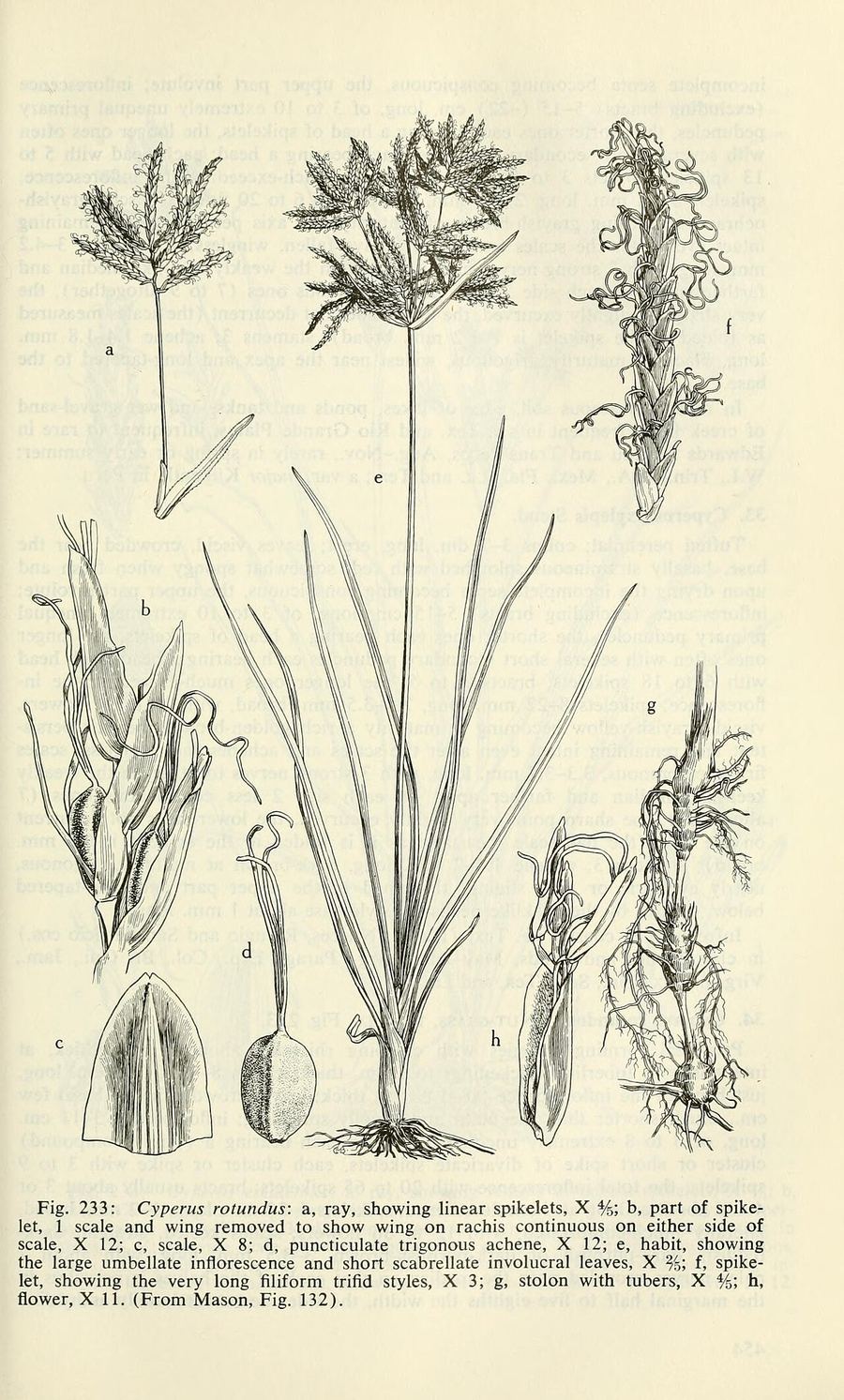
Nagarmotha
Cyperus rotundus · 香附
Herbs & Roots. Ayurveda and Chinese Medicine.
Also called Nut grass, Xiang fu, Musta, Coco-grass
Pinyin: Xiāng Fù
Sanskrit: मुस्त (Musta)
Few human studiesA grassy weed with small tubers, used in Ayurveda for digestion and in Chinese medicine to ease Qi stagnation and period pain.
Did you know? Nut grass is often called one of the world's worst weeds, yet its tubers have been used as medicine for a very long time.
What it may help, and how strong the proof is
- Women's health. Used for period pain in Chinese medicine. Human trials are few and small.Traditional proof
- Digestion & gut health. Traditional digestive and diarrhea remedy. Animal studies show some gut effects. Human evidence is lacking.Traditional proof
Parts of the body
Traditional use
Ayurveda uses musta for digestive complaints, diarrhea and fever. Chinese medicine uses xiang fu to move Qi, ease liver stagnation and relieve period pain.
How it is classified
- Herbal actions
- Antispasmodic, Carminative, Analgesic. Energy: neutral.
- Ayurveda
- Calms Pitta and Kapha. Taste (rasa): bitter, pungent, astringent. Energy (virya): cooling. After digestion (vipaka): pungent. Deepana (kindles digestion), Grahi (binds and firms stool).
- Chinese medicine
- 香附 Regulate Qi. Nature: neutral. Flavour: pungent, bitter, sweet. Enters the Liver channel.
How people take it
Dried tuber in decoctions or powder, usually a few grams a day in tradition. No tested human dose is established.
Decoction, powder and tea.
Where to get it
A grass weed found in fields, lawns and waste ground across warm regions. Tubers are dug, cleaned and dried for sale in herb and Indian grocery shops. Buy from trusted sellers, since many sedges look alike.
Be careful
Few safety studies exist, so avoid it in pregnancy and breastfeeding. Large doses may upset the stomach.
Avoid if: pregnancy; breastfeeding; children under 12.
Mixing with other things
No specific mixing notes on file. That doesn't prove it's safe with everything; ask a pharmacist about your full list.
The honest take
Nagarmotha is a common weed used in Ayurveda for digestion and in Chinese medicine for Qi and period pain. Most support comes from lab and animal work, and human trials are few. It is not a proven period remedy.