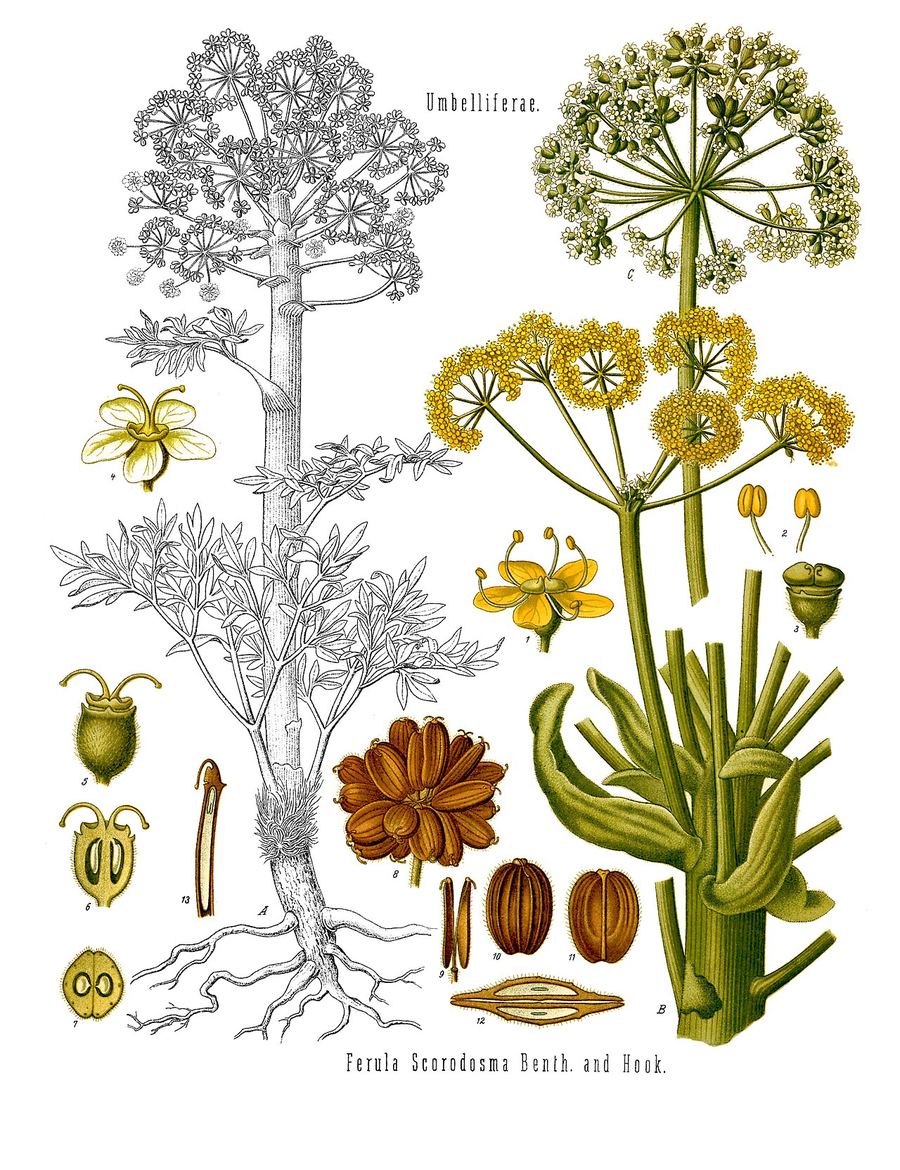
Hing
Ferula assa-foetida · 阿魏
Spices. Ayurveda, Middle Eastern & Unani and Chinese Medicine.
Also called Asafoetida, Devil's dung, Stinking gum, Hingu
Pinyin: Ā Wèi
Sanskrit: हिङ्गु (Hingu)
Avoid high doses in pregnancyA strong-smelling resin from Central Asian Ferula plants, used to flavor Indian food and in Ayurveda for gas and colic.
Did you know? Its nickname, devil's dung, comes from a strong sulfur smell that mellows into an onion-like flavor when cooked.
What it may help, and how strong the proof is
- Digestion & gut health. Traditional use for gas, bloating and colic. Human evidence is limited.Traditional proof
- Parasites & worms. Traditional worm remedy. Human evidence is lacking.Traditional proof
Parts of the body
Traditional use
Ayurveda uses hing for gas, colic and digestion. Traditional Chinese texts use a wei (asafoetida) to break up food stagnation and abdominal lumps, and to expel worms.
How it is classified
- Herbal actions
- Carminative, Antispasmodic, Anti-parasite. Energy: warming.
- Ayurveda
- Calms Vata and Kapha. Can raise Pitta. Taste (rasa): pungent. Energy (virya): heating. After digestion (vipaka): pungent. Deepana (kindles digestion), Vatanulomana (eases gas).
- Chinese medicine
- 阿魏 Relieve food stagnation. Nature: warm. Flavour: pungent, bitter. Enters the Liver, Spleen and Stomach channels.
How people take it
A pinch (less than 1/4 teaspoon) in cooking. Medicinal use is small amounts in capsules. No standard dose is established.
Food, powder and capsule.
Where to get it
Comes from Ferula plants in Iran, Afghanistan and Central Asia. The milky sap dries into resin lumps, which are ground into powder. Buy small amounts from Indian grocery stores. Many powders are mixed with flour, so check the label.
Be careful
Strong smell and taste. Large doses can upset the stomach. Avoid medicinal amounts in pregnancy, because it may stimulate the uterus. Lab studies suggest it may slow blood clotting.
Avoid if: pregnancy; breastfeeding; bleeding disorders; before surgery.
Mixing with other things
- Works well together
Hing and ajwain are classic Indian digestive spices, often used together in dals and breads.
- Works well together
Cumin, hing and ajwain often appear together in Indian cooking.
- Use cautionBlood thinners (warfarin, Eliquis, Xarelto, Plavix, daily aspirin)
May slow blood clotting, adding to bleeding risk with blood thinners.
Adds up with others that may slow blood clotting: , , , , , , , , , , , , , and 40 more.
The honest take
Hing is a useful kitchen spice, and it is safe in normal food amounts. Its medical claims for gas and colic come mostly from tradition, with limited human evidence. Old texts also credit it against worms and malaria, but good human studies do not back those claims.