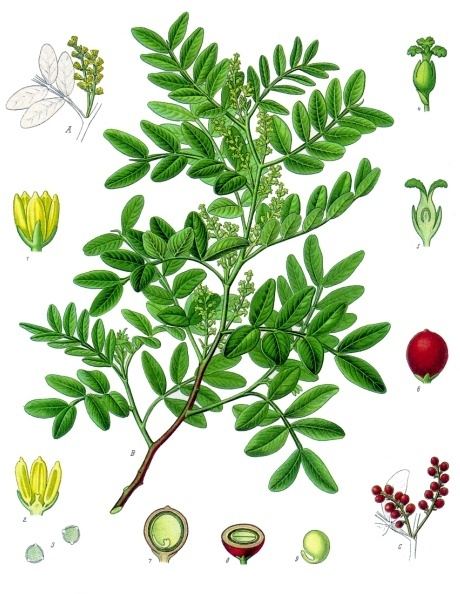
Mastic gum
Pistacia lentiscus
Resins & Pitch. Middle Eastern & Unani.
Also called Chios mastic, Mastiha, Mastaki
Spanish: Almáciga
Can trigger pistachio allergyA tear-shaped resin from the mastic tree, chewed for fresh breath and used for stomach and gum complaints.
Did you know? Most mastic comes from the Greek island of Chios, which is why the resin is often called Chios mastic.
What it may help, and how strong the proof is
- Digestion & gut health. A few small trials in people with indigestion found symptom relief. Results are mixed.Early proof
- Mouth, gums & teeth. Small trials found chewing mastic lowered mouth bacteria and plaque. Studies are small and short.Early proof
- Infections. A small trial suggested it may help clear H. pylori, a stomach germ. Larger trials are needed.Early proof
Parts of the body
Traditional use
Greek, Turkish and Arab healers used mastic for stomach pain, ulcers and gum care. Unani medicine uses it as a tonic for the stomach and mouth.
How it is classified
- Herbal actions
- Antimicrobial, Astringent, Carminative. Energy: neutral.
How people take it
Chew small pieces of the softened gum, or take capsules. Trials used small daily amounts, and no standard dose is set.
Food and capsule.
Where to get it
Grown on Chios and other Greek islands and in parts of the Mediterranean. Buy chewing tears in Greek or Middle Eastern markets, or capsules in supplement shops.
Be careful
Usually safe in food amounts. People allergic to pistachio or cashew may react. Large doses can upset the stomach, and pregnancy safety has not been well studied.
Avoid if: pregnancy; pistachio allergy.
Mixing with other things
- Works well together
Both are aromatic resins used together in traditional incense and remedies.
The honest take
Mastic has some small trials for stomach comfort, mouth bacteria and H. pylori, which are promising but not proven. Most evidence comes from small, short studies. Claims about cancer or heart health are not supported.