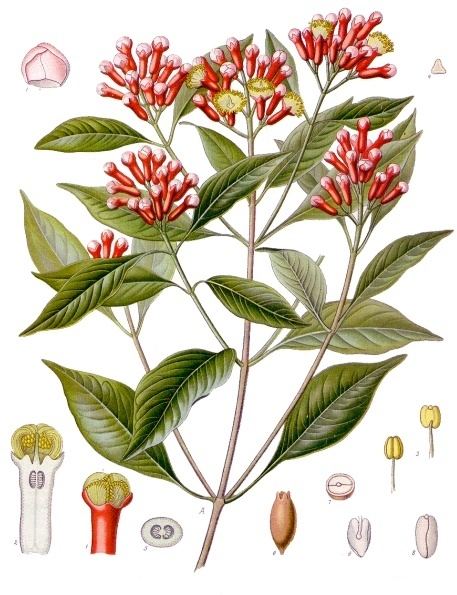
Clove
Syzygium aromaticum · 丁香
Spices. Ayurveda and Chinese Medicine.
Also called Laung, Lavanga, Clove buds
Pinyin: Dīng Xiāng
Spanish: Clavo de olor
Sanskrit: लवंग (Lavanga)
Oil dangerous if swallowedDried flower buds from an evergreen tree, used as a strong spice and as a folk toothache remedy.
Did you know? Clove oil is mostly eugenol, which is also an ingredient in some dental cements.
What it may help, and how strong the proof is
- Mouth, gums & teeth. Small trials found clove oil eased tooth pain. Larger trials are lacking.Early proof
- Digestion & gut health. Used for gas, nausea and indigestion in tradition. Human studies are few.Traditional proof
- Infections. Eugenol kills many germs in lab tests. Human proof for infections is lacking.Traditional proof
Parts of the body
Traditional use
Ayurveda and Chinese medicine use cloves to warm the stomach and ease pain. Western folk medicine has used clove oil on sore teeth for generations.
How it is classified
- Herbal actions
- Analgesic, Antimicrobial, Carminative. Energy: warming.
- Chinese medicine
- 丁香 Warm the interior. Nature: warm. Flavour: pungent. Enters the Spleen, Stomach, Lung and Kidney channels.
How people take it
Use whole buds in tea, spice blends or baked goods. For toothache, a small amount of diluted oil is dabbed on the sore spot, never placed neat on the gums or swallowed.
Food, essential oil and topical.
Where to get it
Grown in Indonesia, Madagascar, Tanzania and Sri Lanka. Buy whole buds in spice shops and essential oil in pharmacies, and choose labels that give dilution advice.
Be careful
Food amounts are safe. Clove oil is strong: it can burn the mouth and gums, and swallowing large amounts can damage the liver and cause seizures. Keep it away from young children and avoid medicine amounts in pregnancy.
Avoid if: children under 12; pregnancy; liver disease; bleeding disorders; before surgery.
Mixing with other things
- Works well together
Both are old toothache remedies that numb the mouth. Clove oil has more study.
- Works well together
Warm spice pair in baking and mulled drinks.
- Works well together
Common warm spice pair in baking and chai.
- Works well together
Part of Chinese five-spice powder.
- Use cautionBlood thinners (warfarin, Eliquis, Xarelto, Plavix, daily aspirin)
Eugenol may slow blood clotting, so use caution with blood thinners.
- Worth knowingDiabetes medicine (metformin, insulin, glipizide, Ozempic)
May lower blood sugar in small studies. Check levels if you take diabetes medicine.
Adds up with others that may slow blood clotting: , , , , , , , , , , , , , and 40 more.
Found in these formulas
Masala chai (Ayurveda), Elderberry syrup (Western), Sorrel drink (Caribbean), Four Thieves vinegar (Folk)
The honest take
Clove is a safe spice in food amounts, and it has real but limited proof for toothache. Most other claims, such as germ killing and digestion, rest on lab work and tradition. Clove oil is strong and has caused serious harm, especially in children.