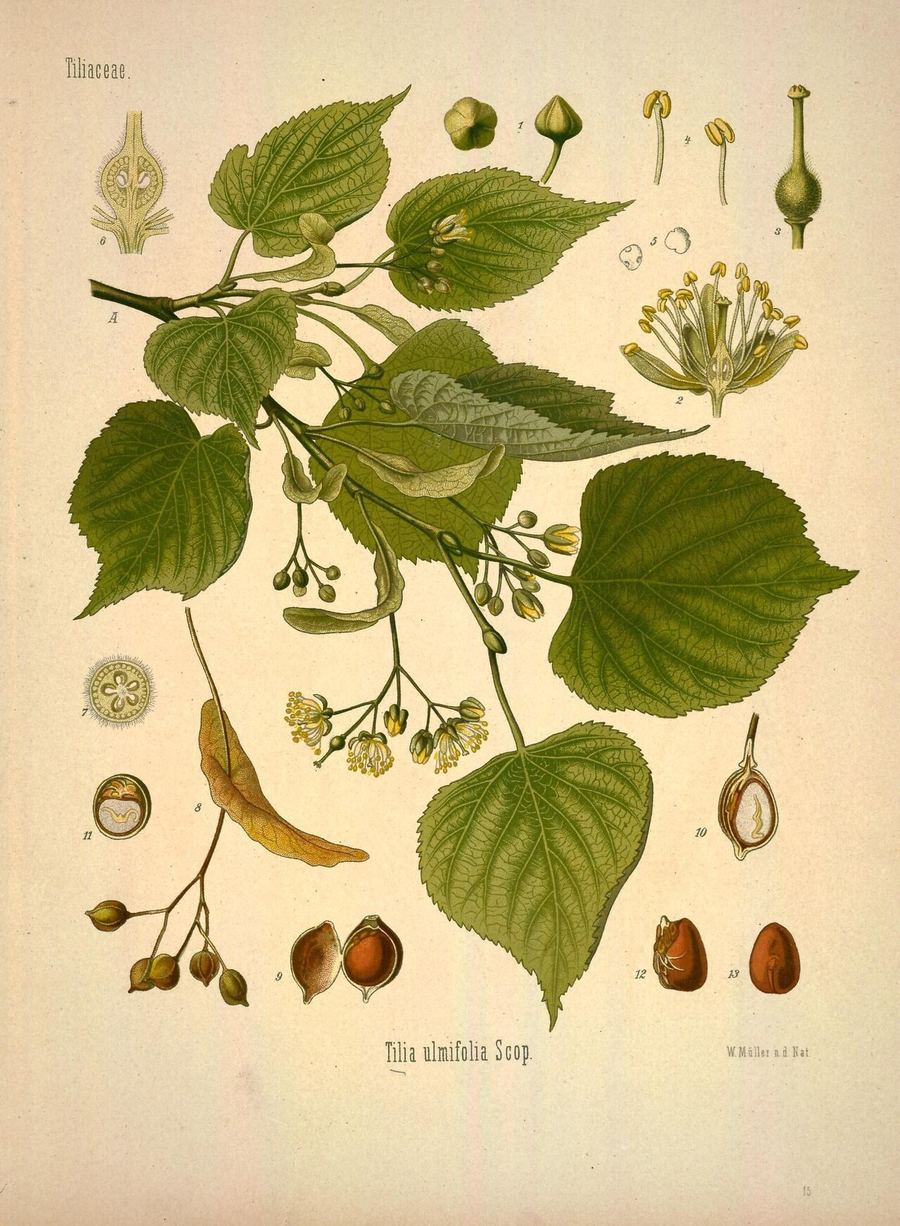
Linden
Tilia cordata / platyphyllos
Herbs & Roots. Western & European, Latin American & Amazon and Dr. Sebi's list.
Also called Lime tree, Lime blossom, Small-leaved lime
Spanish: Tilo
The fragrant flowers of a European tree, brewed into a calming tea.
Did you know? In Britain the linden tree is called a lime, a name that comes from its old word lind, not from the citrus fruit.
What it may help, and how strong the proof is
- Sleep. Tea is a traditional bedtime drink. Little or no human research exists.Traditional proof
- Stress & anxiety. Used to calm nerves. Evidence is mostly tradition and lab work.Traditional proof
- Fever. Hot tea is drunk to bring on sweating during colds. Human trials are missing.Traditional proof
Parts of the body
Traditional use
In Europe and Latin America, linden flower tea (tila in Spanish) is a folk drink for nerves, sleep, colds, and fevers. It is especially common in Mexico and Spain.
How it is classified
- Herbal actions
- Nervine, Diaphoretic, Antispasmodic. Energy: cooling.
How people take it
Steep 1 to 2 teaspoons (about 2 grams) of dried flowers in hot water for 10 minutes, up to three cups a day. No dosing trials exist.
Tea and tincture.
Where to get it
Grows as a large shade tree in Europe and western Asia, and is widely planted in cities. Sold as dried flowers, tea bags, and tinctures. The flowers also feed bees that make linden honey.
Be careful
Generally gentle. People with pollen or tree allergies may react. Its calming effect may add to sleep aids and sedatives, so check with a doctor if you take them.
Avoid if: pollen allergy.
Mixing with other things
- Works well together
Both are classic evening teas in Europe.
- Works well together
Often blended with linden in calming teas.
- Worth knowingSleep or anxiety medicine (Ambien, Xanax, Ativan)
Its calming effect may add to sleep aids and sedatives. Few studies have checked this.
The honest take
Linden tea is gentle and widely drunk in Europe, but its benefits for sleep and nerves are mostly tradition. Good human trials are missing. It is a pleasant, low-risk tea, not a proven sleep aid.