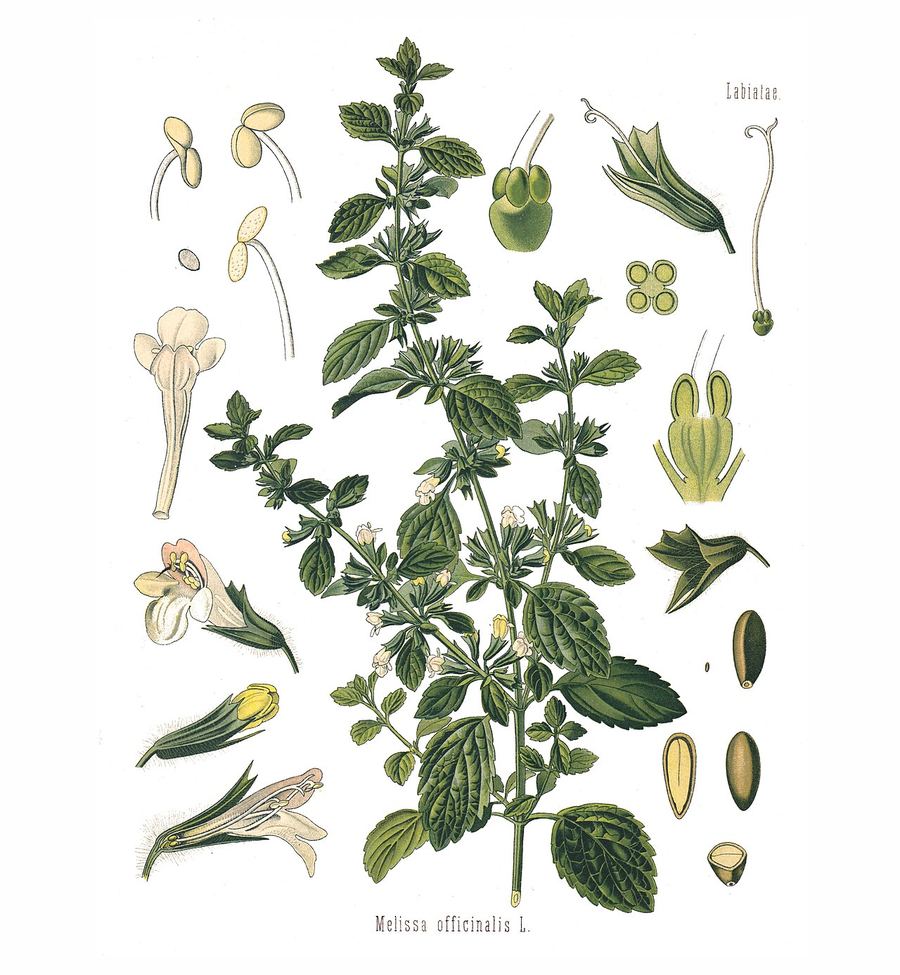
Lemon balm
Melissa officinalis
Herbs & Roots. Western & European.
Also called Melissa, Sweet balm, Balm mint, Toronjil
Spanish: Melisa
May affect thyroid hormone levelsLemon balm is a lemon-scented mint used as a calming tea and as a cream for cold sores.
Did you know? Melissa is the Greek word for honeybee, and beekeepers have long rubbed lemon balm inside hives to attract swarms, a practice from old folklore.
What it may help, and how strong the proof is
- Infections. Creams eased redness and swelling of cold sores in small trials, but pain and scabbing did not clearly improve.Early proof
- Stress & anxiety. Small trials suggest a calmer mood, but the evidence is limited.Early proof
- Memory & focus. Small trials in people with Alzheimer's disease suggested less agitation, but this is not proven.Early proof
Parts of the body
Traditional use
European herbalists used lemon balm for nerves, sleep, and mood. Today it is mostly used as a calming tea and as a cold-sore cream.
How it is classified
- Herbal actions
- Nervine, Sedative, Carminative, Antiviral. Energy: cooling.
How people take it
Tea is made from fresh or dried leaves. Cold-sore studies used lemon balm cream applied several times a day.
Tea, capsule, tincture and topical.
Where to get it
Native to the Mediterranean and widely grown in gardens. Sold as dried leaf, tea, capsules, tinctures, and cold-sore creams.
Be careful
Usually mild. It may cause drowsiness, and it may change thyroid hormone levels. Use it with care alongside sedatives or thyroid medicine.
Avoid if: thyroid disease; pregnancy; before surgery.
Mixing with other things
- Works well together
Common together in calming tea blends.
- Works well together
Both are in STW 5 (Iberogast), a European stomach blend.
- Works well together
Often combined in calming mint teas.
- Works well together
Common together in calming blends for sleep and nerves.
- Works well together
Often combined in calming tea blends.
- Works well together
Common in calming tea blends.
- Works well together
Common in calming tea and aromatherapy blends.
- Works well together
Both are used for nerves and low mood in European herbal blends.
- Works well together
Both are used in calming teas for nerves and sleep.
- Works well together
Often blended with linden in calming teas.
- Works well together
Gentle calming teas often combine them.
- Works well together
Both are mint-family calming teas.
- Works well together
Both are lemon-scented calming herbs often blended into tea.
- Use cautionThyroid medicine (levothyroxine (Synthroid))
May change thyroid hormone levels, so people on thyroid medicine should use it with care.
- Use cautionSleep or anxiety medicine (Ambien, Xanax, Ativan)
Adds to the calming effect of sedatives.
- Use cautionAlcohol (beer, wine, spirits)
Alcohol adds to the drowsiness.
Adds up with others that can make you drowsy: , , , , , , , , , , , , , and 14 more.
Found in these formulas
Sleepy-time blend (Western)
The honest take
Lemon balm is a pleasant tea, and small trials suggest mild benefits for cold sores and calm mood. Most trials are too small to be sure of the effect. Claims that it boosts memory in healthy people go beyond what is proven.