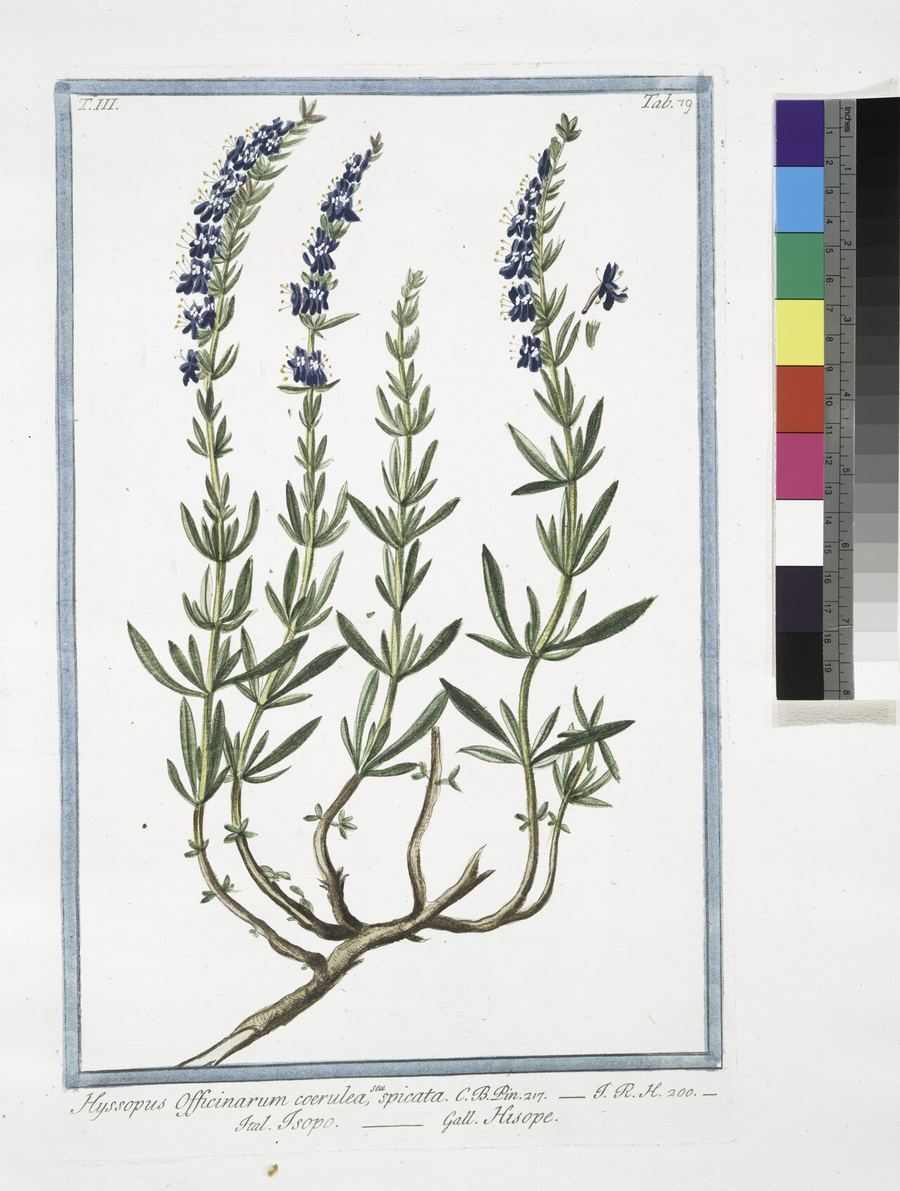
Hyssop
Hyssopus officinalis
Herbs & Roots. Western & European and Middle Eastern & Unani.
Also called Common hyssop, Blue hyssop
Spanish: Hisopo
Thujone; avoid high dosesA blue-flowered mint-family herb used for coughs and sore throats.
Did you know? Hyssop appears in the Bible as a cleansing herb, and Psalm 51 asks to be purged with hyssop.
What it may help, and how strong the proof is
- Breathing & asthma. Traditional tea for coughs and bronchitis. No good human trials exist.Traditional proof
- Sore throat & cough. Used as a gargle or tea for sore throat. Mostly tradition.Traditional proof
Parts of the body
Traditional use
Medieval European herbalists used hyssop tea for coughs, colds, and bruises. Middle Eastern and Biblical traditions used it in ritual cleansing.
How it is classified
- Herbal actions
- Expectorant, Antimicrobial, Carminative. Energy: warming.
How people take it
Tea is usually 1 to 2 teaspoons of dried herb per cup, up to three cups a day. Do not swallow the essential oil.
Tea and tincture.
Where to get it
Grows in dry, sunny ground across southern Europe and western Asia, and is common in herb gardens. Sold as dried leaf, tea, and tinctures; the essential oil is a separate, stronger product.
Be careful
Thujone, a natural compound in hyssop, can cause seizures in large amounts. Avoid it in pregnancy, while breastfeeding, and with seizure disorders. The essential oil is toxic if swallowed.
Avoid if: pregnancy; breastfeeding; epilepsy.
Mixing with other things
- Works well together
Both are used in chest and cough teas in European herbal medicine.
- Works well together
Traditional cough blends often include both.
The honest take
Hyssop has long been used for coughs and sore throats, but almost no modern human trials test it. Its thujone content means large doses can be harmful. It is a pleasant herb for tea in normal amounts, not a proven remedy.