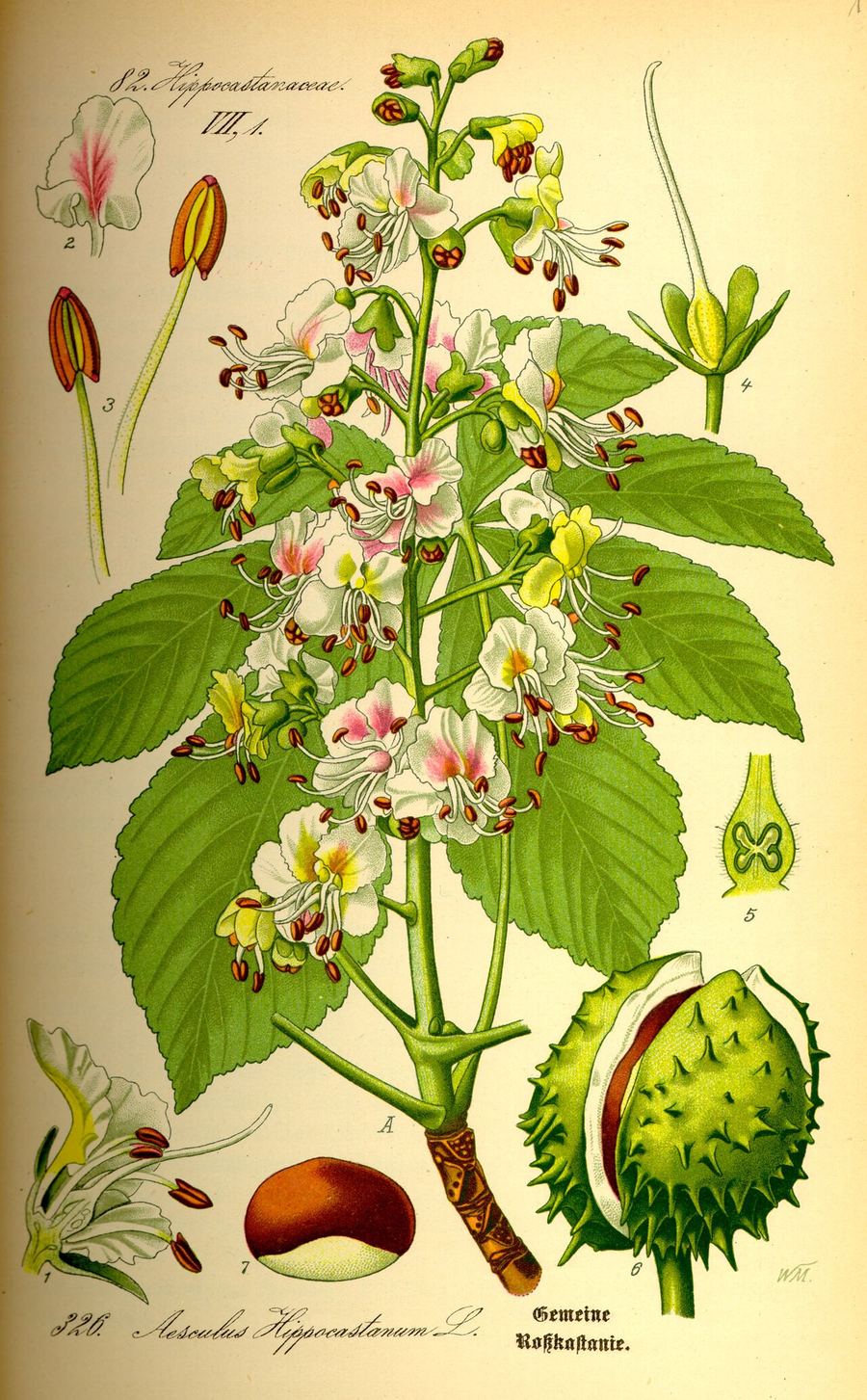
Horse chestnut
Aesculus hippocastanum
Herbs & Roots. Western & European.
Also called Conker tree, European horse chestnut, Escin (main active compound)
Spanish: Castaño de Indias
Raw seeds are poisonousThe seed of a large European tree, used in purified extract form for leg swelling and heavy legs from weak veins.
Did you know? In England, children once played conkers, threading a horse chestnut seed on string and trying to smash their rival's seed.
What it may help, and how strong the proof is
- Heart health. A Cochrane review of 17 trials found it eases leg pain, swelling, and itching from weak leg veins. Most studies lasted 2 to 16 weeks.Good proof
- Pain & headaches. Some small trials of topical escin gels show less swelling and bruising after injuries. Evidence is limited.Early proof
Parts of the body
Traditional use
European folk healers used the seed and bark for varicose veins, hemorrhoids, and leg swelling. Modern products use a purified extract, standardized to escin.
How it is classified
- Herbal actions
- Circulatory, Anti-inflammatory. Energy: neutral.
How people take it
Most trials used a standardized extract with about 50 mg of escin, taken twice a day, for up to 12 weeks. Topical gels are applied to the legs or bruised areas as directed.
Capsule, tablet, gel and topical.
Where to get it
Grows in parks and streets across Europe and is widely planted elsewhere. Extracts come as capsules, tablets, and gels from pharmacies and supplement stores, so look for a product standardized to escin.
Be careful
Raw seeds, bark, and leaves are poisonous. Eating them can cause vomiting, stomach pain, and in severe cases nerve and muscle damage. Purified extracts can cause itching, stomach upset, and headache, and rarely liver or kidney problems.
Avoid if: pregnancy; breastfeeding; bleeding disorders; kidney disease; children under 12.
Mixing with other things
- Works well together
Both are used in European vein formulas for leg swelling and heaviness.
- Works well together
Centella (gotu kola) extracts are also used for weak veins. Evidence is limited for both.
- Use cautionBlood thinners (warfarin, Eliquis, Xarelto, Plavix, daily aspirin)
Contains coumarin-like compounds that may add to bleeding risk with warfarin or aspirin.
Adds up with others that may slow blood clotting: , , , , , , , , , , , , , and 40 more.
The honest take
The purified extract has decent trial evidence for leg swelling and heaviness from weak veins, but studies are mostly short. Raw seeds, bark, and leaves are poisonous, so homemade conker remedies are unsafe. Use only a standardized extract from a trusted brand.