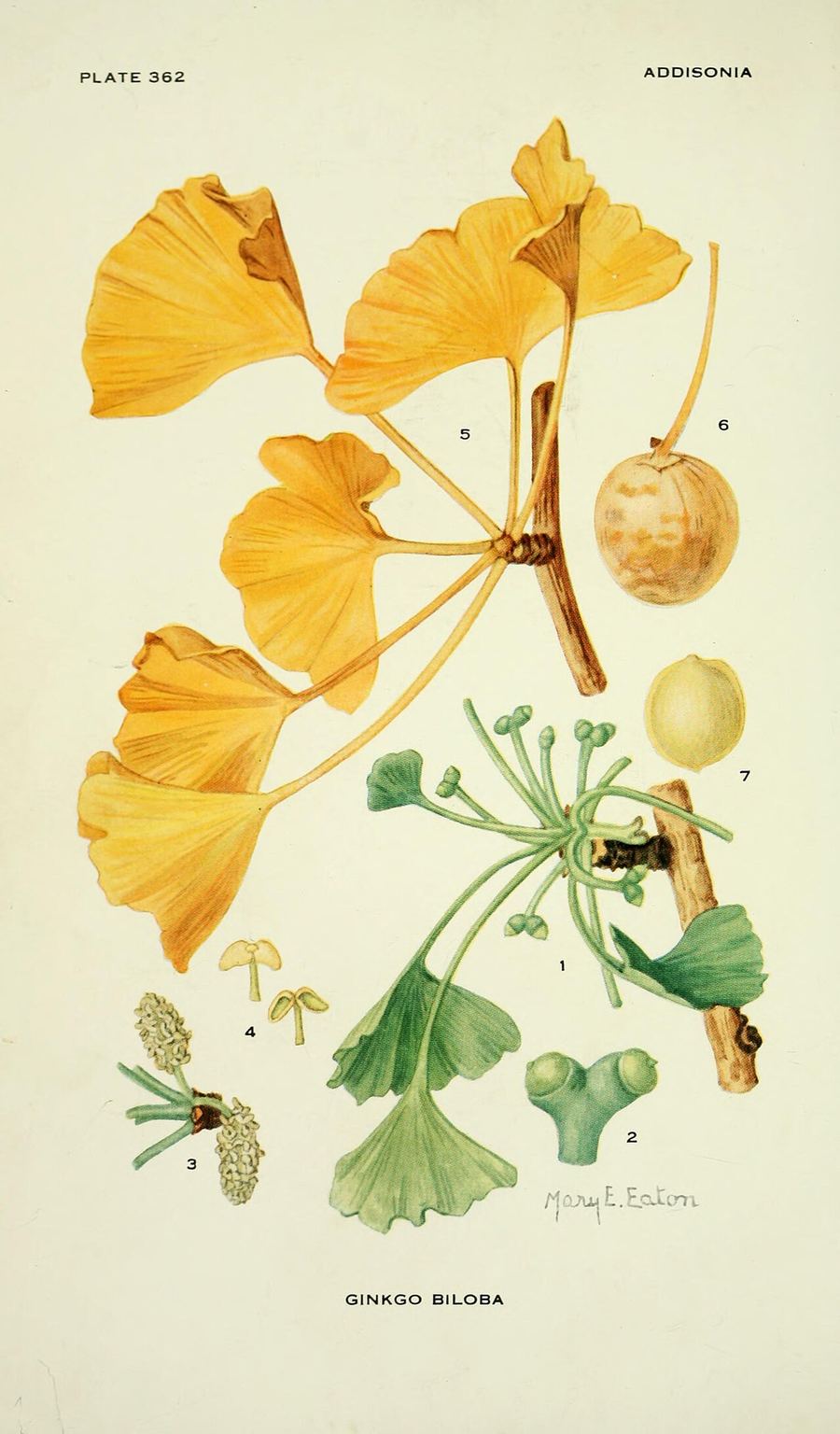
Ginkgo
Ginkgo biloba · 银杏
Herbs & Roots. Chinese Medicine and Western & European.
Also called Maidenhair tree, Bai guo (seed), Yin xing ye (leaf)
Pinyin: Yín Xìng
Spanish: Ginkgo
Raw seeds can cause seizuresThe leaf extract of a very old tree, sold mainly to support memory and blood flow.
Did you know? Ginkgo has no close living relatives. It is the only surviving species in its whole order, and its ancestors lived alongside the dinosaurs.
What it may help, and how strong the proof is
- Memory & focus. Some small trials in people with dementia or memory loss show small gains. A large trial in older adults without dementia found it did not prevent dementia.Early proof
- Heart health. Small trials suggest it may help people with leg pain from poor blood flow walk a bit farther. Results are mixed.Early proof
- Eyes & vision. Sold for eye problems such as macular degeneration. Human studies are few, small, and unclear.Traditional proof
Parts of the body
Traditional use
In Chinese medicine, the seed (bai guo) has been used for coughs and wheezing. Modern leaf extracts, developed in Germany, are sold for memory and circulation.
How it is classified
- Herbal actions
- Circulatory, Brain tonic, Antioxidant. Energy: neutral.
- Chinese medicine
- 银杏 Transform phlegm & stop cough. Nature: neutral. Flavour: sweet, bitter, astringent. Enters the Lung and Kidney channels.
How people take it
Most studies use standardized leaf extract (EGb 761), often 120 to 240 mg a day split into two or three doses. The large memory trial used 240 mg a day. Chinese medicine uses cooked seeds in small amounts.
Capsule, tablet and tea.
Where to get it
Native to China and grown worldwide as a city tree. Leaves are dried and made into standardized extracts, while seeds are sold dried or canned in Asian markets. Leaf extracts come as capsules, tablets, and tea.
Be careful
Common side effects include headache, dizziness, upset stomach, and heart racing. It may raise bleeding risk, especially with blood thinners. Raw or poorly cooked seeds contain toxins that can cause seizures and release cyanide, so never eat them.
Avoid if: pregnancy; breastfeeding; bleeding disorders; before surgery; epilepsy; children under 12.
Mixing with other things
- Works well together
Both are sold together in memory supplements. Neither has strong proof.
- Works well together
Both are sold for eye and circulation health. Human proof is limited for each.
- Use cautionBlood thinners (warfarin, Eliquis, Xarelto, Plavix, daily aspirin)
May add to bleeding risk with warfarin, aspirin, and similar drugs. Case reports of bleeding exist.
- Use caution
Both may slow blood clotting. Taking them together could add to bleeding risk.
Adds up with others that may slow blood clotting: , , , , , , , , , , , , , and 40 more.
The honest take
Ginkgo is one of the most studied herbs, and the results are mixed. A large US trial found it did not prevent dementia in older adults. Small trials hint at modest help for leg pain and some memory symptoms, but the evidence is weak.